



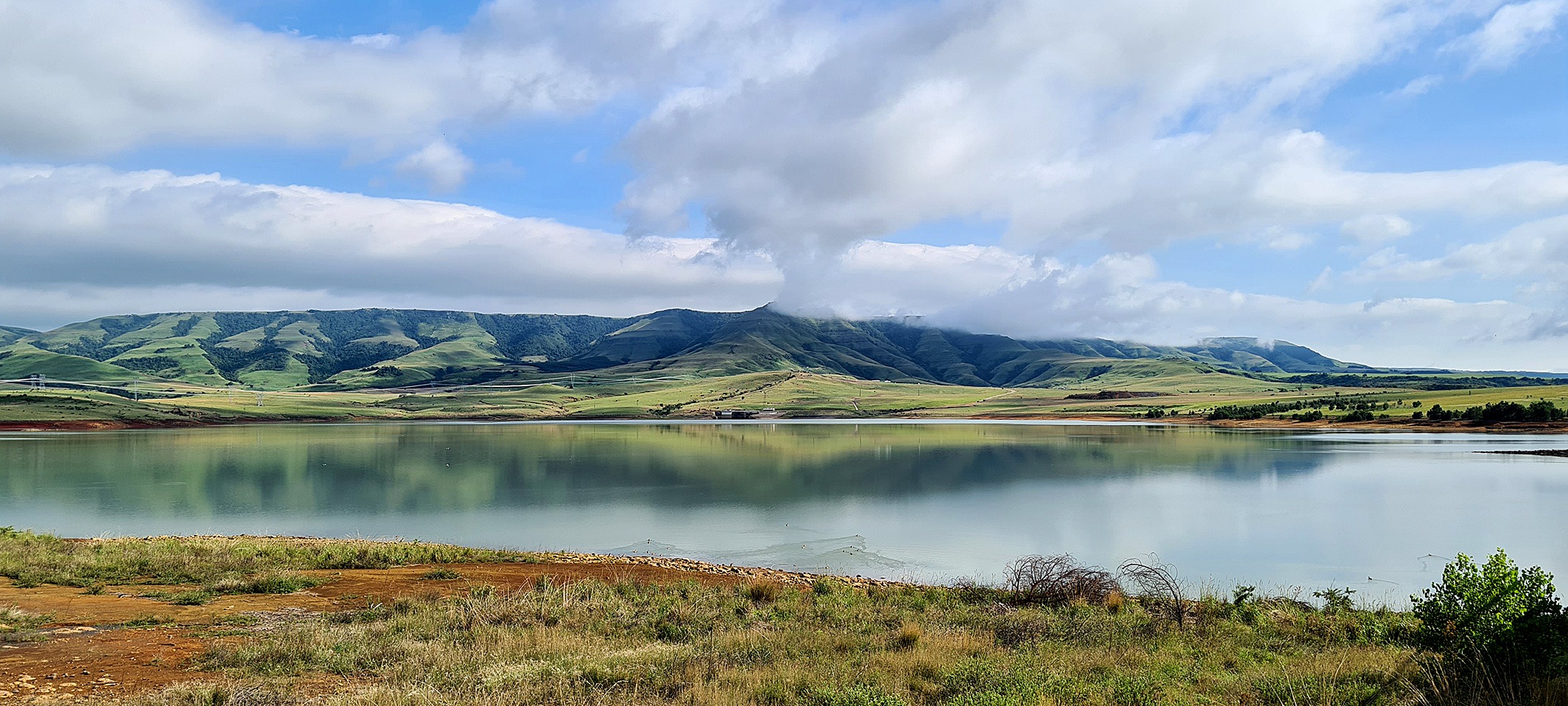
 The aim of the EIA system is to assess, avoid or mitigate the potentially harmful impacts of development projects on South Africa’s environmental assets, including vital wetland and water resources. (Photo: CF Pienaar)
How might the public react to law reform proposals promising more flexible firearm control, flexible traffic rules or flexible salary payments?
Little wonder then that plans to introduce a new Flexible Environmental Impact Assessment (EIA) System have raised several eyebrows.
While many developers will welcome proposals that may allow them to skirt what they see as an onerous and costly obstacle to rapid project approval, a more sceptical response is likely to emerge from public interest and environmental watchdog groups.
EIAs have become one of the most widely adopted environmental policy tools across the world, with more than 180 countries now using this system to limit environmental harm.
Before becoming a legal requirement in South Africa in the late 1990s, EIAs were done voluntarily. The most prominent example of a voluntary EIA was the 1992 study on whether Rio Tinto and Richards Bay Minerals could strip-mine the coastal sand dunes on the Eastern Shores of Lake St Lucia (now part of the iSimangaliso World Heritage Site).
/file/attachments/orphans/tonyEIA2RBMsandduneminingImageSupplied_951311.jpg "A dredger sucks up heavy minerals from coastal sand dunes south of the iSimangaliso Wetland Park. (Photo: Supplied)")
Since the introduction of the Environment Conservation Act (1989) and the National Environmental Management Act (1998) thousands of environmental impact studies have been conducted for a wide variety of projects, ranging from power lines to road construction, coal mining or the construction of nuclear power stations.
The initial EIA regulations have also been amended or “streamlined” several times, in 2006, 2010, 2014 and 2017.
Now the Department of Forestry, Fisheries and the Environment (DFFE) has embarked on a series of national consultation meetings to propose further changes, hoping to conclude the initial consultation by the end of this month (April).
According to the DFFE, there is a “clarion call for change in environmental assessment to cater for more flexibility”.
Sabelo Malaza, the department’s chief director of integrated environmental authorisations, says this push for change is “not something that comes out of the blue”.
/file/attachments/orphans/tonyEIA3sabelomalaza1imagetonycarnie_596860.jpg "Sabelo Malaza, the chief director of integrated environmental authorisations, outlines proposals for the ‘Flexible EIA System’ at a meeting in Durban. (Photo: Tony Carnie)")
It had been influenced by several previous reports, including a 2008 review of the EIA system; the 2014 EIAMS report and a more recent national evaluation report of 2019 by the DFFE and the Department of Planning, Monitoring and Evaluation.
This last report notes that the current EIA system is “sometimes perceived as a barrier to development due to its requirements for rigorous participatory processes and scientific investigation which may often be viewed as time‐consuming and expensive”.
It also suggested that a large number of EIAs were conducted for relatively small-scale projects, which might place a significant cost burden on small and medium enterprises.
The report recommended that there should be a new system allowing for more discretion by the government when deciding which projects required an EIA, on a case-by-case basis.
At a consultation meeting in Durban on 10 April, Malaza said his department proposed moving away from the current system where a basic or full EIA process is required if project proposals are classified as “listed activities”.
Instead, the department favoured a more flexible screening process where the level of assessment was based on the anticipated nature or scale of development and the sensitivity of the receiving environment. This could do away with the need for lengthy and costly EIA studies for projects with low environmental impacts.
He acknowledged, however, that the department was anticipating significant pushback against the plan to grant national and provincial government officials more discretion in deciding which projects could be excluded from the EIA process.
While he appreciated these concerns, the government’s EIA Task Team believed it was possible to incorporate safeguards to guide the reasonable exercise of this discretion.
/file/attachments/orphans/tonyEIA4newEIAsystemoutlneSourceDFFE_401787.jpg "An outline of some of the proposed changes to the EIA system. (Source: DFFE)")
Environmental attorney Janice Tooley, whose Durban-based law clinic has represented poor communities impacted by coal mining, said her main concern was that there should be transparency during all phases of the new screening and assessment process.
“We have no problem with government exercising discretion, but it must be just, fair and reasonable.”
All decisions, including those taken in the pre-application phase, had to be transparent to ensure trust in the new system.
/file/attachments/orphans/tonyEIA5coalminingpitsintheSomkheleareaimageRobSymons_140376.jpg "The EIA system is also intended to regulate the harmful impacts of coal mines in several parts of the country, including rural areas adjacent to the Hluhluwe-iMfolozi Park in KwaZulu-Natal. (Photo: Rob Symons)")
Paddy Norman, southern KZN chair of the Wildlife and Environment Society of South Africa, was concerned that timelines for public participation should be adequate, especially in cases where developments resulted in complex EIA reports often exceeding 1,000 pages.
There should also be strong checks and balances to guard against abuse of the new system by environmental assessment practitioners (EAPs) and consultants who were expected to act independently in the best interests of the environment, yet were paid directly by the developer.
He raised the example of a local environmental consultancy whose website motto was “We make mining happen”, suggesting that there were several “independent” EAPs who seemed to specialise in making development happen for their clients.
Reflecting on three decades of “streamlining” the South African EIA process, Professor Reece Alberts and colleagues at North-West University suggested in a research letter in 2023 that many developing countries are reluctant to provide government officials with discretion in screening decisions because of the perceived lack of capacity and the opportunity such discretion presents for corruption and malfeasance.
“However, our experience in South Africa is that a level of discretion should be part of any well-functioning EIA system, and that the lack of discretion results in overly prescriptive, tedious and inefficient decision-making...
“To achieve more efficiency, a list-based approach needs to be combined with powers of discretion by decision-making. At the moment, the South African system provides very limited discretion and therefore fails in achieving screening efficiency. The indiscriminate nature of a list-based screening mechanism (that excludes provision for discretion) also means unintended potential costs implications, especially for small and medium enterprises such as small waste recycling activities and small-scale housing developments.”
Alberts and his colleagues note that due to high development demands, EIA systems internationally are under increasing pressure to simplify, streamline and demonstrate efficiency.
“From a South African perspective, if not addressed, inefficiencies in EIA systems will likely result in a resistance to EIA by politicians and policymakers, which will subsequently lead to more pressure for streamlining. In this context, streamlining is code for erosion of the mandate of the EIA system.
“This is already happening, with many countries questioning the need for EIA if it is going to frustrate the implementation of certain socioeconomic policy agendas. If EIA is to remain a decision support instrument of choice, the ability of the system to add value to decision-making in a timeous manner is paramount.”
/file/attachments/orphans/tonyEIA6eskomingula1imagefromEskom_627235.jpg "As part of the environmental authorisation conditions for the Ingula hydroelectric power scheme, Eskom was asked to buy adjacent farms containing sensitive wetlands and grasslands to compensate for the residual impacts on wetlands that would be lost during the construction of the power station. (Photo: Eskom)")
University of KwaZulu-Natal environmental law experts Jeremy Ridl and Ed Couzens took a more cautious view when the EIA regulations were “streamlined” in 2006 by the then environment minister, Marthinus van Schalkwyk.
In a law journal article in 2010 they commented: “Time will tell whether the new EIA Regulations that were the political solution of one minister will yet become the target of another, as developers garner the support of Cabinet members in their branding of environmental controls as ‘anti-development’.
“While it is probably too soon to panic, it appears that we might be entering into a crucial phase in the development of South African environmental law – it is going to require extreme vigilance (even activism) from environmental lawyers if, out of the current maelstrom of case law, statute law, politics and policy, a proper balance amongst economic growth, social development and environmental protection is to emerge.
“There is a great danger that the role and place of the new Regulations will be determined by reality and pragmatism in a debate in which the new Regulations will be little more than background noise. If this fear becomes reality, then the principles of the National Environmental Management Act, which do so much to make South Africa’s statutory environmental regime the envy of environmental lawyers elsewhere, will be well and truly missing.” DM
Written submissions on the new Flexible EIA System can be sent to FlexiEIA@dffe.gov.za by 30 April 2026.


Comments
Scroll down to load comments...