




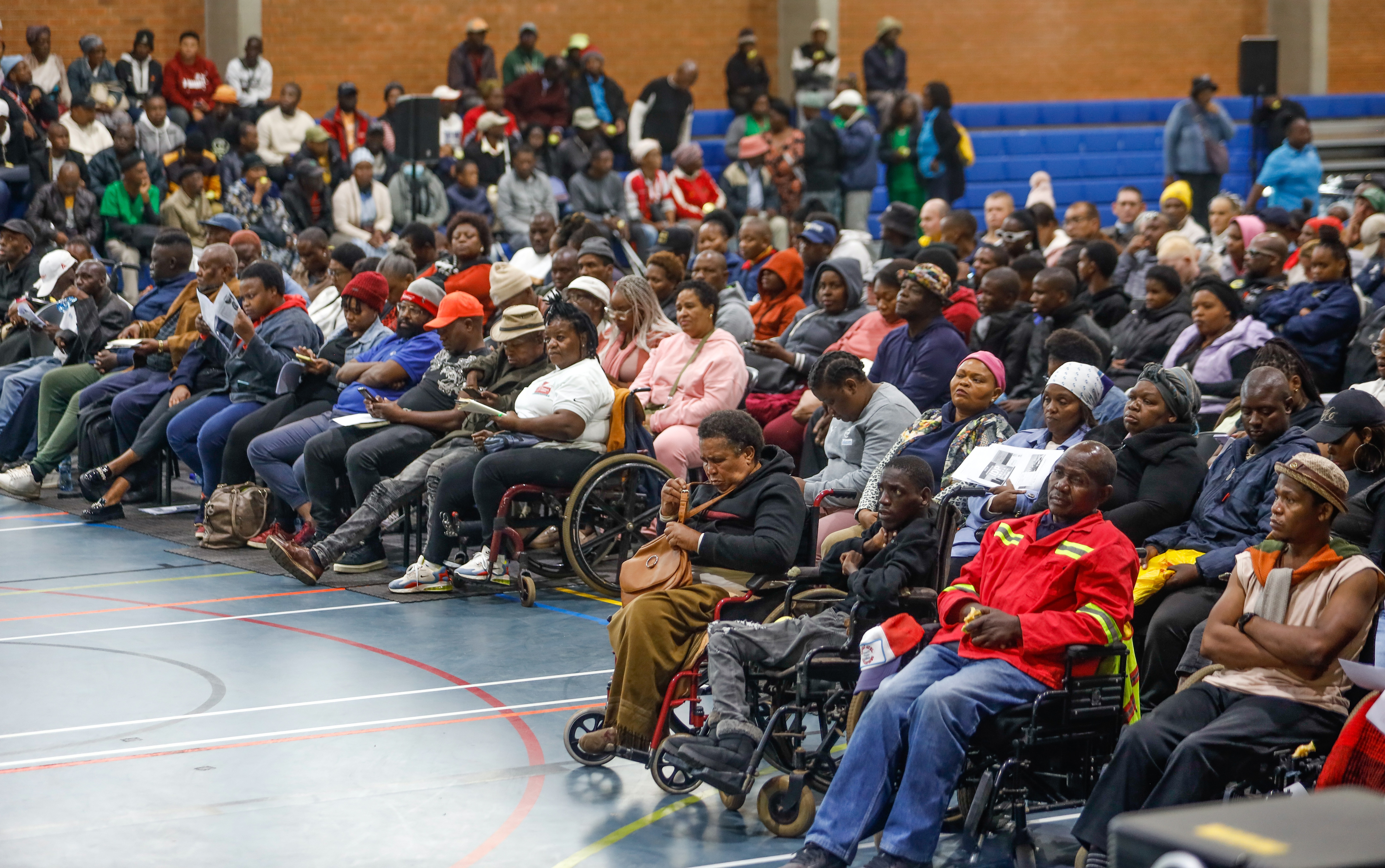
 An Integrated Development Plan meeting with residents at the Brixton Multipurpose Centre on 6 May 2025 in Johannesburg. Joburg’s IDP meetings are attracting low resident participation, with some wards seeing under 20% attendance. (Photo: Gallo Images / Sharon Seretlo)
As Johannesburg rolls out its annual Integrated Development Plan (IDP) meetings in the coming weeks, residents are once again being urged to “make their voices heard”.
In a statement announcing the process, the City of Johannesburg said the meetings were designed to ensure that “residents’ voices play a central role in shaping the City’s development agenda”.
But participation remains low. In some wards, fewer than 20% of residents attended IDP sessions in the last cycle – raising questions about how representative the process really is.
Civil society groups and opposition parties say the problem runs deeper, warning that the process is increasingly reduced to compliance rather than meaningful participation.
The Johannesburg Crisis Alliance said systemic weaknesses were undermining what was meant to be the City’s most important planning process.
“IDPs are essential governance tools, but in Johannesburg they risk becoming a compliance exercise rather than a genuinely participatory process,” said Yunus Chamda, the coordinator of the alliance.
Chamda said the way the process was structured actively limited meaningful engagement.
“Documents are released late, consultation periods are effectively shortened, and materials are dumped in bulk – making it difficult for residents to engage. This is not how you invite public participation. It’s how you tick a compliance box.
“The process is not useless – it’s badly executed. If participation is superficial and information is inaccessible, it becomes symbolic rather than meaningful.”
Have your say on Joburg’s future 📢
— City of Joburg (@CityofJoburgZA) April 13, 2026
IDP consultations for Regions A–G are underway, with a mix of in-person and online meetings to make participation easier for all residents. Your input helps shape service delivery priorities in your ward.
🗂️ Read the draft IDP:… pic.twitter.com/Or5gwOWOi5
The City rejected suggestions that the process was purely procedural.
“The City has adopted a multi-channel participation approach, including physical meetings, online platforms and written submissions, to ensure broader access and inclusivity,” said City spokesperson Nthatisi Modingoane to Daily Maverick.
“In the previous cycle, more than 5,000 public inputs were received through the City’s web-based participation system, which allows submissions to be categorised and routed directly to relevant departments for consideration.”
Meetings derailed
Across the city, residents often arrive at meetings unclear about what they are expected to contribute, while sessions frequently descend into frustration over failing services, with little clarity on how inputs influence final decisions.
These concerns are echoed by opposition councillors.
ActionSA spokesperson Lebo Mokoka said a fundamental flaw was that residents were not properly guided on what fell within the City’s mandate.
“The ruling party does not adequately inform communities what they are supposed to contribute in the IDP process. As a result, many residents raise issues like police stations and clinics – which fall outside the City’s mandate – and those inputs are effectively dismissed.
“Residents should be focusing on municipal priorities like roads, water infrastructure and service delivery, but many don’t understand what the City is actually responsible for. They end up feeling like their inputs are not taken seriously.”
/file/attachments/orphans/ED_556337_275393.jpg "An IDP engagement meeting at the Brixton Multipurpose Centre on 6 May 2025 in Johannesburg. Opposition parties say such meetings are dominated by complaints about service delivery. (Photo: Gallo Images / Sharon Seretlo)")
Mokoka said meetings often collapsed into anger rather than planning.
“Instead of structured engagement, these meetings become venting sessions about deteriorating services. The IDP can work – but only if what communities prioritise is actually funded. Right now, there is a loss of trust.”
DA Johannesburg Caucus Leader Belinda Kayser-Echeozonjoku said the process was widely seen as procedural.
“IDP sessions are treated by the City as just another tick-box exercise, because they are legislated. These sessions become service delivery complaint meetings, and long-standing issues are raised again and again without meaningful response. Some of these problems, particularly around failing infrastructure and safety, have persisted for more than five years.”
Tariffs: comment urged before final approval
While the City considers its draft Integrated Development Plan, residents are also being urged to comment on proposed tariff increases for the 2026/27 financial year — one of the most immediate ways the public can influence the budget.
Comments must be submitted before the budget is finalised and adopted by Council, usually in May or June.
HOW TO COMMENT
Residents can submit input on the City of Johannesburg’s draft budget, rates policy and proposed tariff increases as part of the current public participation process.
Proposed rate and tariff increases
Electricity: 8.63%
Water and sewage: 12.5%
Refuse removal: 6.2%
Property rates: 3.6%
How to submit
Email: ratescomments@joburg.org.za
In person: At City regional offices
Online: Documents available on the City’s website
What to focus on
Affordability of increases
Impact on households and businesses
Service delivery versus cost
Billing concerns
Fairness of property rates
Why it matters
Unlike broader IDP meetings, tariff submissions directly influence what residents will pay – making this one of the most immediate ways the public can shape the City’s budget. DM
Comments
Scroll down to load comments...