




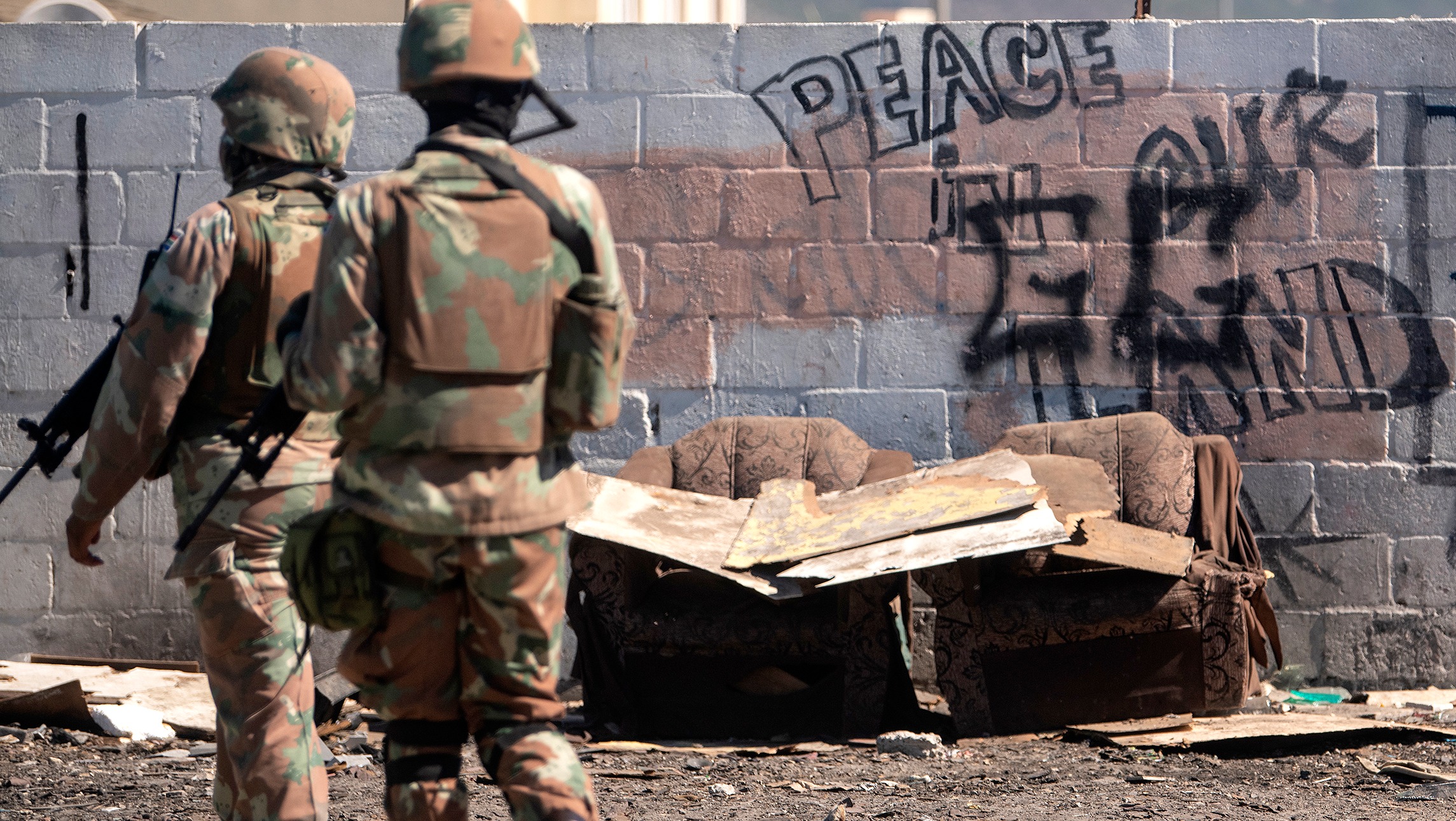
 Army members on joint patrols with the police in gang-ridden areas in Overcome Heights, Cape Town, on 13 April 2026. (Photo: Gallo Images / Brenton Geach)
They may look intimidating with their helmets, combat gear and assault rifles as they move along the streets of Cape Town suburbs where gang violence is prevalent.
It is an image intended to create the impression that the state is taking a no-nonsense approach to violent criminals.
/file/attachments/orphans/ED_603850_537667.jpg "The army and police on patrol in Vrygrond in Cape Town on 13 April 2026. (Photo: Gallo Images / Brenton Geach)")
This may be the case, and it has sparked hope among some residents that the presence of the army will finally stop the shooting and force the gangs to drop their weapons.
But the reality is that these soldiers are facing a crisis that runs deep and is hard to fix.
Already, the sight of soldiers in certain suburbs suggests that these areas are the worst generators of crime, where, in fact, the contributors to criminality lie elsewhere, even in the plush neighbourhoods and business hubs where the army will probably never patrol.
Ramaphosa’s orders versus multiple shootings
SA National Defence Force (SANDF) teams were recently deployed to various provinces, in keeping with President Cyril Ramaphosa’s vow during his State of the Nation Address earlier this year.
The overall operation will apparently cost more than R800-million and run until April next year.
This is not the first time the army has been temporarily deployed to assist in crimefighting.
It has happened intermittently before, and this time the deployment coincides with the run-up to local elections.
/file/attachments/orphans/GettyImages-2247799822_444221.jpg "President Cyril Ramaphosa. (Photo: Jemal Countess / Getty Images for Global Citizen)")
In the Western Cape, widely known as the country’s gang violence capital, the Presidency said the soldiers were there to help the South African Police Service (SAPS) “prevent and combat” the bloodshed.
It is understood that from 9 to 12 April, 49 murders occurred in the province. Not all were gang-related. (The SAPS has not officially provided this figure to Daily Maverick.)
Gang battles have been happening for decades, and have affected countless innocent children – aside from being maimed and murdered, they have lost parents, relatives and friends to bullets.
It is a trauma that is unquantifiable.
Barely a week ago, a six-year-old girl was shot in the head while playing. As of Tuesday, 14 April 2026, she remains in hospital.
Daily Maverick has not managed to speak to her family and will therefore not divulge her name.
The Western Cape army deployment began on 1 April.
The focus of this deployment has been the historically poorer, apartheid-created suburbs with higher concentrations of residents, known as the Cape Flats, where violence is prevalent.
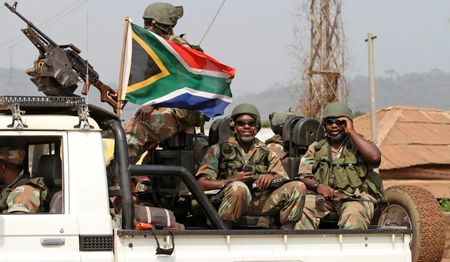
Hope, hype and reality
On day one, Daily Maverick’s Vincent Cuywagen reported on Asa Galant’s relief when soldiers arrived in the neighbourhood she calls home.
“Today, I hope the place will get better because of the army. The army should clean Mitchells Plain and when they go away, violence and drugs should be something of the past,” Galant had said.
And that’s the thing. While the army deployment may deter violence, it can also spark false hope among residents in gang strongholds because the strategy simply cannot break gangsterism’s collusion-bolstered grip.
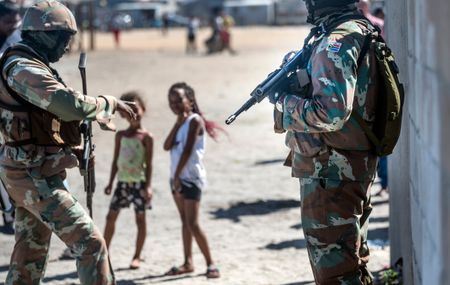
It is a reactive measure aimed at preventing crime.
Two weeks in, and the responses to the Western Cape army deployment are mixed.
Eyewitness News reported that the Steenberg Community Policing Forum welcomed a reprieve in violence in the broader area.
Several others criticised it, with the DA saying that the deployment lacked proper planning.
There were reports that the soldiers didn’t faze gangsters. (Daily Maverick was even told that if deployment details were leaked, gangsters could use this to their advantage.)
This week, DA’s Ian Cameron posted the following video (which Daily Maverick was unable to verify), in which individuals were joking about the army deployment during an apparent street party in Tafelsig, Mitchells Plain, parts of which are gang hotspots.
But beyond the praise, the politics and the criticism, the violence has continued.
Girl shot in ‘gang violence and its manifestations’
Over a week, there have been various shootings concentrated around Cape Town, in the Western Cape, and police have carried out several arrests.
The shootings have not necessarily happened where the SANDF has been deployed to conduct operations with the police.
Some of the incidents involve:
- A triple murder in Gugulethu on Monday, 13 April 2026. The motive for it was not immediately clear.
- Two suspects were arrested in connection with a six-year-old girl who was wounded in a shooting in Bishop Lavis last Thursday, 9 April. She’d been playing outside when a bullet, from a gunfight involving two rival gangs, struck her. “Over 30 spent cartridges were found on the scene,” police spokesperson Brigadier Novela Potelwa said. (Some reports suggested the girl died, but on Tuesday, 14 April, the Western Cape police told Daily Maverick the girl was “still under medical treatment”.)
- Three suspects were arrested and charged after an off-duty SANDF officer was murdered on Wednesday, 8 April, in Delft. His firearm, bank cards and cellphone were recovered.
- A suspect was arrested in connection with a double murder and five attempted murders that happened in Mitchells Plain last Tuesday, 2 April. Another suspect was previously detained.
/file/dailymaverick/wp-content/uploads/Brooks-gunviolence3.jpg "The aftermath of a suspected gang-related shooting in Lavender Hill on 29 June 2020 in Cape Town. It is believed that the victim was shot several times in a street near a feeding scheme. His 17-year-old son put a blanket over his body as many children stood by and watched. (Photo: Gallo Images / Brenton Geach)")
Referring to the three cases in which arrests were made, Potelwa said: “The shooting incidents are believed to be linked to gang violence and its manifestations.”
Meanwhile, the SANDF deployment is happening as South Africa deals with a law enforcement crisis that is producing offshoot scandals.
National policing crisis
It ignited last year when accusations were made that a drug trafficking cartel had infiltrated the criminal justice system, including policing and politics, as well as the private sector.
This broader scandal has resulted in the suspensions and arrests of several senior police officers.
Even National Police Commissioner Fannie Masemola has been summoned to court and is expected in the dock in Pretoria on 21 April over a dodgy tender linked to Vusimuzi “Cat” Matlala.
Matlala faces several formal criminal charges and has been accused of corrupting various police officers and being a drug cartel member.
The infiltration allegation scandal is clearly national – it has irrefutably exposed factions dividing the country’s law enforcers and rotten elements in policing.
Western Cape gang infiltration warnings
A few years before it erupted, a markedly similar scandal developed in the Western Cape.
It hinged on a 2022 high court judgment by Judge Daniel Thulare that related to a gang case involving crimes that included several murders.
A section of Thulare’s judgment said: “The evidence suggests that the senior management of the SAPS in the province has been penetrated to the extent that the 28 gang has access to the table where the Provincial Commissioner of the SAPS […] sits with his senior managers”.
The judgment also referred to the SANDF.
Read more: 28s gang ‘capture’ top Western Cape cops, prosecutors’ lives at risk – judge sounds corruption alarm
It said there were allegations of “involvement of members of the army in selling arms and ammunition to the gang, which arms are used in the killings, rape and robbery of other people.”
Despite the seriousness of the judgment, it’s still unclear if any state officials were found to have sided with gangsters, and if so, whether they have been or will be held accountable.
Symptom, not the cause
These are just some of the deeper, concerning issues underpinning the recent SANDF deployment to the Western Cape (and other provinces) to bolster policing.
Residents desperate for a reprieve from violence rightfully deserve whatever those with the power to deploy law-enforcing measures can provide to safeguard them.
A six-year-old girl should be able to play outside her home without being caught in the crossfire of a gang battle where more than 30 gunshots were fired.
/file/attachments/orphans/ED_603851_995139.jpg "The army and police patrol Vrygrond, Cape Town, on 13 April 2026. The intervention is intended to support police, with soldiers conducting patrols and raids in coordination with the Anti-Gang Unit and other law enforcement agencies. (Photo: Gallo Images / Brenton Geach)")
The SANDF deployment may help save lives. It may help deter shootings.
For now.
When viewed in the broader South African state infiltration accusation and capture context, though, it comes across as a plaster haphazardly put on profusely bleeding gunshot wounds beneath which are decades of untreated, festering complications. DM
Comments
Scroll down to load comments...