




 Ukraine’s Kakhovka Dam was breached in the early hours of 6 June 2023, causing extensive flooding and environmental damage along the lower Dnipro River. (Photo: Associated Press)
Read part one
Environmental lawyer Llewellyn Botha has a long history of fighting for more than just human issues. What deeply concerns him right now is that, increasingly, environmental destruction is being used as a weapon of war, devastating ecosystems.
According to him, such actions should be prosecuted as crimes undermining local and global sustainability.
/file/dailymaverick/wp-content/uploads/2022/03/GettyImages-1387854968.jpg "Firefighters battle a blaze at an industrial facility after a Russian military attack on Lviv, Ukraine, on 26 March 2022. (Photo: Joe Raedle / Getty Images)")
“There’s been a clear shift in how environmental systems are affected in modern conflict,” he said in an interview with Maverick Earth. Targets have become intentionally environmental, undermining lifestyles, livelihoods and daily lives of people – taking away their water, taking away their food, their electricity, making land unusable, sometimes for generations.”
Nuclear power stations have been hit and have become bargaining chips in “or else” political brinkmanship, with frightening potential consequences. In Ukraine, the destruction of the Kakhovka Dam by Russia flooded farmland, displaced wildlife and polluted the Dnipro River.
According to Botha, this shift marks a departure from the traditional view of environmental damage as collateral. It’s not always a side issue… it’s intentional destruction.
This interpretation is supported by recent legal research. As noted in our previous article on war pollution, scholars Viktoriia Sydor and Yuri Ishchenko describe environmental destruction in conflict as “a deliberately chosen instrument of warfare”, rather than an incidental effect.
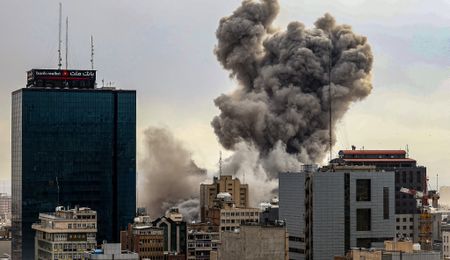
From environmental harm to criminal liability
Botha argues that the law has not kept pace with this shift. As he writes in a recently published paper, there’s a missing link.
Current international law under the Rome Statute of the International Criminal Court focuses on four core crimes: genocide, crimes against humanity, war crimes and the crime of aggression. Environmental destruction, even when severe, does not fall within these categories.
That gap, Botha argues, is why the concept of ecocide has re-emerged.
/file/attachments/orphans/Ecocide-definition_333758_313994.jpg)
According to the legal definition developed by an independent expert panel, ecocide refers to “unlawful or wanton acts committed with the knowledge that there is a substantial likelihood of severe and either widespread or long-term damage to the environment”.
This definition, he says, introduces a critical legal point. Ecocide is framed not only as a crime of outcome, but as a crime of endangerment – meaning liability arises from knowingly creating a situation where serious environmental harm is likely, even if that harm has not yet fully materialised.
The case for a fifth crime
Botha is among a growing group of legal practitioners and advocates calling for ecocide to be formally included in the Rome Statute.
The proposal to include it was initially raised during the drafting of the Statute in the 1990s, but was not adopted. It was also proposed in the Nuremberg trials against Nazi Germany, but the court ran out of time to discuss it.
The idea has since been revived, particularly through the work of the late barrister Polly Higgins and the organisation Stop Ecocide International. According to Botha, momentum behind the proposal is increasing, with support from political leaders, scientists and international organisations. In 2024, the island of Vanuatu – its entire landmass only a few metres above sea level – proposed to amend Article 5 of the Rome Statute to include ecocide.
/file/attachments/orphans/GettyImages-2255903743_554669.jpg "The northern Gaza Strip as seen from a position on the Israeli side of the border on 16 January 2026 in Southern Israel. (Photo: Amir Levy / Getty Images)")
“We want ecocide in the Rome Statute,” Botha said, arguing that existing legal frameworks are not equipped to deal with environmental harm at the scale now being witnessed.
If adopted, ecocide would become the fifth crime under the jurisdiction of the International Criminal Court, allowing for the prosecution of those responsible for major environmental damage. Iran, Iraq, Gaza, Sudan, Afghanistan, Vietnam – the list is long.
As Botha explains, the court’s jurisdiction would then apply to political leaders, executives or military decision-makers who could be held personally accountable for actions taken with knowledge of their environmental consequences.
War as a central example
While ecocide is not limited to conflict, Botha identifies war as one of its clearest and most extreme expressions. “Just about all the wars that have taken place have been culpable in terms of environmental issues,” he said.
As outlined in the previous article in this series, modern warfare produces intense and concentrated environmental damage – from emissions and toxic pollution to the destruction of infrastructure and ecosystems.
Research cited in that article shows that such damage is often layered and long-term, affecting water systems, soils and biodiversity long after the conflict ends.
Insidious ecocide
Botha is also clear that ecocide extends beyond the battlefield. He pointed to forms of environmental degradation that occur gradually through economic activity, what he calls insidious ecocide… undermining sustainability.
Over-fishing is an example, as is the massive destruction of the Amazon rainforest under Brazil’s previous president, Jair Bolsonaro.
/file/dailymaverick/wp-content/uploads/2023/05/GettyImages-1255165325.jpg "German President Frank-Walter Steinmeier greets Indigenous Brazilian leader Raoni Metuktire (left), at Schloss Bellevue presidential palace on 16 May 2023, in Berlin, Germany. Metuktire is the chief of the Kayapo people and an environmentalist who has campaigned for the preservation of the Amazon rainforest and the rights of its Indigenous peoples. (Photo: Carsten Koall / Getty Images)")
/file/dailymaverick/wp-content/uploads/2024/03/LOADGettyImages-1237319148.jpg "A fire burns in the Amazon rainforest near Ourilandia do Norte, Para state, Brazil. (Photo: Jonne Roriz / Bloomberg via Getty Images)")
“Such damage may not be immediately visible, but can have profound long-term consequences, eroding the systems that sustain life.” Often, Botha added, actions were taken without full awareness of their consequences.
“That does not absolve them. Under the proposed legal framework, knowledge of likely harm – rather than intent to destroy – would be sufficient to establish liability.”
Legal momentum – and limits
Though efforts to recognise ecocide as an international crime are gaining traction, progress remains uneven. As Botha notes in his paper, the Rome Statute can be amended only by agreement among its 125 States Parties.
While support is growing, reaching consensus remains a significant challenge. In the meantime, some countries are moving ahead at the national level.
“If it can’t get done at the Rome Statute level … countries are establishing it in their own legislation, he said. “Several states are already incorporating elements of ecocide into domestic legislation, reflecting a broader shift toward recognising environmental harm as a matter of legal accountability.”
A question of survival
For Botha, the significance of ecocide ultimately lies beyond legal frameworks. As he puts it, the issue is not only about protecting the environment as an abstract concept, but about safeguarding the systems on which human life depends.
“We’re taking away the life support systems, and ultimately it’s going to bite us. If you destroy trees, destroy waters, destroy seas and eliminate fish, these are things we depend on. If we destroy them, we’re going to die.
“It’ll be the end of our system, our lifestyles. So it’s not only to protect the environment, it’s to protect all who are part of the environment. We’re dependent upon other systems. If we destroy them, our system, life, will disappear.
“That’s what ecocide deals with.” DM


Comments
Scroll down to load comments...