




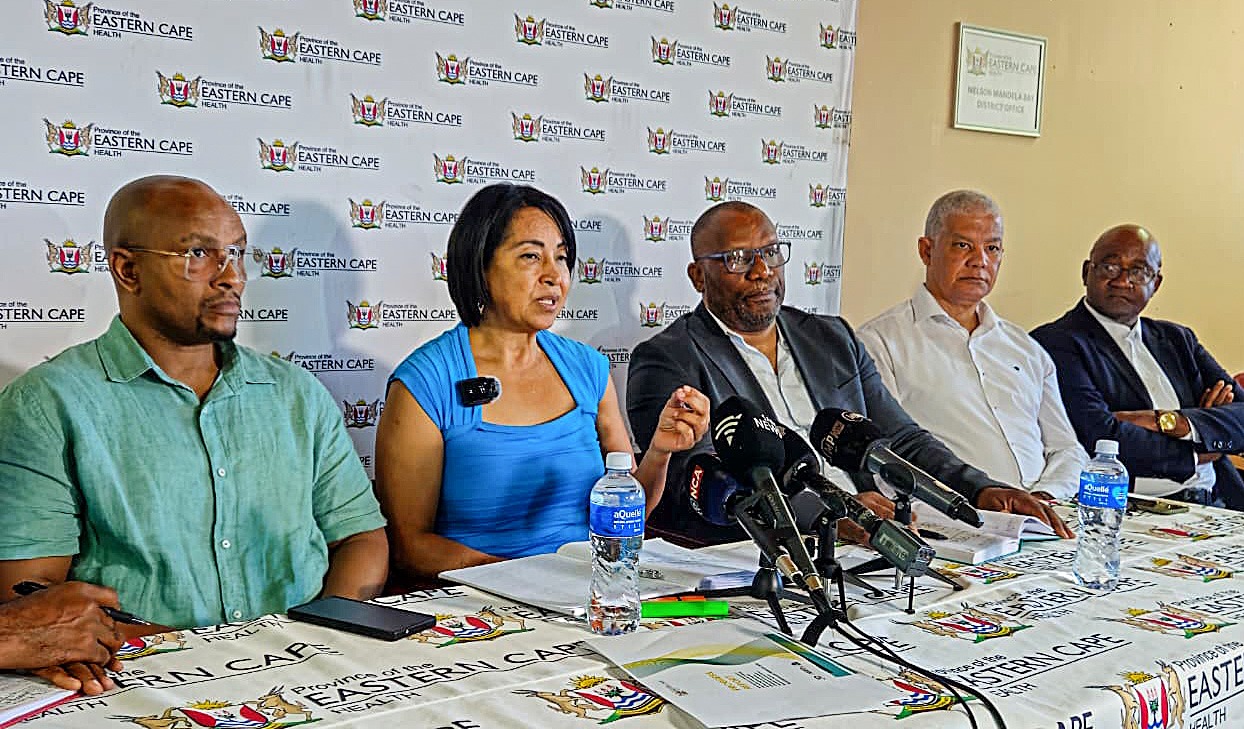
 From left: Nelson Mandela Bay health district acting manager TT Ndamase, Eastern Cape Department of Health head Rolene Wagner, provincial health department deputy director-general Mthandeki Xamlashe, clinical manager for Dora Nginza Hospital Dr Mukoni, Dora Nginza Hospital CEO Dr Nxiweni and district human resources manager Mzuli Njalo address the media in Gqeberha, Eastern Cape. (Photo: Andisa Bonani)
 Conditions at Dora Nginza Hospital’s casualty and maternity wards have prompted the Eastern Cape Department of Health to begin converting the Empilweni TB Hospital into a district facility, in a move aimed at easing pressure on the overburdened hospital.
The plans form part of recommendations contained in Public Protector Kholeka Gcaleka’s May 2025 report.
This was announced by provincial health department head Dr Rolene Wagner at a press briefing in Gqeberha on Monday.
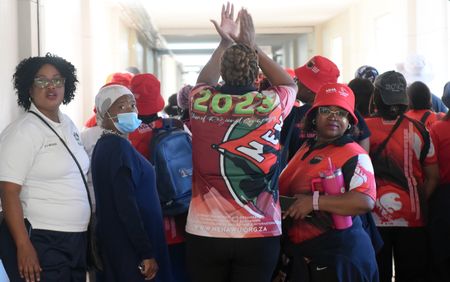
A four-day unprotected staff strike at the Motherwell Community Health Centre (CHC) and Dora Nginza had ended, with staff returning to work on Sunday night shift, Wagner said.
Nehawu provincial secretary Mlu Ncapayi indicated on Friday that among the reasons for the strike was the department’s failure to implement Gcaleka’s recommendations – including the conversion of the Emplilweni hospital.
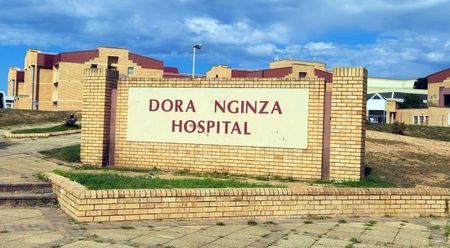
/file/attachments/orphans/Dora_419620.jpeg "Dora Nginza Hospital signage on 10 April 2026. (Photo: Andisa Bonani)")
“It is reported that the strike arose because we were not responding to the recommendations of the Public Protector,” said Wagner on Monday.
“The reality is that there are laws that govern strike action. If there are issues, there is a process to engage with management and discuss issues of mutual interest and not to go straight to a strike action. We’re an essential service and we don’t have the luxury of going on strike due to the significant consequence it has on the communities.”
Speaking on the implementation of the Public Protector report, Wagner said there was a population crisis that overwhelmed the health facilities’ capacity.
“The Public Protector report arose out of a concern around mothers and the increase in demand for services provided at Dora Nginza,” she said.
“The problem in Nelson Mandela Bay is that the population has increased, and the services that have been put in place were not designed for the number of extra people that have migrated to the Bay and the kind of services that the people in this area require.”
Wagner said they understood from Gcaleka’s report and similar issues raised by the Bhisho Legislature oversight committee on health that they had to strengthen the entire system in both the Nelson Mandela Bay and Sarah Baartman districts.
/file/dailymaverick/wp-content/uploads/2025/04/20250317_Bhekisisa-Rolene-Wagner-_Jay-Caboz_019.jpg "Head of the Eastern Cape Health Department Rolene Wagner. (Jay Caboz / Bhekisisa)")
“Here in NMB, for example, we don’t have a district hospital, so they’re correct about what the recommendations say,” she said.
“We’ve started work at Empilweni TB Hospital and we now have an additional 43 beds. Empilweni relieves pressure from Livingstone [hospital] and Dora Nginza so that stable patients will be managed there going forward. We have infrastructure and staffing investments in some hospitals and CHCs (Community Health Centres) to bring on maternity and theatre capacity.
“In the interim, we have been using agency nurses until additional staff are appointed. So we took the Public Protector report seriously.”
Wagner said the Nelson Mandela Bay district no longer required three TB hospitals as demand had decreased and the management of TB patients had changed, meaning they could convert Emplilweni hospital.
Dora Nginza was thrust into the spotlight in 2023 after heavily pregnant women were forced to sleep on the floor due to a shortage of beds, and some had to wait long hours before caesarean sections were performed, risking the lives of both unborn babies and mothers.
These scenarios played out once again last week with staff at Dora Nginza Hospital and Motherwell CHC downing tools until Sunday, over safety concerns and demands that overtime work not be capped at 16 hours, among other issues.
Pregnant women, some awaiting the C-section, were abandoned by staff, leaving them anxious about their safety as they waited to be attended to or to be transferred to other hospitals.
Wagner indicated that in the past two financial years, the health department had a net loss of staff, which affected services.
“There were two main contributing factors: we had insufficient budget to match the requirements of the vacancies – it was about a R900-million deficit. By August last year, we reached break-even point and had stabilised the organisation and were able to commence with appointments outside of the conditional grants to replace staff.
“This year we can report to the Public Protector that we utilised funding that was available in our conditional grants to appoint staff.”
Wagner said that while they managed to fill some CEO positions in some hospitals, they had struggled to attract skilled people in certain facilities. DM