




 South Africa’s economy shows slight growth and improved fiscal metrics, but underlying structural weaknesses remain a real concern. (Photo: iStock)
 /file/dailymaverick/wp-content/uploads/2025/10/label-Op-Ed.jpg)
This is Part 1 of a two-part Daily Maverick op-ed
Progress of economic reforms
A growing chorus of voices is articulating the view that the South African economy is “turning the corner”, emerging from the era of State Capture, Covid-19, and associated years of economic difficulty, and that we are on track to achieve a higher growth trajectory, and address key challenges such as unemployment.
It is argued that significant progress has been made in “structural reforms” aimed at stabilising and improving the performance of the network industries servicing business – in particular electricity and transport logistics. There has also been a modest increase in growth, from 0.6% in 2024 to 1.1% in 2025.
On the macroeconomic front, projected stabilisation of debt, higher than projected revenue, budget surpluses, low inflation and a declining deficit are cited as evidence of improvement in the economy.
Further, our sovereign rating was upgraded, and we have been removed from the Financial Action Task Force grey list.
This has led to the belief in some circles, particularly the Treasury and organised business, that the economy is turning the corner, and that we are well positioned to accelerate growth and economic progress.
This turning-the-corner perspective was strongly advanced at the recent News24 On The Record summit on employment, which set as a target the creation of five million jobs by 2035, and remains the dominant view in the commercial media, organised business and sections of the government.
Concerns with the turning-the-corner narrative
There is a different view in society, which argues that while some of the areas cited, such as the stabilisation of electricity supply, do represent progress, these are nevertheless fragile and far from addressing the main social and structural economic challenges.
At the level of the major macroeconomic indicators, it is argued that:
- The level of growth is way below what is needed to break out of the country’s economic stagnation, it remains below population growth, and even if it increases to 2-3% (which is above all credible projections for the next few years) this will fall far short of the pace of growth needed to meet our economic challenges, requiring at least 5-6% annual GDP growth. Analysts who point this out do not believe that there is a credible strategy to move the economy onto a different growth path, and the National Treasury’s own growth statistics indicate that the status quo policies will, at best, achieve 2% growth over the medium term.
- The composition of growth is reinforcing the speculative, low investment, financialised, employment-poor and low productivity nature of our economic growth path, as well as high levels of inequality. This severely undermines the goals of diversifying our economy away from its current commodity extractive and financialised bias to development of the productive sectors with manufacturing at the centre; or creating the level of employment needed to address our jobs and poverty crisis.
- There are low and declining levels of public and private sector investment, labelled by many as an investment strike. Investment: GDP continues to decline and is around 14%, way below the National Development Plan target of 30%. Government and state-owned enterprise (SOE) investment dropped from 6.3% of GDP in 2010 to 3.9% in 2025, while private sector investment decreased from 11.5% to 9.7% over the same period.
- The decline in public investment is further compounded by policies of fiscal austerity, which are linked to the macro fiscal measures and indicators that are touted as signs of progress (including budget surpluses, reduced deficits etc). In fact these very policies are likely to prevent the realisation of targets such as stabilising our debt:GDP ratio, because they stifle growth. Contractionary monetary policies also suppress investment by raising the cost of capital.
- Policies of structural reform are narrowly targeted to network industries, and, even if successful in stabilising the provision of these services for business, will be unable to move the needle of employment and economic growth significantly. They constitute a strategy of stabilisation in the limited sense of reestablishing services that were decimated by State Capture, but do not constitute a strategy of economic transformation that breaks with our historic growth path. If anything, because they aim to increasingly shift control of these sectors from the state to the private sector, they undermine the ability of the state to harness them for development, and undermine the accessibility and affordability of public services.
- The targets set for growth, employment and other key indicators are way below what is required to address our social and economic crises. This is clearly shown for example through scenarios demonstrating that the five million jobs target over 10 years would actually result in an increase of 2.5 million unemployed, and 15 million without jobs by 2035. In addition, even an ambitious 6% annual growth rate, while resulting in 10.3 million additional jobs in 10 years, would still leave us with a very high unemployment rate of 26.3% (given the current low employment multipliers of growth). This underlines the importance of both increasing the rate of growth and changing the composition of growth, to make it more jobs-rich, in a diversified economy.
- Lack of demand. High levels of poverty, affecting about two-thirds of the population, leads to depressed economic activity in large parts of the country, and low effective demand for locally produced products. Policies of structural reform have little, if any, impact on this reality. In fact, privatisation policies associated with the structural reform programme will increasingly raise the cost of basic services in poor communities. At the same time, monetary policies aimed at achieving a 3% inflation target do not result in low inflation for the poor, particularly in relation to food prices, which are a large part of the basket for poor families, whose inflation rate is consistently higher than the average CPI.
International situation
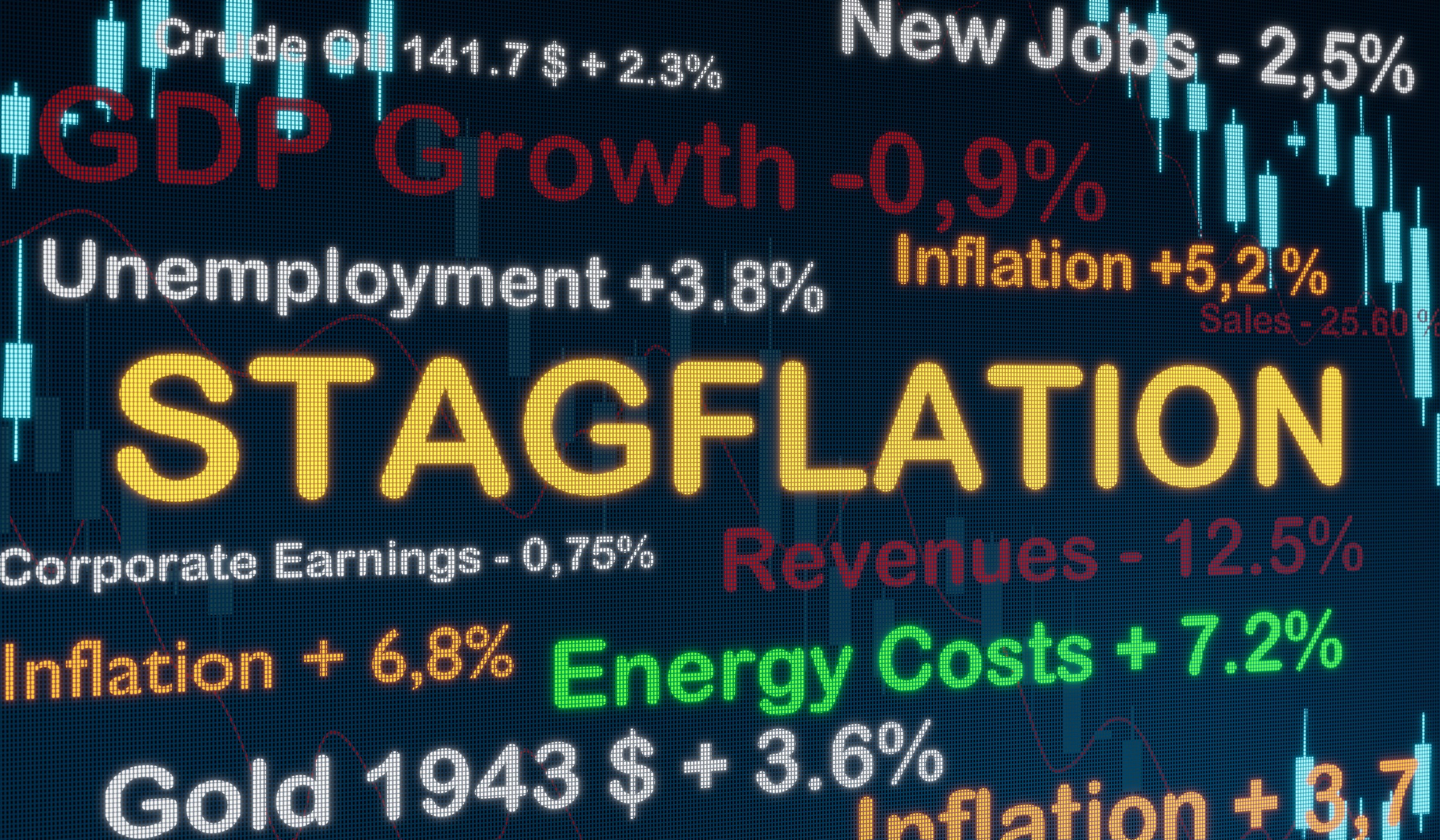
The above challenges are compounded by the emerging international economic crisis caused by the war on Iran, and the disruption of oil and gas production and infrastructure in the Gulf region. Rapidly rising oil prices pose the threat of a double global shock – rising inflation combined with a global recession, or so-called stagflation. As the conflict continues, the likelihood is increasing that the economic shock will be deep and long-lasting, rather than a temporary crisis.
Governments globally are taking various measures to mitigate the crisis, including fuel subsidies, cash transfers etc. However, this raises the question of whether such measures, while providing relief, are able to avert recession and major job losses, without fiscal and monetary policy packages providing a stimulus commensurate with the crisis. We can draw some lessons from governments’ responses to the 2008 financial crisis, the Covid-19 crisis, and other similar global economic shocks.
The South African government has announced that it is looking into measures to mitigate these shocks, but at the time of writing had only stated that it was introducing a temporary reduction in the fuel levy. Meanwhile organised labour has demanded a comprehensive set of measures to cushion workers from this crisis.
The fear is that economic contraction may be worsened by the likely hawkish posture of the Reserve Bank, which has historically raised interest rates to combat imported inflation, such as rising fuel costs. This has only worsened economic downturns.
Similarly, the current fiscal paradigm of the Treasury makes it unlikely that it will support the idea of introducing a major stimulus package. It is therefore of serious concern that our key economic institutions may adopt a posture that will only worsen the impact of the global crisis on our economy. DM
Neil Coleman is coordinator of the Institute for Economic Justice (IEJ) Economic Justice Matters series, and Senior Policy Specialist at the institute.
This two-part article forms part of a debate series curated by the Institute for Economic Justice (IEJ), published by Daily Maverick, to deepen understanding of South Africa’s economic challenges. It accompanies the IEJ’s podcast series Economic Justice Matters. The first podcast of the 2026 season – now available – asks whether the economy has turned the corner. Deputy Minister of Finance Ashor Sarupen joins IEJ Executive Director Gilad Isaacs and SCIS researcher Thoko Madonko in a lively discussion. Watch the full conversation here.
In Part 2, we will look at what needs to be done to turn the corner, and put our society and economy on a new growth and development path.