




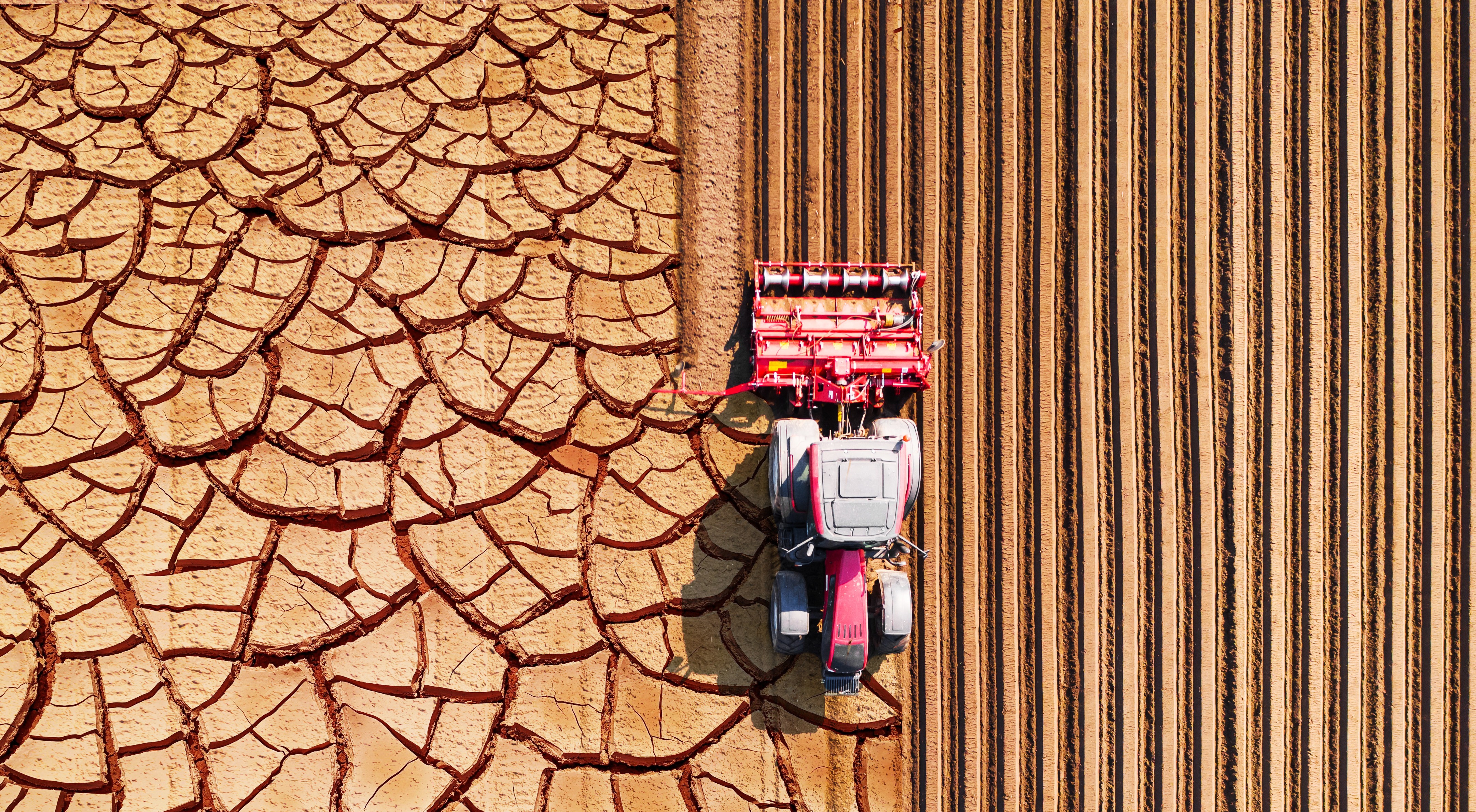
 Illustrative image. (Photos: iStock and Pixabay)
 The prospects of a return of the El Niño weather pattern, which typically brings drought to southern Africa, are rising and there are indications that it could be particularly intense – a state of affairs that will herald hunger and misery for tens of millions of people in this region.
South Africa’s hi-tech and capital-intensive agricultural sector will – as it did in the last El Niño – partly cushion the effects in the country, but they will still be harsh. The production of crops such as the staple maize will decline, and a livestock sector already waylaid by foot-and-mouth disease outbreaks will suffer further blows.
And subsistence farmers throughout the region will once again be left in dire straits at a time when aid flows, notably from the US, have been drying up.
Still, it must be said that, at this point, none of this is set in stone and many of the recent headlines on CNN and in The Washington Post and other outlets warning of a “Super El Niño” have been alarmist.
“In terms of the current outlook, the ECMWF [European Centre for Medium-Range Weather Forecasts] does not formally define a ‘super El Niño’. However, the latest forecasts indicate that a strong El Niño event is likely to develop,” a spokesperson for the centre told Daily Maverick.
But forecasts at this time of the year in particular are fraught with uncertainty.
“Predicting its onset at this time of year is challenging and considerable uncertainty remains regarding its timing, duration and intensity,” José Álvaro Silva, a programme officer at the UN’s World Meteorological Organization, said.
“However, it is also important to note the high consistency and high probability across different forecast models towards sea surface temperatures reaching El Niño levels this boreal summer. The increasing chances of El Niño are supported by the large amount of heat in the subsurface ocean.”
El Niño forms when sea surface temperatures warm beyond a certain threshold in the equatorial latitudes of the Pacific Ocean. The cooling of these waters produces La Niña, which unleashes heavy rainfall in this region and has just faded.
Known as the El Niño-Southern Oscillation (ENSO), this shifting weather dance with global consequences is now in its neutral phase, which is seen as short-lived. Most recent forecasts from global weather and climate centres, including the South African Weather Service, point to El Niño appearing before the southern hemisphere spring, with the chances generally put at more than 60%.
The US National Oceanic and Atmospheric Administration said in its latest ENSO update that there is a “1-in-3 chance that it would be ‘strong’ during October-December 2026”.
Daniel L Swain, a climate scientist with the California Institute for Water Resources, told Daily Maverick: “The majority of predictive models, including all models from the primary global modelling centres, suggest a strikingly high likelihood of a strong or even very strong event by late summer or early autumn in the northern hemisphere, so by late winter or early spring in the southern hemisphere.
“Additionally, observations of the ocean and atmosphere at present are strongly consistent with what they would need to look like if we were indeed on a trajectory toward a significant El Niño event.”
/file/dailymaverick/wp-content/uploads/2025/11/GettyImages-467753834.jpg "Dried maize corn plants grow in a drought-affected field operated by farmer Ryan Mathews in Lichtenburg, North West, on 20 March 2015. (Photo: Waldo Swiegers / Bloomberg via Getty Images)")
The bottom line is that the chances of it arising in the coming months are increasing and there are signs that it could be on steroids, which would make it comparable to the El Niño events of 1982/83, 1997/98, 2015/16 and the most recent and relatively short-lived one that occurred in 2023/24.
If a “super” event does occur, the impact will be huge and the historical spoor from the past suggests what future tracks it might leave on southern Africa’s social and economic landscape.
The past – and the future
The extremely intense 2015/16 El Niño slashed food crop production in the region by up to almost 80% in some areas. The staple maize, which accounts by some estimates for as much as 50% of southern Africa’s caloric intake, was absolutely hammered.
Botswana’s maize crop fell almost 80%, Lesotho’s 67%, Zimbabwe’s 56% and South Africa’s more than 25% to just over seven million tonnes.
During the most recent such event in 2023/24, Zimbabwe’s maize production fell more than 60%, Zambia’s 50% and South Africa’s more than 20%. This, in turn, fanned the flames of food inflation and hunger.
This highlights two key areas that need to be addressed over the long term. The first is the region’s dangerous dependence on white maize, which elsewhere is only grown at a commercial scale in Mexico and the US.
The second is the need for the precision farming methods that have been rapidly adopted in the past decade or so by South Africa’s capital-intensive commercial agriculture sector to be rolled out, where it is feasible, to smaller-scale farmers.
Precision farming, as the name suggests, enables farmers to precisely apply inputs such as fertiliser and seeds using soil analysis and GPS technology. Without such methods, South Africa’s commercial crop yields would be much lower and the impact of El Niño events much worse.
And given advances in technology – most subsistence farmers today have cellphones with computing power that exceeds that of Nasa computers five decades ago – such methods can be spread more widely. The University of Pretoria, for example, has been doing research on this front to enable subsistence farmers to pinpoint the location of weeds with more precision.
More urgently, there will be appeals for increased food aid. It seems unlikely in the wake of the evisceration of USAID that the Trump administration will be generous – it is spending way more on guns than butter these days. This means donors from other wealthy countries will need to step up to the plate.
South Africa also has mounting water woes, though dam levels in most provinces are over 80% at the moment, which is a good place to be ahead of a drought. But the municipal crises involving water literally being wasted down the drain require urgent attention if evaporation rates soar next summer.
On that score, El Niño looks as if it will probably set in ahead of the local government elections – and it could have a political impact as well. DM
Ed Stoddard is a Daily Maverick contributor.
This story first appeared in our weekly DM168 newspaper, available countrywide for R35.
/file/attachments/2990/DM-10042026-001_448919.jpg "P1 DM168 1004")