




 Ashor Sarupen, Solly Msimanga and Geordin Hill-Lewis celebrate during the DA Federal Congress 2026 on Sunday, 12 April in Johannesburg. (Photo: Felix Dlangamandla)
 The DA now has one of the youngest cohorts of political leaders in South Africa. Its 2026 Federal Congress, held on Sunday, marks a changing of the guard, as many of the new leaders are in their thirties (the ANC leadership is much older).
The DA aims to be the largest party in the metros in the upcoming local government elections and ultimately, the largest party in the country in the 2029 national elections. It’s hoping its young team, with some more experienced leaders mixed in, can get it there.
Here are the DA’s new leaders.
Federal leader – Geordin Hill-Lewis
/file/attachments/orphans/WFD_9568_547265.jpg "Geordin Hill-Lewis was elected as the new federal leader of the Democratic Alliance on Sunday, 12 April. (Photo: Felix Dlangamadla)")
Hill-Lewis (39) is the executive mayor of Cape Town. Affable and media-savvy, with a strong social media presence, he is widely seen as one of the DA’s most popular and credible figures.
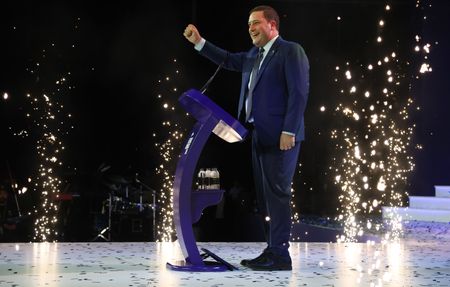
Federal chairperson – Solly Msimanga
Msimanga (45), the party’s Gauteng leader, appears to be being groomed as a possible future leader, with an important role in the DA’s provincial plans after a closely fought contest. He is generally viewed as a populist politician, strongly associated with anti-corruption messaging.
His win against incumbent Ivan Meyer, although close, is seen as strategic, particularly as the party works to strengthen its hold on Gauteng’s metros and grow its provincial support base, with 2029 as the long-term goal.
/file/attachments/orphans/WFD_9581_385898.jpg "Solly Msimanga during the DA’s 2026 Federal Congress on Sunday. (Photo: Felix Dlangamandla)")
Deputy federal chairpersons
Solly Malatsi (40): He was re-elected to the position, with his victory unsurprising, given his steady rise through the party ranks. He is the minister of communications and digital technologies in the Government of National Unity (GNU). He has previously served as the DA’s national spokesperson and held positions within the party’s federal leadership structures.
/file/attachments/orphans/WFD_9195_690044.jpg "Solly Malatsi has risen steadily through the party ranks. (Photo: Felix Dlangamandla)")
Cilliers Brink (38): From 2023 to 2024, he was the mayor of Tshwane, where he led the coalition-run metro government. A few months ago, he was announced as the party’s mayoral candidate ahead of the local elections.
Speaking to journalists on the sidelines of the congress, he confirmed that he intended to stand for mayor in the local elections, “Absolutely. We have to save our city, especially [after] what emerged from the Madlanga Commission.”
/file/dailymaverick/wp-content/uploads/2025/09/ED_569308.jpg "Cilliers Brink intends to stand for mayor of Tshwane in the local government elections. (Photo: Deaan Vivier / Beeld / Gallo Images)")
Siviwe Gwarube (36): She is South Africa’s youngest-ever Cabinet member, serving as basic education minister. She rose through the DA ranks and previously worked as spokesperson for former parliamentary leader Lindiwe Mazibuko. She was also the party’s communications director and health spokesperson.
At the congress, she told Daily Maverick she believes the party needs to move towards being compassionate.
“If we want to be the largest party in 2029, we’ve got to grow the DA in communities who have never considered voting for the DA before.”
/file/attachments/orphans/WFD_9070_718600.jpg "Siviwe Gwarube is South Africa’s youngest-ever Cabinet minister. (Photo: Felix Dlangamandla)")
Chairperson of Federal Council – Ashor Sarupen
Ashor Sarupen (37) takes on the top job, replacing Helen Zille. One of South Africa’s two deputy finance ministers, he is among the younger leaders in the GNU and part of a new generation within the DA.
He is known for focusing on economic reform and previously helped lead the party’s 2021 local government election campaign.
/file/attachments/orphans/WFD_9334_710945.jpg "Ashor Sarupen is part of a new generation within the DA. (Photo: Felix Dlangamandla)")
Deputy chairpersons of the Federal Council
First deputy: JP Smith (54): He is a senior figure in the DA’s leadership structures, having served as a deputy federal chairperson and is a long-time provincial and national organiser. In Cape Town, he is known for his hard-edged, no-nonsense approach to urban crime.
Second deputy: Thomas Walters (50): A former member of Parliament, where he served for several years. He has institutional memory and is a specialist on crime, policing and public safety. (Even in a generational shift, you still need institutional memory.)
Third deputy: Carl Pophaim (28): A former DA Youth leader in the Western Cape, he joined the party when he was just 17. He is the mayoral committee member for human settlements in Cape Town.
Chairperson of federal finance – Mark Burke
Dr Mark Burke (36): Originally from the Free State, he has served as the party’s spokesperson on finance. In that role, he came up with several innovative ideas to ameliorate the cost of fuel. He is feisty, academic and an entrepreneur with two master’s degrees, one from UCT and the other from Cambridge University.
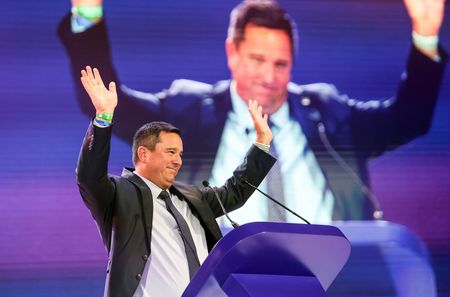
The new leadership now faces the challenge of growing the party beyond its current support base and becoming the largest party in South Africa by 2029.
This will not be easy, as the DA still struggles to win over many black voters and rural communities. Its support is strongest in cities and among minority groups, while many voters are still unsure about its ability to deliver economic change.
In the 2024 elections, it won 6,961,361 votes, or 21.81%, mostly from the Western Cape, Northern Cape and Gauteng.
To win more broadly in 2029, the party will need to keep its current supporters while expanding its reach across the country, which it has already started doing by micro-targeting. DM