



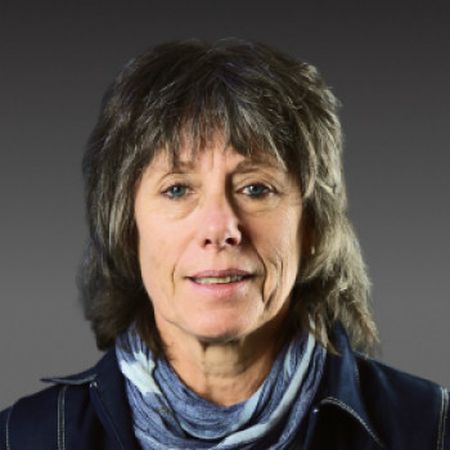
 Illustrative image | Prof Willem Landman. (Photo: Gallo Images/Brenton Geach) | Former IFP MP Mario Oriani-Ambrosini. (Photo: Gallo Images / Foto24 / Leanne Stander) | Craig Schoenegevel. (Photo: Family/Supplied)
 The legal battle for the right to medical assistance by the terminally ill to end suffering and life has been revived through a motion handed to the Gauteng Division of the High Court in Pretoria by DignitySA.
The approach to the court on Thursday by the non-profit lobby group marks the start of a historic legal process aimed at decriminalising and legalising assisted dying.
It is as a result of 15 years of advocacy by DignitySA for the right of South Africans “to choose a dignified end when facing intractable and unbearable suffering”.
DignitySA chair, Professor Willem Landman, and his deputy, Professor Joseph Raimondo, held a media conference at the Desmond and Leah Tutu Legacy Foundation in Cape Town, announcing the legal action on Thursday.
The late archbishop voiced his support for the right of the terminally ill to die with dignity and for the law to be changed after reading of Gqeberha resident Craig Schonegevel’s struggle to die with dignity.
Denied the right
In attendance on Thursday were his parents, Patsy and Neville Schonegevel, who have supported DignitySA’s campaign.
Craig, who took his own life on 1 October 2009, suffered from a vicious variant of neurofibromatosis. The 28-year-old’s application to Dignitas in Switzerland for an “assisted suicide” suffered long delays and was ultimately declined.
On Thursday, Patsy said she and Neville had lived through Craig’s multiple hospitalisations, surgeries and trauma as a toddler and later as a teenager and grown man. She said their son had been denied the right to die peacefully in their arms, as was his wish.
“I keep a photograph of Craig with me when he was very ill in hospital, and when I miss him, I look at it and think he is now at peace,” she said. It had not been easy to support their son’s decision, but his prognosis was bleak, and his health and body tortured him.
“Craig would have wanted this. He hoped that his death and his story would help to change legislation,” she said.
Also in attendance was Dieter Harck, who suffers from Motor Neurone Disease (MND) and who spoke of his desire to see the law change before his own health deteriorated.
Terminology
Over the years, as this debate has taken place in many countries, different terminologies and euphemisms have been used to describe the act of a terminally ill patient taking their own life: “self deliverance”, “euthanasia”, “assisted suicide” and “assisted dying”.
The definition proposed in the DignitySA motion is “Medical Assistance in Dying” (MAiD), a much clearer description of the intention behind new laws which must still be written to enable common law to dovetail with the Constitution.
Parliament has dragged its feet on this “hot potato” issue since 1998, when it first received, from the South African Law [Reform] Commission, a comprehensive report on legal reform. DignitySA highlighted that while numerous other rights had been established in new laws and court rulings, “the last right” had remained unrecognised.
“Towards the end of our lives, we need end-of-life options appropriate for our health and healthcare circumstances, and in accordance with our considered preferences,” said Landman.
For those who were “terminally or irremediably ill or injured, life’s trajectory will reach a point where suffering becomes intractable and unbearable, beyond the reach of current legal options. For them, medical assistance in dying (MAiD) is the last and preferred option,” he said.
Kinder, gentler death
MAiD is medical assistance given by a healthcare practitioner “at the informed and free request of a competent patient with a terminal or irremediable condition caused by illness or injury. Hence, in dire circumstances.”
This process sought to make dying “kinder, gentler and more dignified”. Medical assistance consisted of “supplying the necessary means to cause death (such as a lethal drug) followed by either self-administration (formerly “assisted suicide”), or medical doctor/practitioner-administration (formerly “voluntary euthanasia”)”.
South Africa’s common law currently places “a blanket prohibition on MAiD” in all its forms, placing helpers and others at risk.
“Effectively, our common law regards MAiD as [no different] from killing in cold blood,” said Landman.
Bill of Rights
The adoption of the Constitution incorporating a Bill of Rights in 1996 enshrined constitutional rights and superseded common law if the two should clash, said Landman.
“Our Constitution thus created an intolerable tension in our law, a formidable inconsistency between our common law that regards MAiD as murder and our constitutional right to MAiD”.
This “defect” needed to be rectified in the public interest.
DignitySA’s constitutional argument against the blanket prohibition of MAiD draws from, and is supported by, about 30 supporting and confirmatory affidavits.
Respondents are the Minister of Justice and Constitutional Development, the National Director of Public Prosecutions (NDPP), the Minister of Health, and the Health Professions Council of South Africa (HPCSA).
Proceedings in a motion court required argument based on documentation and DignitySA, as the applicant acting in the public interest rather than an individual applicant, has relied on 11 case studies, 10 of which were accounts of people who had wished to access MAiD or would have requested it if it had been legal.
The testimony of 15 foreign experts from six countries spread over four continents would also set out how MAiD operated in these jurisdictions, most of which permit both self-administration and medical doctor-administration. The US permits only self-administration, while Colombia permits it only by a medical doctor.
“These foreign expert reports go into meticulous detail about eligibility criteria (who qualifies for assisted dying) and safeguards (measures to manage risk of abuse of vulnerable patients),” said Landman.
They also addressed the veracity of objections that alleged a “slippery slope” of uncontrollable expansion of MAiD and presented models for the implementation of MAiD in South Africa.
“Importantly, they argue that palliative care and MAiD are located on a continuum [and] are in fact synergistic,” said Landman.
Two South African medical practitioners submitted reports considering the desirability and feasibility of MAiD in South Africa and concluded that the public-private healthcare system could implement and manage MAiD responsibly.
The relief sought
DignitySA seeks the court to decriminalise MAiD by means of a declaration of invalidity in line with section 172(1) of the Constitution.
The “blanket ban” should be declared unconstitutional, unlawful and invalid, and should DignitySA’s high court challenge be successful, Parliament would be obliged to write legislation appropriate for South African circumstances within 24 months. DM