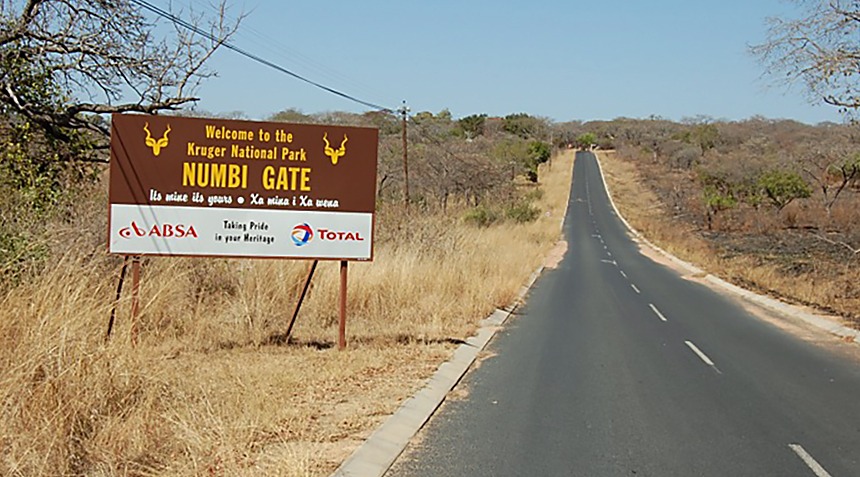
 Three former SANParks employees including two officials tasked with manning the Kruger National Park entrance gates were on Friday, 10 April 2026, found guilty in the Skukuza Regional Court of killing a rhino and conspiring to commit a rhino horn smuggling offence. (Photo: Flickr)
 Three former Kruger National Park employees have been convicted of rhino poaching and conspiracy in a case that has laid bare the role of insiders in wildlife crime.
On Friday, 10 April 2026, the Skukuza Regional Court convicted Nyiko Gumede, Nomsa Ndlovu and Ludwick Mhlaba on charges of killing a rhino and conspiring to commit a smuggling offence.
The trio, who worked within the park at the time of the crime, now face the prospect of lengthy prison sentences, with a minimum of 10 years’ direct imprisonment prescribed for rhino poaching.
Gunshots, a phone — and a breakthrough
The case dates back to 2021, when rangers responded to gunshots in the Skukuza section of the park.
By the time they reached the scene, the suspects had fled – but they left behind crucial evidence: freshly cut rhino horns, a cellphone and a firearm near the carcass of a slain white rhino.
That phone would prove decisive.
Investigators discovered that a call had been made from the device. Police dialled the number and reached Gumede, one of the accused. Officers then posed as individuals willing to return the horns in exchange for cash, setting up an entrapment operation.
The operation led to the arrest of Gumede, Ndlovu and Mhlaba, linking all three accused to the killing.
All three were employed at the park at the time. Gumede and Ndlovu were deployed as guards at Kruger National Park entrance gates to prevent poachers from entering the park. Gumede’s job also entailed patrolling the park to monitor suspected poachers’ vehicles. Mhlaba was a mechanic who did maintenance work on SANParks’ official vehicles.
The entrapment
The trio argued that they had been framed by colleagues. In cross-examination, State prosecutor, advocate Lot Mgiba, questioned how this would have been possible given that the arresting officer, Warrant Officer Frederick Pienaar, did not even know who the accused were prior to planning the entrapment. Pienaar was wired with a device to record the handover of the rhino horn on audio and video. Furthermore, the exact location of the handover, on a road just outside the Kruger gate, had been arranged by Gumede.
/file/attachments/orphans/AdvLotMgiba_279876.jpeg "State prosecutor, Advocate Lot Mngiba. (Photo: Fred Kockott)")
Magistrate MJ Ngobeni ruled that the State had proven its case beyond a reasonable doubt. He said it was impossible for the accused to have been framed. The court heard that immediately following the entrapment, the accused had driven past a police vehicle that was part of the sting. If they were innocent, as claimed, they would have stopped to arrange the handover of the horn to the relevant authorities, said Ngobeni.
Trusted to protect
Their conviction highlights one of the most serious dimensions of poaching: insider involvement.
“They were entrusted with the duty to safeguard and protect wildlife,” said Monica Nyuswa, spokesperson for the National Prosecuting Authority.
The NPA has consistently argued that crimes involving conservation staff represent a profound breach of trust and warrant stern punishment.
Julian Rademeyer, an investigative journalist and author of Killing for Profit: Exposing the Illegal Rhino Horn Trade, said the case reflected a persistent pattern in poaching investigations.
“Again and again, investigations uncover some degree of insider involvement – whether through access, intelligence or direct participation,” he said. “It’s what makes these cases particularly damaging. When the very people tasked with protecting wildlife are implicated, it strikes at the heart of conservation enforcement.
“It’s just a pity the poachers who killed the rhino were never caught,” added Rademeyer. The court heard that the investigations into their identify had come to a dead end as the phone found at the crime scene was untraceable.
Years on the roll
The matter remained before the courts for four years, with repeated changes in legal representation by the accused contributing to delays.
The State pursued the case as part of broader efforts to clamp down on organised poaching networks operating within protected areas.
Sentencing has been postponed to April 24. In terms of South African law, the killing of a rhino carries a prescribed minimum sentence of 10 years’ imprisonment. A conviction for conspiracy to commit a crime carries a potential sentence of up to six years.
Warning to would-be insiders
The case is likely to resonate far beyond Skukuza, sending a warning to those working within conservation structures who may be tempted to collaborate with poaching syndicates.
Insider collusion has long been identified as a critical vulnerability in efforts to protect SA’s rhino population.
Today’s judgment marks a rare but significant conviction in that ongoing battle.
/file/attachments/orphans/rodneyLandela_159142.jpg "Rodney Landela worked on Kruger National Park programmes to reintroduce rhinos to other reserves. He is now in the dock for killing a rhino in the park. He faces up to 10 years in prison if convicted. (Photo: Supplied / KNP)")
/file/attachments/orphans/RodneyLandelaincourt_837233.jpeg "Rodney Landela appears in the dock at the Skukuza Regional Court during his trial. (Photo: Fred Kockott)")
Another similar case is nearing conclusion in the Skukuza Regional Court: the trial of former ranger Rodney Landela – once hailed as the “Crown Prince of the Kruger” – and former state veterinary technician Kenneth Muchocho. The pair stand accused of killing a white rhino in the Kingfisherspruit section of the park in July 2016.
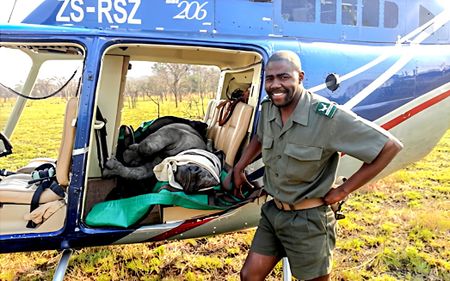
Much like the Gumede conviction, the marathon trial has tested the State’s resolve to confront alleged criminal activity and betrayal within conservation ranks.
The State alleges that Landela exploited his senior position, using his intimate knowledge of the park and ranger deployments to facilitate the poaching. Prosecutor Lot Mgiba presented evidence that the pair shot and dehorned the rhino, and then attempted to hide the horn alongside Landela’s state-issued firearm when they were intercepted by other rangers. The prosecution’s case relies heavily on forensic evidence, including vehicle-tracking data, spent cartridges ballistically linked to Landela’s rifle, and DNA from the slain rhino found on Landela’s boots and jumpsuit.
Landela, however, insists he was framed. He testified that he and Muchocho were scouting for diseased wild dogs at the time of the incident, claiming he had no idea who planted his firearm, a bloodied axe and the freshly chopped rhino horn at a stash site near the carcass to implicate him.
For several SANParks staff, the trial has been an emotional ordeal, with colleagues testifying to a deep sense of betrayal over the allegations against a ranger who many had once hoped would become the chief ranger of the Kruger National Park. DM/Roving Reporters
This Roving Reporters story forms part of the Skukuza Reporting Project, developed with support from the Yazi Centre for Science and Society and the Resilience Fund run by the Global Initiative Against Transnational Organised Crime.