




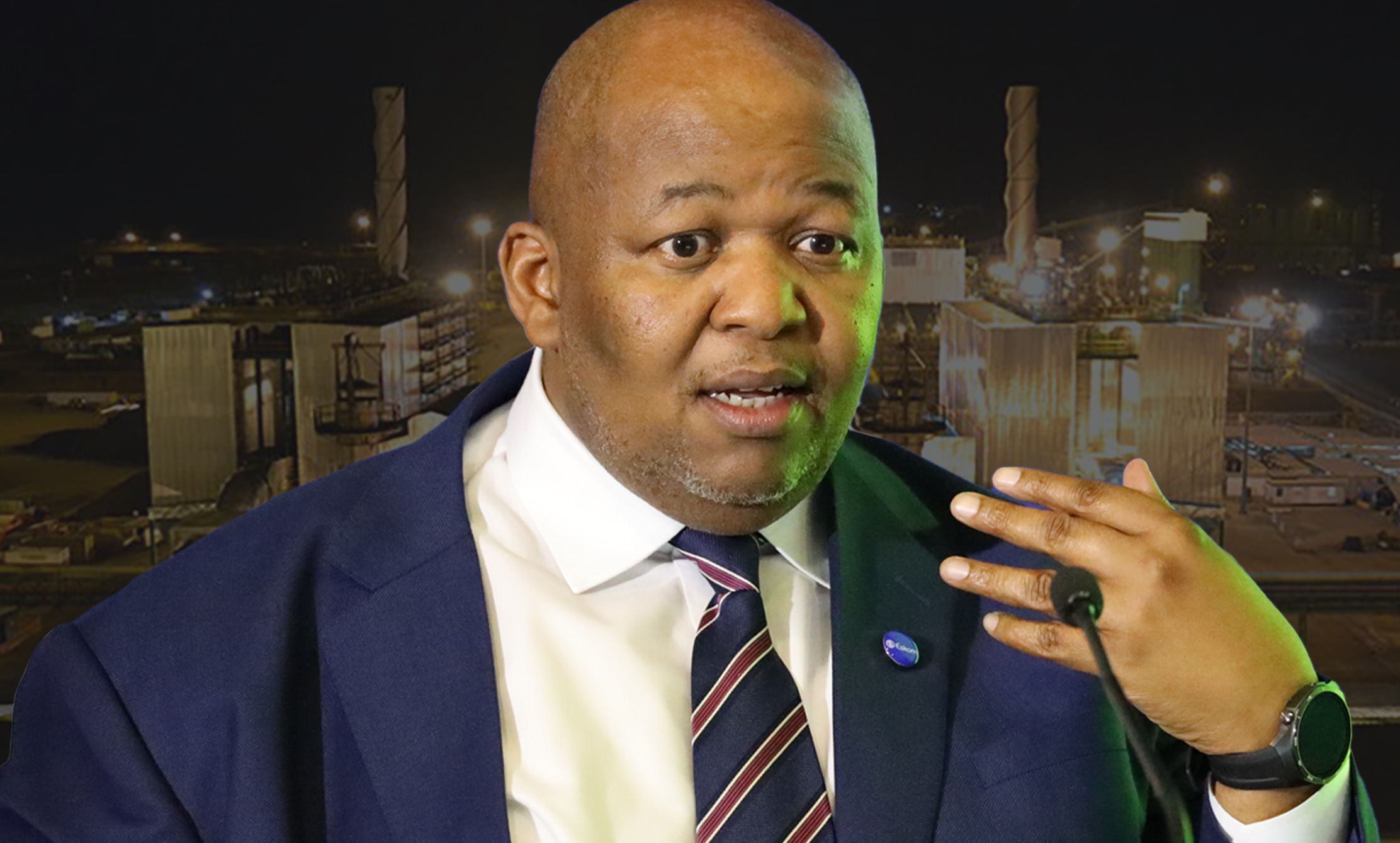
 Illustrative image | Eskom has struck a new power agreement at 62c/kWh with ferrochrome smelters to recover lost revenues, amid significant pressures on the industrial sector. (Photo: X) | Dan Marokane Group Chief Executive of Eskom (Photo: Gallo Images/Lubabalo Lesolle)
 Eskom CEO Dan Marokane must be the most fortunate (assuming of course that Brian Molefe faces the orange overalls of justice at some stage) parastatal chief since Mandela walked to freedom. In the last financial year, the industrial sector contributed just short of 20% of the power utility’s R340.9-billion revenue. But the collapse of the ferrochrome smelting industry meant it lost R8-billion in fair value.
Even with the heavily discounted tariff of 62c/kWh, Eskom now rather counterintuitively stands to recover between R5-billion and R8-billion in industrial revenue from the ferrochrome sector.
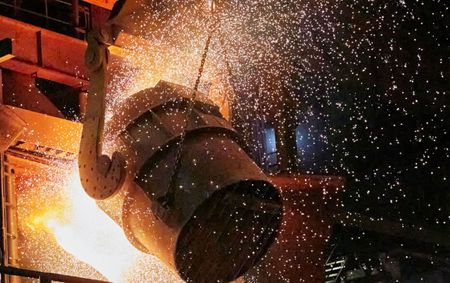
Of course, there is a significant catch… The success of Marokane’s tariff intervention, which he says “improves Eskom’s liquidity without requiring higher tariffs, additional Eskom borrowing, or further government support”, hinges almost entirely on the refiring of up to 25 furnaces (about 1,500MW of load) by the close of the year.
The precise art of the deal
On the other side of the negotiation table sat Samancor Chrome and, for reasons that will be revealed shortly, dealmakers-in-chief the Glencore-Merafe chrome venture.
In remarkable symmetry, Merafe’s ferrochrome production collapsed by 63% in the venture’s 2025 financial year on the back of it shuttering some of its smelting operations. This also drove the financial efficiencies out of kilter to the tune of 14% year-over-year production costs caused by the R633-million standing charges for those idle furnaces.
When the national energy regulator stepped in with an initial 87.74c/kWh tariff lifeline, it brought the Lion Smelter up to 50% capacity operation. But Merafe disclosed that conditions for firing up the Boshoek, Wonderkop and increased Lion capacity would require a 62c/kWh rate.
To make this all make sense, it’s important to note that electricity is 40c of every rand it costs to operate a smelter. It takes bout 450MWh to produce one ton, and in FY2025, Merafe produced 112 kilotonnes – down from 301kt the year before.
/file/attachments/2990/Gemini_Generated_Image_SAalsonetwinnerinferrocrhomedeal_466345.png "South Africa is set to gain in the new power agreement. (Infographic by Lindsey Schutters using Nanobanana Pro)")
Fine, for now
Does this new power agreement (NPA is the official name of the deal) mean the industry is saved and SA can take its rightful place as the bobaas ferrochrome producer of the world? Quite counterintuitively, no.
Glencore’s chrome chief Japie Fullard has long noted this is not a viable model for future operations. He advocates for a model where the real solution sits “outside of Eskom’s balance sheet” and involves independent power producers and international actors.
“The one thing South Africa has is we hold 70% of the world’s chrome ore reserves. That is our leverage,” Fullard told MiningMX in February. “The conversation should be: ‘China, bring your money here. Come and invest in South Africa, and process here – with our power solution.’’’
It’s a great idea. This would convert SA’s ample reserve endowment into leverage for inward investment and independent power, rather than depending on Eskom’s tariff structure indefinitely.
Marokane obviously has an alternative view, as Eskom’s NPA statement quoted him as saying:
“Without the success of Eskom’s turnaround over the past three years, delivered by our 40,000 employees, which restored consistent baseload electricity supply, for which there is currently no alternative source available to energy‑intensive users, we would not have been in a position to support the ferrochrome industry or play a meaningful role in preventing job losses.”
These are not the words of someone looking at alternative balance sheet configurations.
“Eskom will continue to work tirelessly with intergovernmental teams, labour, producers and stakeholders to balance Eskom’s financial sustainability and regulatory responsibilities so that it can play its part in delivering electricity to drive economic growth.”
The best outcome
As far as the current picture of the ferrochrome industry goes, Samancor continues as normal without any major asks on its side. To be fair to it, there is a chrome engineering learnership programme accepting applications right now – and it has been through the thick of the negotiations.
Marokane looks like a hero and grows his folklore as the Dan-with-a-plan in the post-De Ruyter Eskom era.
The industry as a whole can stumble to the end of the decade with all 10 toes intact, but carrying the weight of serious discussions. For the industry to achieve true long-term success, it must use this lifeline to actively transition toward off-grid, renewable, or dedicated coal-conversion Purchase Power Agreements.
The Glencore-Merafe venture, for its part, has provisionally accepted the NPA, but the deal still requires urgent approval from national energy regulator Nersa within the next 30 days to become fully effective and finally halt the Section 189 retrenchments.
Now we wait for the manganese smelter deal to be brought to the table. DM