




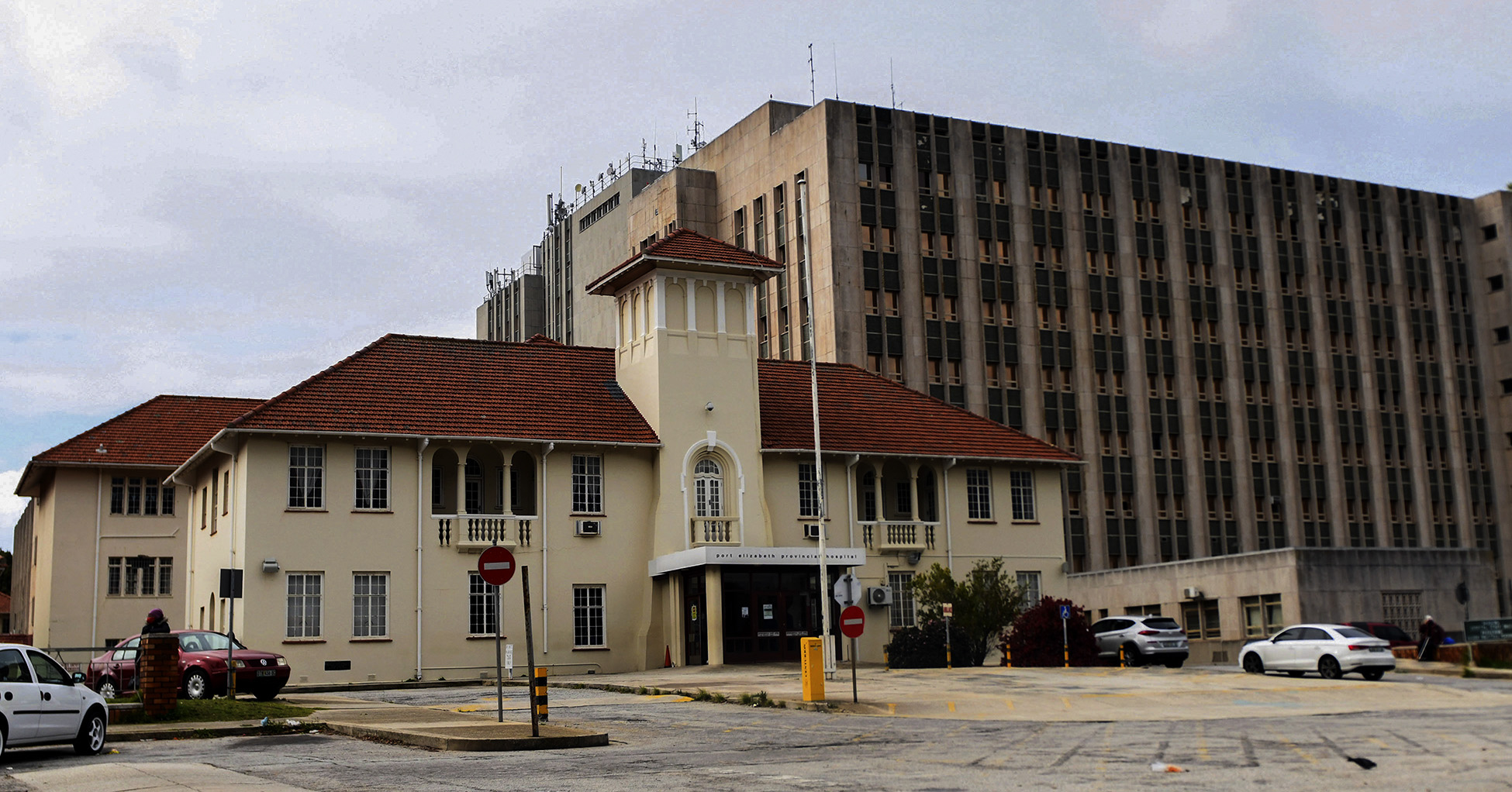
 The cath lab at Port Elizabeth Provincial Hospital, part of the Livingstone Tertiary Hospital, could not be used this month as cardiologists’ contracts had lapsed. (Photo: Theo Jephta)
From 1 to 9 April, not a single cardiologist for adult patients was on duty at Livingstone Hospital in Nelson Mandela Bay — because their contracts had lapsed. On Thursday, 9 April, the crisis appeared still to be unresolved.
While lifesaving equipment, including a multimillion-rand catheterisation laboratory (cath lab), was available, it remained unused as the doctors who could operate it were not under contract.
As the primary tertiary facility for the western area of the Eastern Cape, Livingstone Hospital manages a vast patient network extending to Cradock.
Its specialist services are spread across two hospital sites, collectively known as the Livingstone Hospital Tertiary Complex. Patients are admitted at Livingstone Hospital, but those needing cardiology treatment must be transferred to the Port Elizabeth Provincial Hospital, where the cardiologists are based.
/file/dailymaverick/wp-content/uploads/2024/05/MC-EC-ClinicCommittee_2.jpg "Livingstone Hospital, Eastern Cape. (Photo: Donna van der Watt)")
The Eastern Cape Director of Communications, Siyanda Manana, said the hospital had one permanent specialist on contract, two sessional specialists, two medical officers (equivalent to GPs), and one registrar (a specialist in training).
The hospital has been struggling for years to maintain a fully staffed cardiology department.

For the cath lab to operate, the hospital requires at least one of its contracted specialists. These contracts lapsed on 31 March, and the Eastern Cape Department of Health failed to renew them on time.
Crunch time
The Eastern Cape Department of Health began the new financial year on 1 April with unpaid bills that, according to the Auditor-General, amount to R7-billion. At the start of the previous financial year, R514.2-million was set aside specifically to cover unpaid bills.

Last year, the head of the department, Dr Rolene Wagner, speaking at the South African Human Rights Commission’s hearings into malnutrition in the Eastern Cape, provided a snapshot of the dire state of Nelson Mandela Bay’s public health system.
Yes, no, maybe
On Tuesday, Daily Maverick sent questions on the issue to the Department of Health.
On Wednesday, Manana did not provide a reason for the delayed contract renewals, but insisted they would be signed “today”. By Thursday morning, none had been signed. Messages seen by Daily Maverick indicated that the hospital was still waiting for Wagner to approve them.
Manana confirmed that the contracts had not been signed, but said Wagner had approved them on Wednesday. However, since the doctors had not signed them, no cardiology sessions could take place at the hospital.
One question Manana did not answer is whether the department, given the current cardiology crisis, believed it could provide a safe service at the hospital.
The hospital last had a permanent CEO in 2018, when the highly regarded CEO Thulane Madonsela was forced out by unions. Despite promises by provincial politicians, no replacement has been appointed.
Over the past year, multiple staff crises emerged, with doctors and specialists leaving in droves. The hospital is also facing a severe nursing shortage, operating with fewer than half of its required nurses. DM
Comments
Scroll down to load comments...