




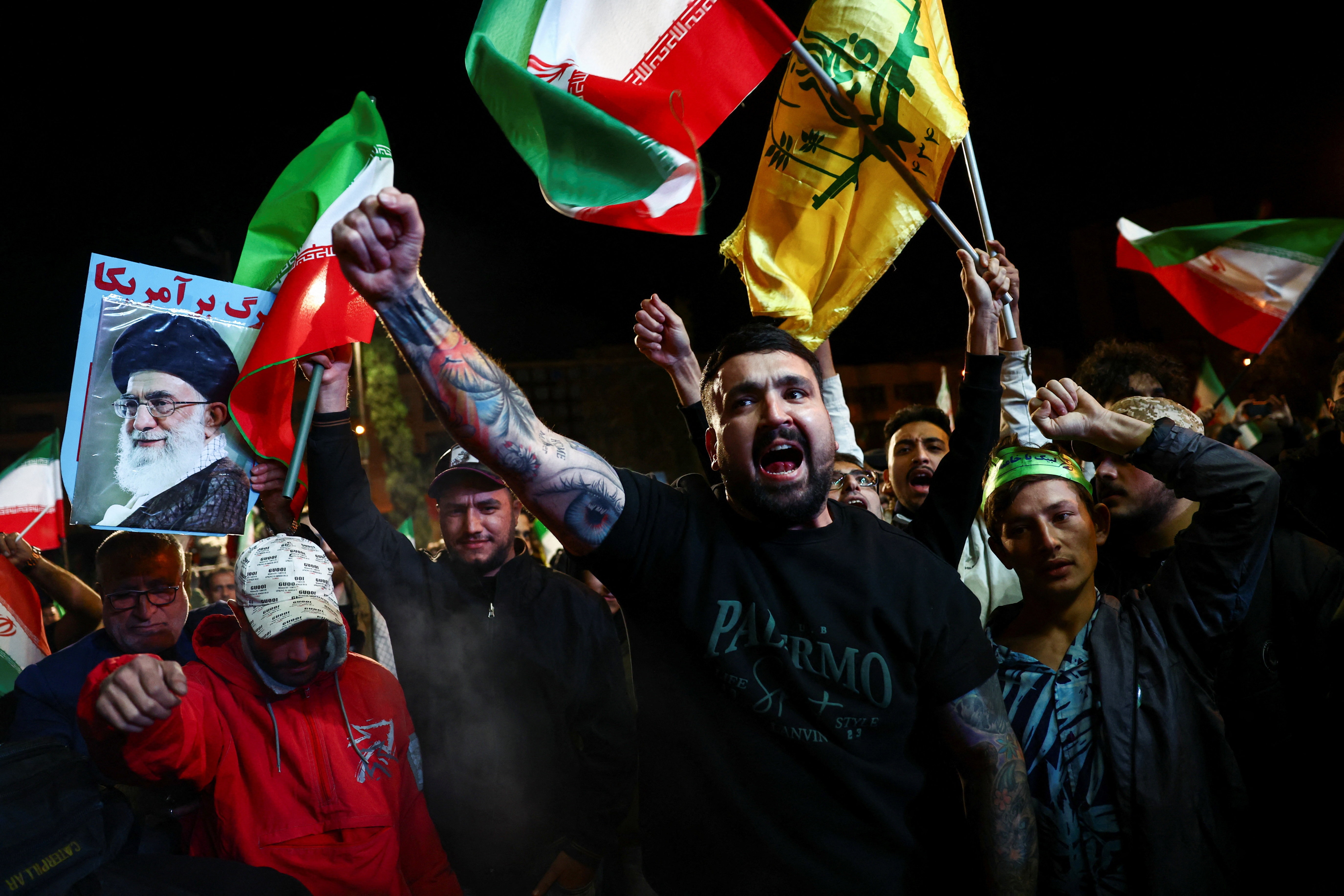
 People chant slogans in Tehran on 8 April 2026 after the announcement of a two-week ceasefire in the Iran war. (Photo: Majid Asgaripour / Wana / West Asia News Agency)
 What does the ceasefire mean for South Africa and for Africa?
It is clearly a good thing for South Africa and Africa, as it is for the rest of the world, mainly because oil and gas prices immediately dropped significantly, particularly on news that the Strait of Hormuz would be reopened. Brent crude oil fell as much as 16% and European natural gas futures dropped by as much as 20%. Conversely, stocks rose.
So all that is good for the global economy, including South Africa and Africa. For Africa specifically, Iran’s agreement to reopen the Strait of Hormuz also meant fertiliser supplies could resume, lowering the price of that essential input for farmers and staving off the danger of food insecurity.
However, analysts warned that the full resumption of supplies of all of these critical commodities could take a while as refineries would have to be fired up again.
On the downside, the end of war around Iran, if confirmed, should encourage shipping companies that detoured around the Cape of Good Hope to return to the shorter Suez route. That would mean a loss of some business for the port of Cape Town, in particular.
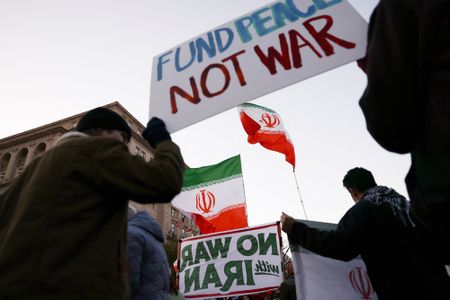
We should also be aware that fundamental underlying issues could still upset the negotiations, which the ceasefire was designed to allow. Iran’s 10-point peace plan, which has been accepted as the basis for negotiations, contains several elements that the US seems likely to resist.
For example: the lifting of all primary and secondary sanctions on Iran; continued Iranian control over the Strait of Hormuz; US military withdrawal from the Middle East; and an end to attacks on Iran and its allies.
Iran is also insisting on the right to continue enriching uranium – for peaceful purposes – whereas President Trump has insisted in the past that all enriched uranium should be surrendered.
On Wednesday, there were already concerns over the viability of the ceasefire as Israel continued to bomb Lebanon while Iran continued to strike neighbouring Gulf states.
SA was granted passage through the Strait of Hormuz before the ceasefire. How was this negotiated and how important is it?
Minister of Mineral and Petroleum Resources Gwede Mantashe told Parliament in March that “the Strait of Hormuz allows cargo that goes to South Africa without interruption”. Analysts were sceptical, wondering how Iran would possibly identify cargo destined for South Africa.
We asked Chrispin Phiri, spokesperson for the Department of International Relations and Cooperation, whether anything had been negotiated with Iran. He forwarded a post on X from the Iranian Foreign Minister Seyed Abbas Araghchi in which he said:
- Strait of Hormuz is not closed. Ships hesitate because insurers fear the war of choice you initiated—not Iran
— Seyed Abbas Araghchi (@araghchi) March 22, 2026
- No insurer—and no Iranian—will be swayed by more threats. Try respect
- Freedom of Navigation cannot exist without Freedom of Trade. Respect both—or expect neither
Phiri said, “As I understand it, this is the official position of the Iranian government.”
The implication of Araghchi’s post seemed to be that South Africa needed no special dispensation to traverse the Strait of Hormuz. The waterway remained open to the country as long as it was not involved in the aggression against Iran, in Araghchi’s view.
However, it is uncertain whether this is the reality and whether Iran was denying access to the Strait of Hormuz on a case-by-case basis. It is also not clear how the last-minute ceasefire, which the US and Iran agreed to late on Tuesday (early Wednesday SA time), might have affected any bilateral deals with individual countries such as South Africa.
Current reports suggest that Iran may exact a levy of $2-million per vessel to traverse the strait. This will not affect SA directly since it is not known to have ships trading inside the Persian Gulf, anyway.
/file/attachments/orphans/RC25GKAZE6WK_457447.jpg "A hovercraft in Mumbai, India, moves past the vessel Jag Vasant, which is transferring LPG on 1 April 2026 after transiting the Strait of Hormuz amid the supply disruptions linked to the US-Israeli conflict with Iran. (Photo: Reuters / Francis Mascarenhas)")
What does the ceasefire mean for the economy?
As mentioned above, the ceasefire deal should have a positive ripple effect throughout the economy, mainly by lowering the price of fuel, which obviously affects almost everything. Another boost for the South African economy is that global stocks soared on the news of the ceasefire – many South African share prices also rose.
At about 11am on Wednesday, the JSE All Shares Index was up more than 5%. The rand also strengthened by more than 2.3% against the dollar, which enhanced the benefit to South Africa of the drop in the global oil price.
All these factors contributed to a significant boost for the SA economy in particular, which would probably be similarly felt across Africa, although the net benefit for major oil exporters such as Nigeria and Angola would be mitigated by the drop in the global oil price.
As long as this ceasefire holds – and of course it is only for a tentative two weeks so far – the positive impact on the South African economy will continue to expand. Having said that, one should be aware that there are fundamental underlying issues which could still upset the talks which the ceasefire was designed to allow, as mentioned above.
What does the ceasefire mean for the fuel price?
The dramatic cut in global oil prices, from about US$111 to US$94 a barrel, should shave about R2.12/litre off the South African fuel price, according to Aluma Capital chief economist Frederick Mitchell, quoted by BusinessTech.
He said that if one added the R0.53 improvement in the rand-dollar exchange rate prompted by the ceasefire, that would total a potential R2.70/litre drop in the fuel prices. But he warned that if Pretoria decided to restore the R3/litre fuel levy cut in April, that would more than wipe out the advantage of the drop in the oil price.
Can you travel to the Middle East again?
Probably not yet. It is likely to take some time for airlines to feel secure enough to resume flights to and from the Middle East, as they assess the extent to which the ceasefire is holding. Iran continues to fire many missiles at the Gulf states after the ceasefire was meant to be in effect.
This might have been because the Iranian leadership was taking time to communicate the news of the ceasefire down to all its decentralised structures. But there is a suspicion that hardline elements of the Iranian Revolutionary Guard Corps, which now effectively controls Iran, have not accepted the ceasefire.
Willie Walsh, director-general of the International Air Transport Association (IATA), told Reuters on Wednesday that the ceasefire was positive for the airline industry as it promised to restore greater oil flows – and jet fuel flows – to the market.
However, he also warned that jet fuel prices and passenger ticket prices would probably remain high for some time. It would take months for jet fuel supplies to return to normal because of disruptions in Middle East refining capacity during the war and the effective blockade of the Strait of Hormuz.
Bloomberg reported him as saying short-term risks of supply shortages still existed. Asia, Africa and Europe were the most vulnerable regions. DM