




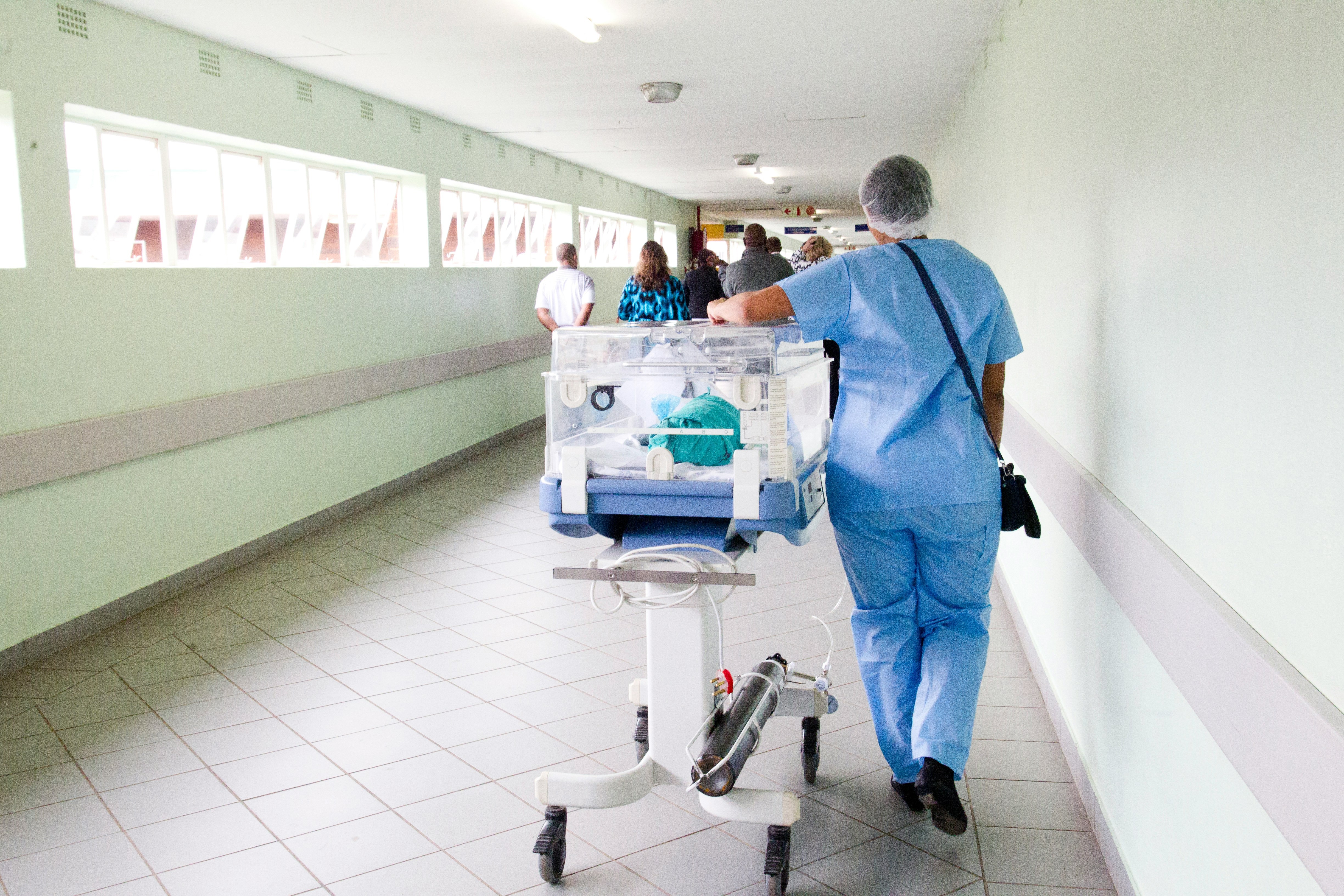
 Some healthcare workers in the public sector are allowed to moonlight in the private sector to earn extra money, subject to conditions. (Photo: Unsplash)
 Professional nurse Nomsa Dlamini* has been picking up extra shifts in Gauteng’s private health sector for years, without the required approval from her public sector managers.
The health department has no record of this work, a breach of the rules meant to regulate “moonlighting” among state employees.
She says the benefits of keeping her extra shifts off-book far outweigh the risks of getting caught. If that ever happens, she’s happy to face the consequences, such as disciplinary action. For her, that’s still preferable compared with the cost of following the rules.
In her 20-year career, Dlamini says she has watched retaliation against her complying colleagues, often in the form of a punishing shift schedule that makes rest unlikely and private sector shifts impossible.
Losing the extra income would be the worst-case scenario, she says.
Dlamini is not the only one bending the rules to avoid backlash.
Moonlighting often not declared
A survey of 1,397 health workers in Gauteng and Mpumalanga found that among public sector employees who were moonlighting, just 20% of professional nurses said they had permission, compared with 85% of doctors and 13% of rehabilitation therapists. The results were published in the South African Medical Journal in 2025.
The fear that managers would refuse permission, or that the act of asking would be met with hostility, were high on nurses’ list of reasons for sidestepping the system.
The policy that allows moonlighting – usually called remunerative work outside of the public service (RWOPS) – started in the 1990s as a retention strategy with few official rules. The government has gradually layered oversight roles and overtime limits into the system to stem abuse, with mixed success.
The latest policy guideline includes compulsory quarterly reporting to the Department of Public Service and Administration and tighter consequence management. Circulars and job adverts suggest the government is in the process of further beefing up its moonlighting monitoring systems but for now there is little detail about their plans on the public record.
A broader overhaul of South Africa’s health system staffing strategy is on its way too. A ministerial advisory committee, set up by Health Minister Aaron Motsoaledi in April 2025, hosted an indaba in November 2025 and has sent out questionnaires to gauge health workers’ expectations and concerns about issues including moonlighting, overtime and community service.
But for some nurses the details of how their work is regulated has become less important than the everyday task of making a living. Dlamini says she and her colleagues understand why the government needs to make these rules, but they feel the health system no longer has the legitimacy to enforce them. They suggest that years of corruption have gutted the system by draining resources, stripping services and eroding trust.
At Tembisa Hospital, for instance, the Special Investigating Unit (SIU) found that medical supply spending dropped by nearly three-quarters in the year after massive graft was uncovered there. This suggests that money was being spent on ghost stock and overpriced consumables, not the supplies nurses need to do their work. Health workers and patients often flagged medicine shortages at the hospital and were reportedly still borrowing food and drugs from other facilities late in 2025.
Dlamini herself says she has had to push her aching body through understaffed shifts with stretched resources for years, and now she’s being asked to help restore what others have taken.
Worst of all, she says, is an ethics course the higher-ups want staff to complete. The request feels alien and disconnected from the realities of a department that has allowed syndicate-linked health workers to siphon millions away from patients. A professional nurse at Tembisa allegedly pocketed nearly R28-million by approving appointments and managing the illicit flow of one of the three syndicates described by the SIU. According to the SIU, a nurse assistant made at least R7.3-million, the equivalent of well more than two decades of legitimate salary.
So, until Dlamini hears that her pay will be withheld if she doesn’t do the ethics course, she simply refuses. “It’s a slap in the face,” she says.
Standoffs and moonlight mistakes
In 2023, City Press reported that more than 8,700 Gauteng health employees meant to file disclosures had failed to report their financial interests. Nearly two-thirds of the province’s health staff were facing suspension.
The health department’s risk office sent an email saying the rule breakers should “make themselves available at the MEC’s boardroom… to explain themselves”. City Press reported that at least one hospital told its staff not to go.
Whether it is such standoffs between governmental leadership and public servants or the state’s inability to effectively regulate moonlighting, it is patients who ultimately pay the price.
Sometimes, patients aren’t being monitored because their nurse is selling cosmetics for a multilevel marketing scheme in the tea room, Dlamini says. Or a nurse has called in sick when they’re really working in the private sector while still being paid by the government.
There’s also a gruelling cycle that begins after a nurse spends their day at a private facility and then reports for night duty at a public hospital. At some point in the night, they might disappear to get some sleep, leaving an even smaller team to make sure dozens of patients are clean, comfortable and medicated by morning.
Jacky James and Isaac Rabotapi, both Gauteng shop stewards for the Democratic Nursing Organisation of South Africa (Denosa), say they know of many night shift tragedies. The pair regularly represent nurses at disciplinary hearings.
In one instance, they say a six-month-old needed a drip. The ward was short staffed and the nurses in attendance were exhausted. Nobody was monitoring the infant once the drip was in. By the time somebody checked up several hours later, the infusion had leaked into the surrounding tissue, causing irreversible damage. Surgeons had to amputate the infant’s hand.
The two shop stewards say this is one of many instances they believe are linked to exhaustion and compromised judgement of nurses who work non-stop.
In one nationally representative study from 2015, just more than half of surveyed nurses said that they were too tired to work while on duty. This study found no statistically significant link between moonlighting and medico-legal claims but South Africa’s action plan for health sector staffing acknowledges that burnout and clinical mistakes probably contribute to the health department’s sky-high malpractice bill.
In a submission to Motsoaledi’s advisory committee, the South African Medical Association (Sama) describes a health system trapped in a destructive loop in which low base salaries and chronic understaffing feed off each other. Clinicians rely on excessive overtime and side-jobs as a financial lifeline. While this keeps services running 24/7, they say extreme burnout and fatigue triggers medical errors and drives overextended staff to quit. When people leave, Sama says, the staffing gap widens, forcing those who remain to work even more hours. This restarts a cycle that ultimately relies on overworking clinicians to prevent the system from collapsing, Sama maintains.
The high cost of low salaries
Dlamini, James and Rabotapi are all professional nurses. Among them, they have about 85 years of experience in South Africa’s public hospitals.
“I love my job,” Dlamini says. “For me, it’s about the patients. But the workplace has become unbearable.”
It is worth pointing out here that, even while much of what we describe in this article is negative about the state of nursing in South Africa, we have in the course of our reporting over the years come across scores of nurses who are deeply committed to serving their patients. We have profiled some of these nurses – see here, here, here and here.
James and Rabotapi say they also used to love nursing, but they both switched to union work in an effort to help patients by improving the system in which they’re treated.
Rabotapi’s view of the system is even worse now that he’s on the road for Denosa because he can see the full extent of poor nursing care. “The lack of empathy is shocking. I’ve seen nurses addressing their patients by conditions instead of their names. That’s a violation of their right to privacy and confidentiality.”
Harsh treatment seems to have become a rite of passage, passed on from older nurses to young recruits, says James. This is especially visible in maternity wards where nurses can be judgemental or cruel towards young mothers, she says.
Obstetric violence, which includes verbal or physical abuse, humiliation or forced medical procedures, is widespread. A 2025 report estimates that 1.79 million people who gave birth in KwaZulu-Natal and Gauteng experienced some form of obstetric violence in the past decade.
In February, a coalition of local human rights organisations, including Embrace and the Centre for Applied Legal Studies, sent Motsoaledi a memorandum demanding change.
By August, they want legal recognition of this abuse and for respectful maternity care to be added to district performance dashboards. They also demand an explicit ban on hiring freezes in sexual and reproductive health services to ensure good staff levels, and an adequately funded budget to upgrade dilapidated infrastructure.
“We wouldn’t have any of these problems if nurses were paid well,” Dlamini says.
It’s a sentiment that was repeated by everyone Spotlight interviewed, and in line with the findings of a number of studies conducted over the past decade.
A 2023 study published in BMJ Open found that low baseline government pay, the desire for financial freedom and the need to pay off debts were the biggest drivers of moonlighting among doctors, rehabilitation therapists and professional nurses.
Today, nurses are caught in a financial squeeze. According to our analysis of DSPA data, below-inflation wage increases cumulatively wiped out about eight percentage points of public sector nurses’ buying power between 2021 and 2023. After three years of losses, their pay has started to recover thanks to lower inflation and wage increases, but ultimately they’re still worse off than they were before the Covid-19 pandemic.
/file/attachments/orphans/Arenursessalarieskeepingupwithinflationcopy_833334.jpg)
Dlamini says many nurses also earn too much to qualify for government housing subsidies or National Student Financial Aid Scheme funding for their children’s education, yet they don’t earn enough to afford a bond or expensive university fees on their own.
Professional nurses typically progress through three tiers of seniority as they gain experience. They also receive annual salary increases based on performance. The upper limit for the most experienced professional nurse (who isn’t a manager) is about R50,000 per month before tax, according to the DPSA’s latest salary data. This amount includes benefits such as pensions so their take-home pay is lower.
Civil servants’ contributions to the state’s medical aid, the Government Employees Medical Scheme (GEMS), are outpacing their earnings. In two years, monthly contributions have jumped 23% in total, and members say they’re paying more for less.
Nurses aren’t legally required to join GEMS, but some government subsidies are tied to the scheme so opting out can also come at a cost.
There are reasons for hope. For the first time in two years, Treasury is adjusting tax rules so that inflation doesn’t eat into raises, helping people to keep more of their take-home pay.
It’s hard to get a representative picture of what nurses are paid in the private sector. Leading public health researcher Laetitia Rispel, who chaired the process that led to government’s 2030 staffing strategy, explained that private sector partners are not obliged to share this information. They wouldn’t disclose what they paid nurses during the drafting of the staffing plan and withheld this information as confidential during the Competition Commission’s Health Market Inquiry.
According to the government’s staffing plan, reimbursement data shows that junior nurses tend to have higher salaries in the private sector, while private sector senior nurses may earn less than their counterparts in the public sector.
The coming retirement wave
A retirement crisis now looms over South Africa’s nursing profession, which remains the heart of the public healthcare system.
The latest data from the South African Nursing Council shows that nearly half (48%) of the country’s nurses and midwives are aged 50 or older, with about a fifth already in the 60-69 age bracket.
This exodus will be a huge loss of the nursing expertise and institutional knowledge essential for high-quality care. Their retirement could also exacerbate the existing nurse shortages, which already force nurses to the brink, and often out of public service.
This is more pronounced in rural areas, where exhausted nurses have described stress-related headaches, sleep disturbances and chest pains to researchers. One nurse at a psychiatric hospital in Limpopo told researchers she was responsible for 40 patients on a single night shift. Another collapsed in the ward while she was pregnant. “It’s a prison sentence,” a third nurse told the researchers.
The researchers at the University of Venda argued that low wages could explain why some nurses steal and resell hospital supplies, and why they don’t consider it outright theft.
South Africa is also battling a critical shortage of nurse educators, an unintended consequence of the Occupational Specific Dispensation, which favoured clinical practice over teaching, and thereby created a pay gap that pushed faculty to transition into better-paid clinical roles within government hospitals.
The health department’s staffing strategy until 2030 admits that South Africa needs to view nursing as an investment rather than an expense. It describes the many benefits of investing in nursing care which include economic growth and improved health services.
The document, drawn up in 2020, included measurable goals to address workforce issues by 2025, including a plan to meet a shortage of nurse educators and to train and employ up to 34,000 professional nurses and midwives.
The government hasn’t yet tracked progress against these targets, says spokesperson Foster Mohale, but a review by the Department of Planning, Monitoring and Evaluation is in the pipeline to guide the strategy’s remaining period.
In the meantime, the government is building a Human Resources for Health information system and registry and rolling out systems to track workforce indicators, he says. Coordination structures are also being strengthened, and occupational health and safety committees are coming to facilities around the country.
Money isn’t everything
In her 2024 presentation to a panel of experts tasked with getting buy-in from the broader health sector, called the Health Workforce Consultative Advisory Forum, public health researcher Rispel warned that the 2030 human resource strategy could not be rolled out with an austerity mindset.
Research published in the journal PLOS One in 2025 backs this up. It suggests that professional nurses would give up moonlighting in exchange for a minimum 20% pay increase. That’s much lower than doctors (46%) and rehabilitation specialists (43%).
Modelling suggests, however, that if the government banned moonlighting, the state would need to bump up salaries by 50% to counteract an exodus among all three cadres.
The study found that a well-resourced environment is worth more than money to many nurses. Nurses would trade a large portion of their paycheques if it means finally having the resources to provide quality care.
Bitter laughter
Dlamini says she became a nurse to continue her mother’s legacy. “I saw how passionate she was. People would come up to her in the streets and say, ‘sister, do you remember me, you helped me give birth’. She was so loved.”
She knows that she’s operating in the shadows of the system her mother served and recognises the danger of her own exhaustion. “We really should all be declaring,” she says.
But the feeling fades when she thinks of all the nurses who remain jobless on the one hand, and those who joined syndicates on the other.
It hurts to think about those moonlighting to pay for their children’s education or basic needs while others have opted to “order their skinny jeans through Tembisa Hospital”, she says, referring to rigged tender contracts in which the hospital is mired.
The two shop stewards laughed when Spotlight relayed Dlamini’s disgust with the hypocrisy of the system. That particularly South African, absurd kind of laughter that sits on the edge of anger and resignation.
“She’s right,” says Rabotapi. “How many more nurses could we have hired with that money?” DM
*Dlamini is not her real name. Spotlight has agreed to withhold her real name since we believe there is a risk that she will be persecuted for speaking to the media.
This article was first published by Spotlight – health journalism in the public interest. Sign up to the Spotlight newsletter.
/file/dailymaverick/wp-content/uploads/2024/08/image1-1.jpg)