



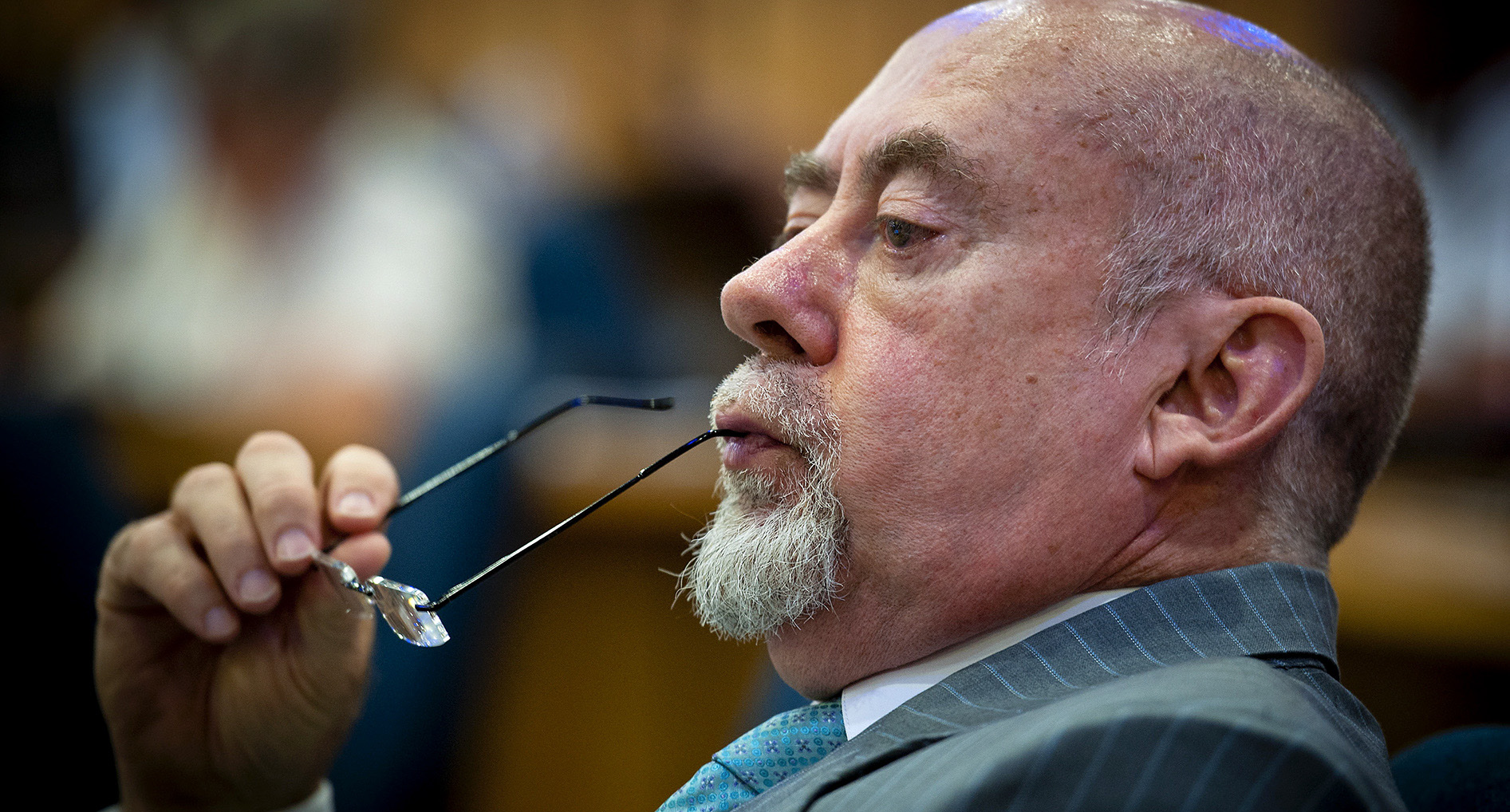
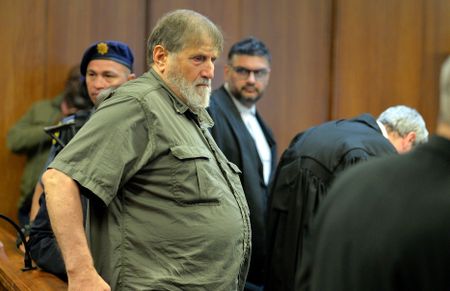
 Dr Wouter Basson, 'Dr Death' of the apartheid state, who now has a thriving medical practice in the Western Cape. (Photo by Gallo Images / Foto24 / Lisa Hnatowicz)
 Should the 75-year-old Dr Wouter Basson be found guilty in his Health Professions Council of South Africa (HPCSA) disciplinary hearing, he will be struck from the medical register and will not be able to attend to his thriving private practice in Cape Town.
Basson is facing four charges related to the production of substances including Mandrax, MDMA (Ecstasy) and tear gas on a major scale, the weaponisation of CR gas (an incapacitating agent) placed inside thousands of 120mm mortars used in Angola, having manufactured substances to tranquillise and kidnap captured prisoners of war (POWs) in Namibia (then South West Africa) as well as the distribution of cyanide capsules to members of special units for “suicidal use”.
North Gauteng High Court Judge Irene de Vos last week dismissed Basson’s application for a permanent stay of proceedings by the HPCSA. She noted that the charges were serious and “tip the scales against granting a permanent stay”.
Dr Teflon
The man who has escaped accountability for three decades since the Truth and Reconciliation Commission (TRC) and who was acquitted on 67 charges of murder involving 229 people, conspiracy to murder, drug law transgressions and fraud, will have to explain his role, as a doctor, in concocting and distributing these drugs, toxins and deadly substances that resulted in mass deaths.
The court’s ruling comes as the Khampepe Commission into delayed TRC prosecutions continues to hear evidence of political interference and a “secret” deal between apartheid-era generals and ANC top leadership.
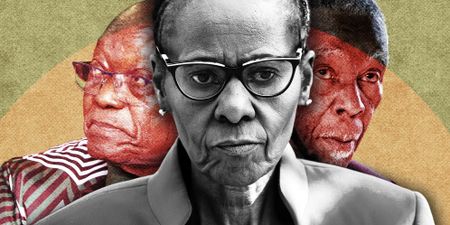
Basson, a Brigadier in the South African Defence Force (SADF), had testified at the TRC but refused to apply for amnesty. He was acquitted in 2002 by Judge Willie Hartzenberg in the last big apartheid-era trial.
Basson, head of Project Coast, as the programme was known, has managed to slip the coils of justice in this matter for more than a quarter of a century at a cost of about R20-million.
A career military doctor and surgeon, he was accused of colluding in the murder of captured Swapo POWs who were tranquillised or administered a lethal injection before their bodies were thrown out of a private plane into the Atlantic Ocean.
Journalist Michael Schmidt, in “Death Flight – Apartheid’s Secret Doctrine of Disappearance”, documents the ghoulish work of Delta 40, the unit tasked with killing the apartheid regime’s enemies in Namibia.
The South African Medical Association (Sama) maintains that Basson should be removed from the medical register.
“Accountability in medicine is not subject to expiry. Medical ethics apply in all contexts, including military service, and Dr Basson’s actions were inconsistent with the duties of a medical professional,” said the association’s chairperson, Dr Mzulungile Nodikida.
Out and about
Basson enjoys a flourishing practice and was consulted by former Vlakplaas commander Eugene de Kock when he was released on parole in 2015. In 2013, the private Newlands club, Kelvin Grove, advertised Basson as a “motivational speaker”.
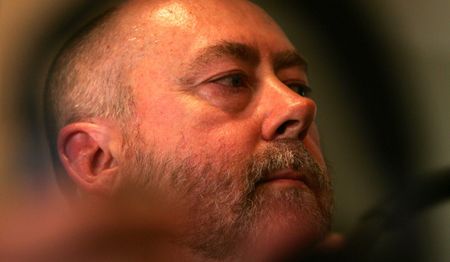
Basson has been quick to admonish and correct anyone who has forgotten that Hartzenberg found that the prosecution had failed to prove “beyond reasonable doubt” that he was guilty, and that he had merely been “following orders” as a soldier. There was also no proof, said Hartzenberg, that Basson had killed anyone.
Project Coast
Project Coast was disbanded in 1995 and its diabolical activities were investigated by the Truth and Reconciliation Commission (TRC). It was Priority Crimes Litigation Unit Head, advocate Anton Ackermann, who led the case against Basson.
Basson stood trial in the Gauteng Division of the High Court in Pretoria from 1999 to 2002.
Guardian correspondent Chris McGreal, writing that year, noted Ackermann had grown so frustrated with Hartzenberg that he accused him of blatant bias. Four months into the trial, he applied for Hartzenberg to recuse himself, but the judge refused to step down.
“Not long afterwards, the judge argued that because no one in the old South African army suspected Basson of fraud, he believed there was no case to answer,” wrote McGreal.
By November, Ackermann informed Hartzenberg that there was “no real point in continuing to present the prosecution’s case as he believed the judge had made up his mind that Basson was innocent at the beginning of the trial and that the prosecution now knew ‘who in this court is revered as the Virgin Mary’”.
In 2014, the HPCSA found Basson guilty of misconduct in that he had contravened international protocols and conventions, and that he could not rely on military orders to escape his duties as a doctor. Basson had argued he had “acted as a soldier”.
But Basson fought the finding, and in 2019 the Gauteng Division of the High Court found in his favour for the recusal of two possibly biased committee members who had been members of medical associations that had advocated for his removal from the medical register.
The HPCSA unsuccessfully applied for leave to appeal at the trial court, the Supreme Court of Appeal and the Constitutional Court in February 2020.
The disappeared
Authors Chandré Gould and Peter Folb in “Project Coast: Apartheid’s Chemical and Biological Warfare Programme” point to evidence introduced in both Basson’s criminal trial and the TRC that indicated Basson had had ultimate control of the military project.
Gould and Folb investigated the project for the TRC and wrote that some of Basson’s work involved “bizarre and unethical experiments including the testing of Mandrax on soldiers”.
The authors write that Basson, interviewed by filmmaker Bob Coen for the 2009 documentary Anthrax War, had responded to a question by Coen about rumours that Project Coast worked on developing an “ethnic weapon”, the “black bomb’’, Basson had responded: “That was great, ja, that was the most fun I’ve had in my life.”
They uncovered that under Basson, scientists had also tried to develop an anti-fertility vaccine. Gould noted that during TRC hearings, these scientists testified that they had believed this vaccine had been intended for black women and to be administered without their knowledge or consent.
“Basson was also involved in the Roodeplaat Research Laboratories, known to have conducted biological warfare experiments on animals, including dogs and horses.
“In one case, baboons were slowly poisoned to death over the course of seven days.” They note that details such as these cast “severe doubt” on Basson’s testimony to the HPCSA that he was acting “for the benefit of mankind and to limit loss of life”, Gould and Folb found.
Basson’s activities drew international attention. William Finnegan, writing on the trial for The New Yorker, noted that Basson had relied on “a global network of spies, ex-soldiers, sanctions busters, smugglers and biowarriors to obtain the chemicals, toxins, viral cultures, specialized equipment and expertise necessary to develop his program”.
Basson was raised in Cape Town by his police colonel father and his opera-loving mother, who worked as a secretary, and had been called up to military service as a medical student.
He became a major at the age of 30, and in 1981 founded and commanded the Seventh Medical Battalion, “a pioneering unit that gave medical and military support to special forces fighting behind enemy lines in the clandestine wars that South Africa waged in Angola, Mozambique and Namibia”.
He was awarded the Order of the Southern Cross for his service to the apartheid state. DM