



 ATB- Transactions
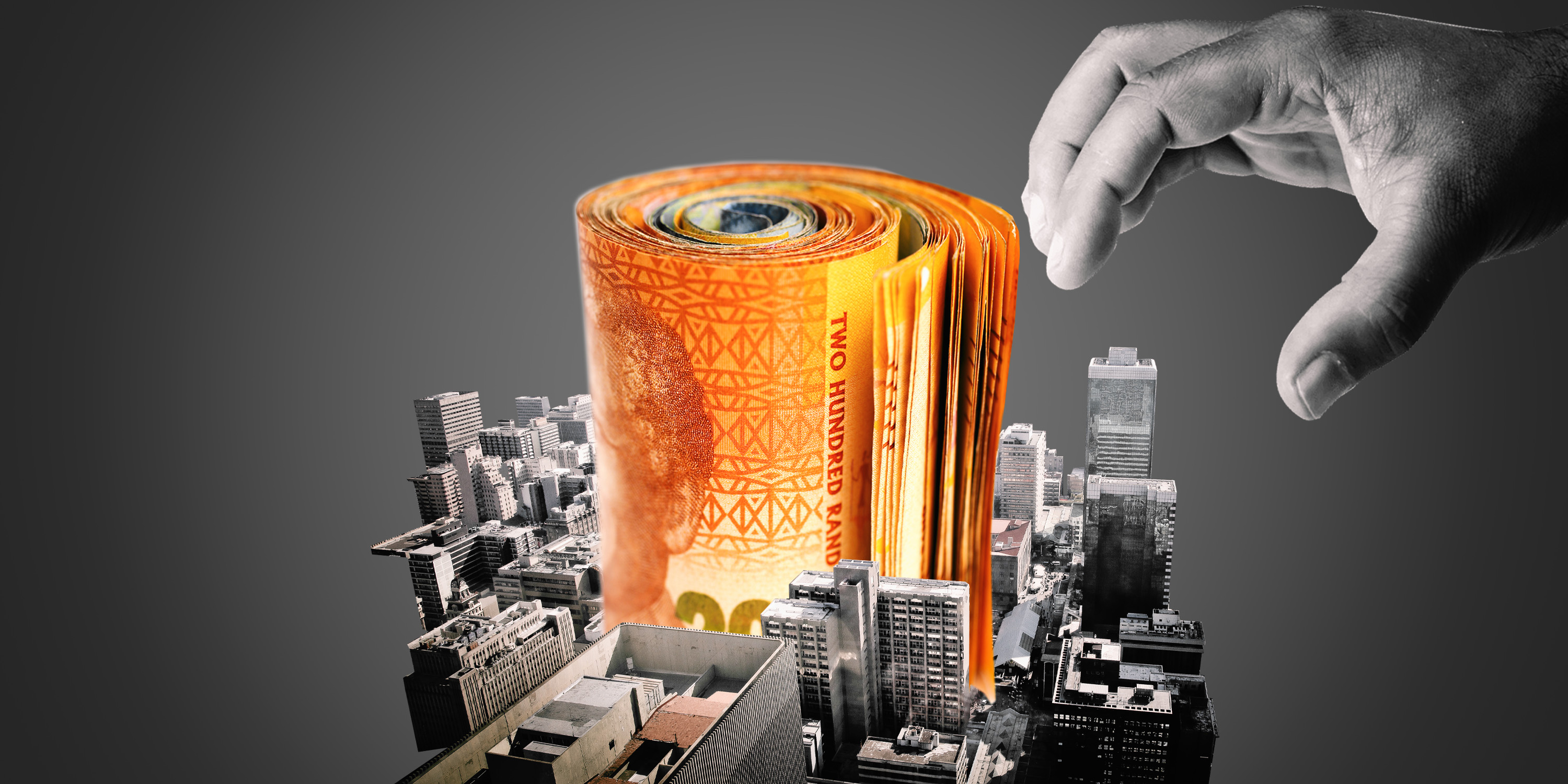
I’m sure, when you look at your household finances in these troubled times, with fuel prices going up, food prices still rising and those children of yours presenting you with more demands for money (they seemed like such a good idea at the time…), you wonder how we got here?
Why is life so expensive? Why do we never have any money? Why do some people seem to fly along unaffected? And how do those who are outside the formal economy even survive?
Last week, the Competition Commission explained how you are feeling rather nicely. But two facts from their Cost of Living Report stood out for me.
The first is that the price of electricity has jumped by 85% since January 2020.
And the price you pay for water went up by 68% during that period.
To compare, overall inflation went up by 30% in those six years, which reveals just how expensive water and power are for you now.
So it’s no surprise that you will keep seeing headlines about how smelters simply cannot run. The latest in this long-running saga was this morning’s Business Live report that Eskom is now asking the energy regulator Nersa (the regulator that always loses) for permission to give Transalloys a lower tariff.
Can you imagine any other situation in which someone who is selling something asks for permission to charge its client less? (Don’t forget, it’s the same company that once asked you to use less of its product).
The reason is obvious: Transalloys is our last manganese smelter. And despite the fact that we have loads of the stuff, and that there is strong demand for manganese, our power prices are simply too high for them to smelt it here.
But all of the trouble we’ve had with Eskom, and the trouble we’re now having in so many places with water, has a much bigger impact on us in another way.
The Reserve Bank is trying to keep inflation at 3% (with a tolerance band of 1%). As you probably know by now, I’m a big fan of a lower inflation target. The lower we can keep inflation the more real money we will all have in our pockets.
And, until Donald Trump had an ego attack they were doing quite well.
But the Bank is trying to do that when administered prices (prices that are set by the government or regulators or monopolies that are not competitive) are so high it makes it almost impossible.
And if the Reserve Bank does have to raise interest rates again, well, we know there will be a real cost to you and me, and of course to our economy, as a result.
It really does say something about our economy, our society and your daily life that the real problem in terms of pricing and inflation is the government.
And if we miss the inflation target, you can’t blame evil profit-taking by our firms.
It is really our government.
And, to an extent, American voters. And don’t forget Benjamin Netanyahu, a man who surely now has to be seen as an extremist and a war criminal.
All of this really puts something else into perspective.
For a long time we have worried about why our economy isn’t growing, why firms aren’t hiring and why people are not growing richer.
You will have seen endless screeds on this subject, including probably more than 100 by those three slightly odd people, Me, Myself and I.
But I think we often underestimate the sheer cost of state failure. It’s one of the things that adds such a cost to our economy. It must act as one of the biggest anchors that is preventing our economy from moving.
There is something else to this.
It also shows you the really long hand of corruption.
One of the reasons power prices are so high now is because so much money was wasted by the government. There was no focus on efficiency, it was all about extraction.
And while I don’t have the maths to even try to work this out, there might be a way for some clever person to calculate how much money the corruption and waste at Eskom during that era might be costing each of us now in much higher bills.
You might even be able to extrapolate from there and work out the total cost of State Capture in terms of its drag effect on the economy.
Don’t think for a second that you are not still going to be paying more in the future because of all of this. A brief read of the Auditor-General’s last report on the City of Johannesburg will remind you just how much money is being wasted now.
And one of the biggest reasons there are so many water problems in that city is simply because of waste and mismanagement and probably corruption.
So, when you look at your household finances and wonder, with yet another weary sigh, where all the money goes... it goes to all sorts of places.
Just not where it’s meant to go. DM
Comments
Scroll down to load comments...