




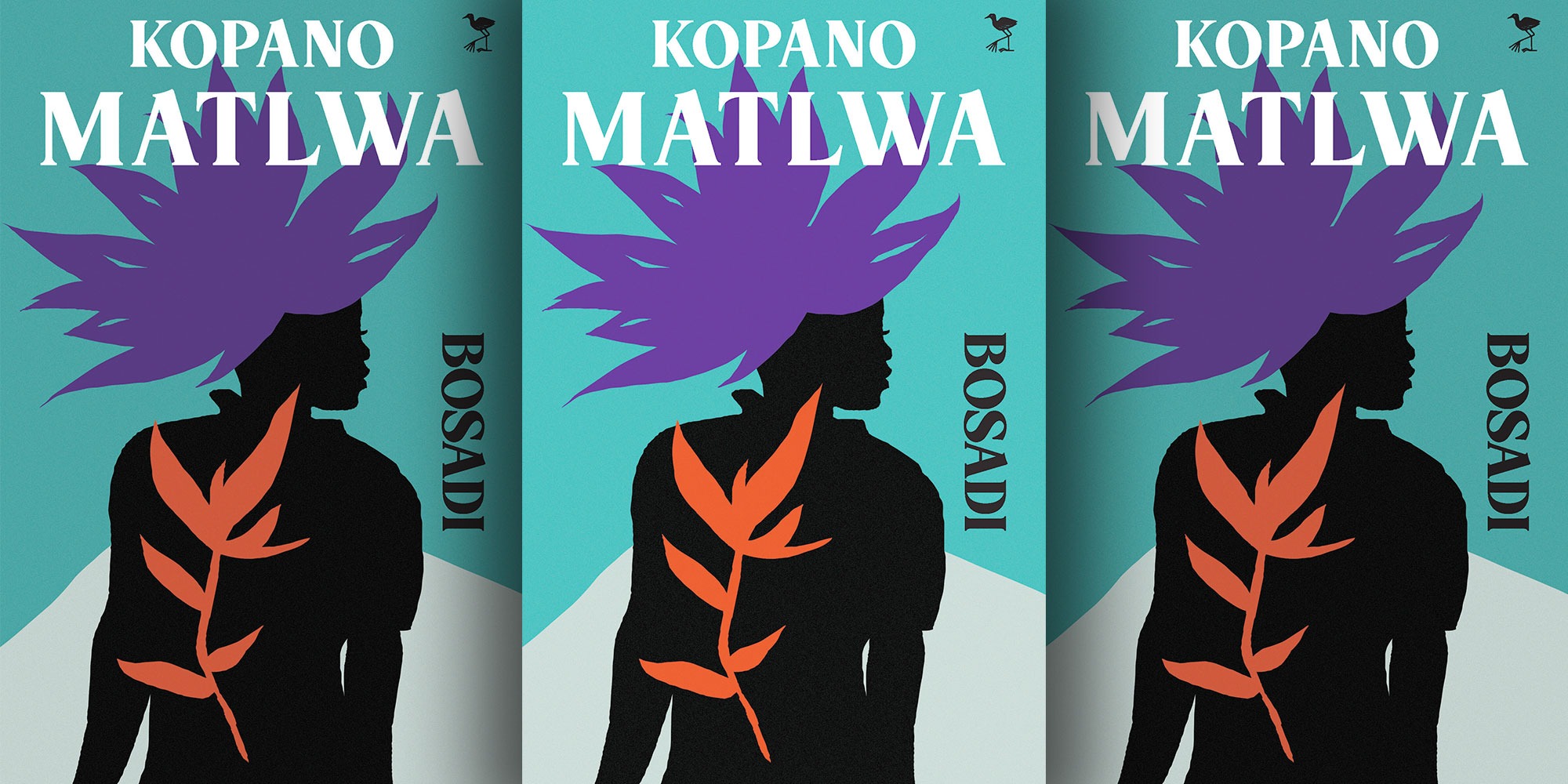
 Bosadi by Dr Kopano Matlwa Mabaso is published by Jacana Media. (Image: Jacana Media)
 One of the things that grab your attention with Bosadi – besides the murderous first line in the book – is the cover. The potent splash of purple instantly brings memories of last year’s G20 Women’s National Shutdown.
The choice of colour on the sleeve however, didn’t have to be a coincidence as abuse is a daily reality for most women in South Africa and other parts of the world.
“That was just coincidental, or maybe not – maybe it’s synchronicity,” Dr Kopano Matlwa Mabaso said during our interview.
Matlwa Mabaso’s three novels, Coconut, Spilt Milk and Period Pain, were social commentaries on post-apartheid SA. Bosadi is no different, as it takes readers through the lived experiences of an abused wife at the hands of her husband.
It’s as fictional as it is reality. It’s the silent cries we don’t hear behind luxury lifestyle estate walls, where the novel is set.
If the G20 Women’s National Shutdown, #MeToo campaign and 16 Days of Activism gave us public protests, this book is an account of bleeding private thoughts and emotions driven by first person narration.
Bosadi is a devastating exploration of marriage, motherhood, faith and family, taking inspiration in part from the events of the Covid-19 pandemic.
“I write about the issues in our society I care about, that trouble my heart and mind. Bosadi was born out of that grappling,” said Matlwa Mabaso.
Developing the book’s characters
The story follows Naledi, once full of love and hope for a thriving career and family, but now slowly and painfully coming undone. She no longer feels safe in her own home, living with a husband whose love has turned into something dark and dangerous. As she grieves a loss and bakes in an effort to steady herself, Naledi struggles to reclaim her body, her dreams and her sense of self. Aunty, the helper, watches, waits and bears witness to Naledi’s crumbling marriage.
Aunty is a hardworking domestic worker, fiercely devoted to the children she left behind in Zimbabwe. She is aware of the abuse within the household, but remains unable to speak out, fearing the loss of her job and the risk of deportation.
As the story progresses, a fragile sisterhood grows between the two women.
Complex and contentious, Matlwa Mabaso’s character development process was based on experience rather than a set formula.
“It is less of a science for me,” the author explained. “But rather an exploration of the different types of being a woman and the challenges that are both similar and different. The pains that bind and the privileges that set us apart.”
Lesedi, Naledi’s husband, is a deeply frustrating character. Rather than confront his own struggles, he turns his frustration on Naledi, emotionally and physically, while deflecting responsibility and leaning on others’ influence.
The novel also lays bare the pressure of in-laws and the ways culture and religion can be used to justify silence and avoidance. As Naledi supports her partner at the expense of her own dreams, she is met with blame instead of care.
“The novel is not attempting to point at any one thing, but rather attempts to sit in the discomfort of all the many ways we reinforce and are complicit in all of our collective suffering,” said Matlwa Mabaso.
The book captures the quiet isolation of abuse, showing how it can persist even in seemingly comfortable, contemporary settings.
Collective healing
Although the book centres on physical abuse, it also reveals the quieter weight of emotional and psychological harm. Religion and the role of the in-laws emerge as additional sources of distress, with the family choosing to shield the abuser rather than offer support.
In doing so, the novel calls for more honest, direct conversations within couples and families. Each character holds promise and potential, yet their blind spots unravel what could have been healthy, nurturing relationships.
Bosadi calls on society to acknowledge that we are all broken and are breaking each other; therefore, something must change to avoid repeating the same generational wounds.
“I don’t presume to have all the answers, but hope by illuminating the questions we might be moved to be the change we hope to see in our own little corners of society,” said Matlwa Mabaso. DM
Bosadi is published by Jacana; retail price R240.