




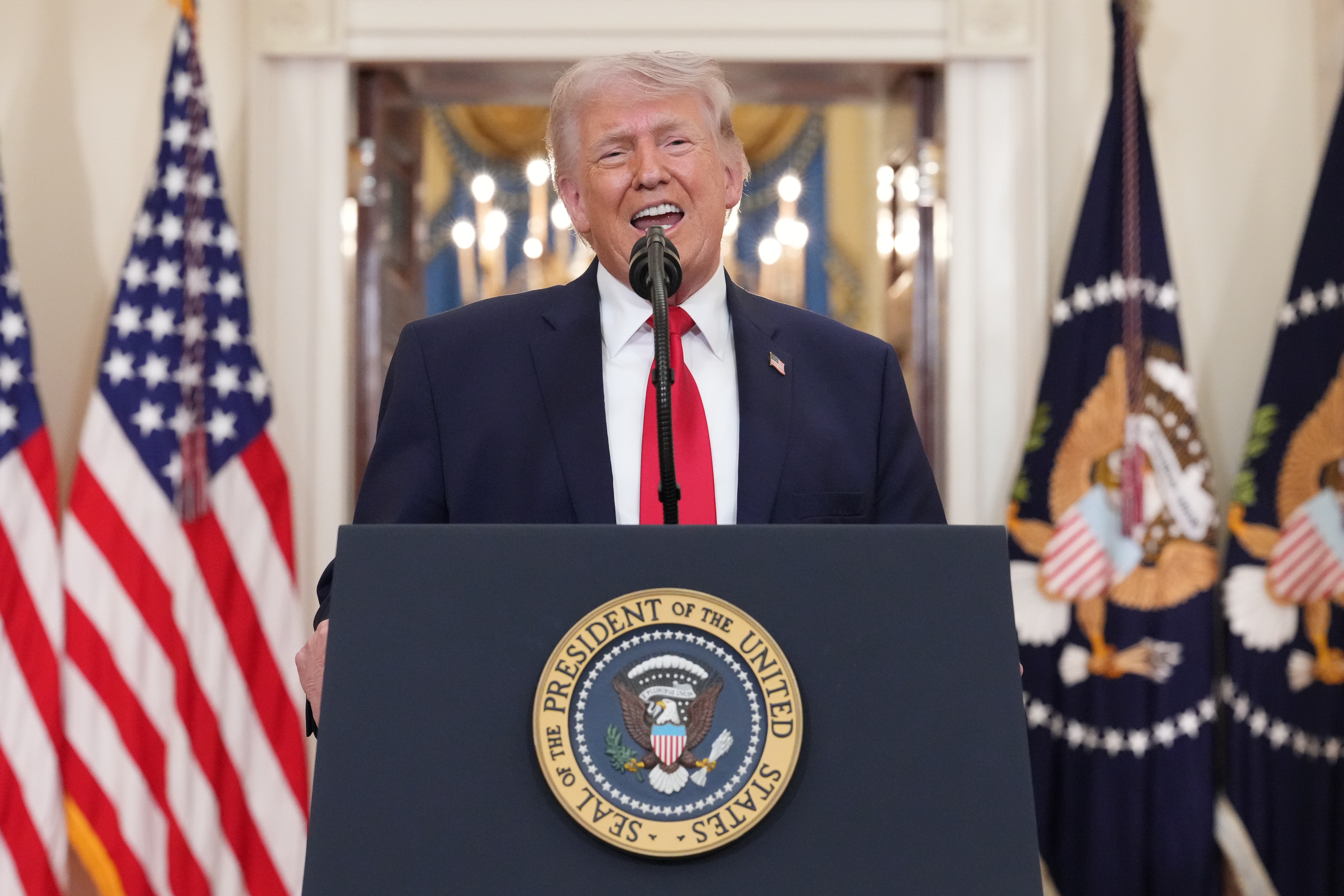
 President Donald Trump used a prime-time address from the White House on 1 April, to update the nation on the war in Iran. (Photo: Alex Brandon-Pool / Getty Images)
 Oh, the grand old Duke of York,
he had ten thousand men.
He marched them up to the
top of the hill and he marched
them down again.
– Traditional English nursery rhyme
If viewers of Wednesday night’s speech by the US president had, finally, expected to gain insights about the goals of Donald Trump’s plan for victory – or even an escape from his self-created miasma of the ongoing conflict with Iran – they would have been none the wiser. Largely he delivered a melange of rationales, boasts of the virtual success in all military objectives and cynical shrugs about how America can simply wash its hands of the current mess.
Instead, to most observers, the speech was like the stitched-together “best” moments from previous Trump Truth Social postings. Global stock markets reacted – but they issued a collective thumbs down and the benchmark oil futures price actually rose markedly in the aftermath of his speech.
Announcing that Iran’s nuclear ambitions have been decisively thwarted and its missile programmes stilled, among other damage, Trump basically brushed off the global economic difficulties stemming from the closing of the Strait of Hormuz and gave a bit of a backhand to other Nato members who had declined to join his conflict of choice.
According to Trump, after everything works out magically, the Strait will be open, the ships will sail, the petroleum and natural gas prices will equally magically drop and American motorists will be placated. In the meantime, however, his polling has dropped dramatically and is now lower than that of his predecessor.
Which Stone Age?
In a gratuitous slap, beyond threatening vast future destruction, Trump threatened to bomb Iran “back to the stone ages” if it didn’t agree to his peace plan. Of course, there was only one Stone Age, when early humans had made tools and arrow points from flint and other stones.
For those interested in that phrase’s origins, its first recognised use was by Air Force General Curtis LeMay, who had urged the US government to so bomb Hanoi during the Vietnam conflict. (The president wisely chose not to follow the general’s advice.) LeMay, of course, was famous (or infamous) for carrying out an incendiary bombing campaign against Japanese cities in World War 2.
Trump berated Nato nations for not rising up to join in his conflict of choice to forcibly reopen the Strait of Hormuz – they should “take it, protect it”. He reminded his audience that America is now basically energy independent, essentially saying that it is the task of those snivelling ingrates for not cleaning up the mess (one that he essentially created).
And he urged Europe to buy American oil and gas, naturally. As the Financial Times opined: “The US president’s primetime address to the nation on Wednesday evening, however, delivered nothing new. There was more bluster and threats of escalation, and a mention of a two- to three-week period of bombing. By Thursday, we were again bracing for uncertainty over the war’s objectives, its timeframe and the trajectory for oil markets.”
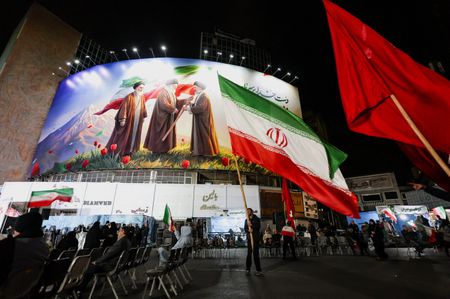
The sad irony is that over a decade before this latest violence began, the Joint Comprehensive Plan of Action, signed in 2015, had restricted Iran’s uranium enrichment efforts – with substantial international inspections – and the Strait was open for transit by ships. The first Trump administration abrogated US participation in this accord that had been negotiated by his predecessor, Barack Obama, largely provoking the current crisis.
Now, by contrast, an embittered and possibly more radical Iranian government – although suffering from difficulties in its command and control of military installations because of missile strikes that have killed significant numbers of its leadership cadre – has learnt that even in the midst of negotiations with the US, hostilities can begin.
As far as the larger picture, now, only a few ships have been allowed to transit the Strait. One lesson to be drawn is that sometimes, the US must relearn, anew, that it must hold its nose and tolerate a noxious foreign regime such as Iran’s on behalf of furthering the stability of the larger global system.
Making things worse
In addition, making things worse, the US leader is threatening to leave Nato over the other members’ reluctance to join the reopening-the-Strait “party”, calling the other members “paper tigers” for their unwillingness. A question that might be asked of the US leader: does he know the phrase originated with Mao Zedong, decades ago, as a derisory term directed at the US?
Seemingly lost in the most recent comments from Trump has been any criticism of the Iranian government’s horrific behaviour towards its own citizens – thousands of whom were slaughtered during anti-regime protests just a few months ago. Back then, those killings had been a key feature of the Trump administration’s harsh criticism of Iran’s government. No longer, it seems. All is forgotten.

Ultimately, all of this policy incoherence, the threats and the empty bluster can only give encouragement to Russia and China in their respective foreign engagements. Russia can draw parallels with its struggles to subdue Ukraine and its “might is right” approach. Equally, China can draw the lesson that Clausewitz’s dictum that war is simply diplomacy by other means might be applied to its dealings with Taiwan in future.
In sum, Donald Trump’s efforts have made the world less stable, less predictable and more vulnerable to economic dislocations. None of those were promises Donald Trump had made explicitly in his campaign for the presidency in 2024. Sadly, we still have years to go with this kind of thing. DM