




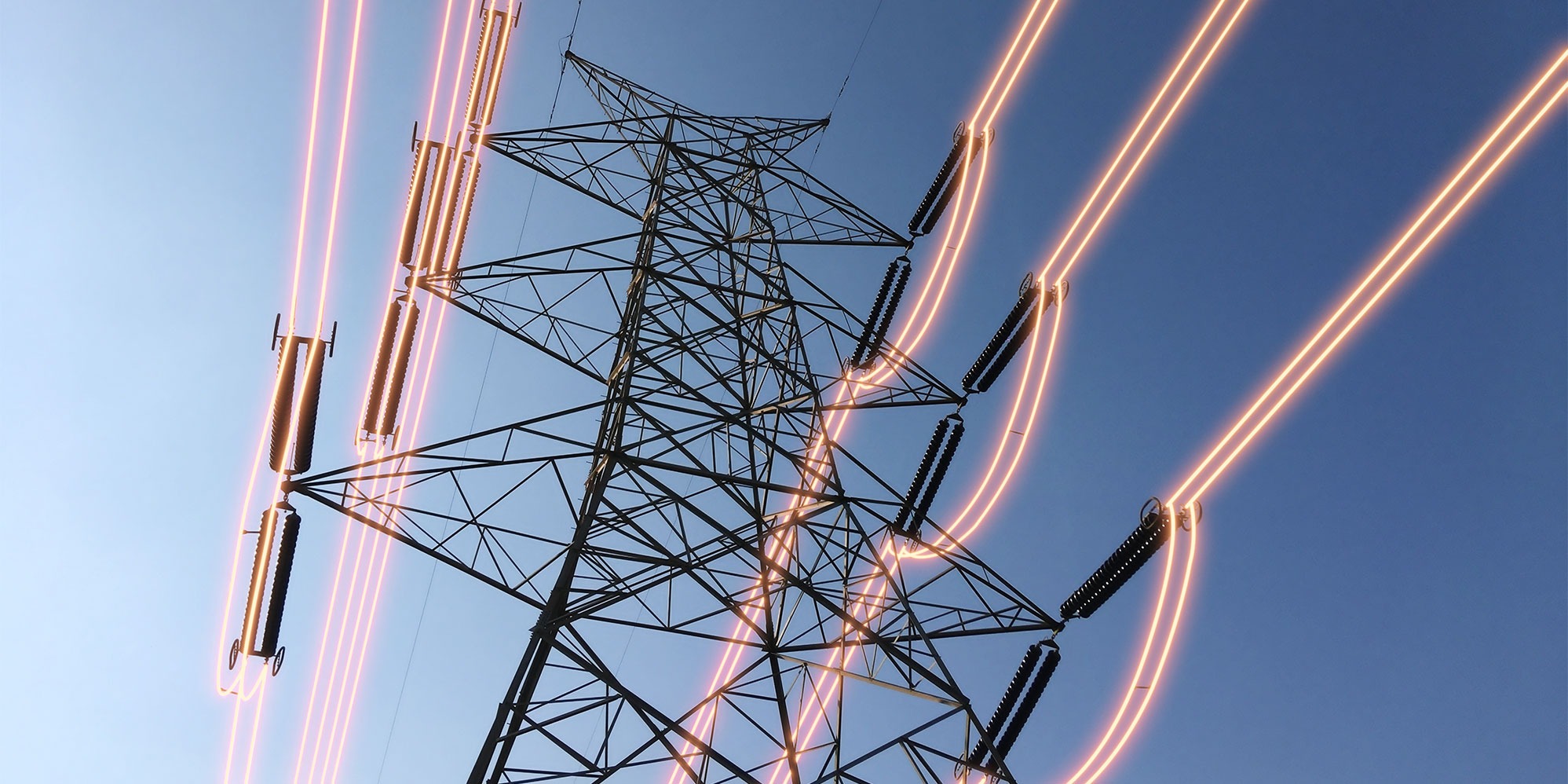
 Abruptly carving transmission assets out of Eskom’s financial web threatens creditor agreements and exacerbates fiscal risks. (Photo: iStock)
 If you own or are running a drone (apologies: unmanned aerial vehicle – UAV) pilot training academy, you have 12 hours from when this article was published to put together a tender to service the National Transmission Company of South Africa (NTCSA).
There are dozens of similar tenders that close in April that smell of a company that needs to operate an intricate, legacy infrastructure network with brand new procurement pipelines and has just suffered a messy breakup.
On the other, louder, side of the aisle is a host of suitors — independent power producers (IPPs), business lobbies (such as BLSA and Busa) and international climate financiers — aggressively rolling down their bakkie windows and calling for the total structural and financial separation of the NTCSA from Eskom Holdings. They also want cheap access.
Minister of Electricity and Energy Kgosientsho Ramokgopa gets it. He argues that total structural separation presents immediate, severe financial and administrative complexities.
/file/dailymaverick/wp-content/uploads/2025/10/IMG_20251022_105155_edit_47294650443935.jpg "Minister of Electricity and Energy Kgosientsho Ramokgopa. (Photo: Lindsey Schutters)")
A view from the top
President Cyril Ramaphosa, however, is more sensitive to the investor pressure and threw his one-time bright spark under the commercial bus during the 2026 State of the Nation Address. Ramaphosa stood up before the country and mandated that the original reform trajectory must remain intact: the state will establish a fully independent transmission entity that will not only operate in the wholesale market but will also hold absolute ownership and control of the physical transmission assets.
The IPPs might also be asking for a unicorn. They are demanding non-discriminatory, open access to high-yield renewable corridors that are currently bottlenecked.
They also insist that the NTCSA must have an entirely unencumbered balance sheet, completely free from Eskom’s legacy debt — arguing during a very detailed Krutham report media call — that this is the only way the NTCSA can secure independent credit ratings, satisfy international lenders, and fund its massive R440-billion Transmission Development Plan, which involves building 14,000km of new high-voltage lines over the next decade.
Yet, abruptly carving these transmission assets out of Eskom’s financial web threatens creditor agreements and exacerbates fiscal risks.
Ramokgopa’s now-discarded split-entity strategy, which sought to keep physical assets within the Eskom corporate structure while spinning off operational duties to an independent Transmission System Operator, was actually a pragmatic attempt to navigate complex upward guarantees and lender anxieties.
Now, the dedicated National Energy Crisis Committee (Necom) team has been tasked with figuring out how to execute Ramaphosa’s total separation order on a strict timeline without collapsing the house of energy transition cards.
What was up with the Ramaphosa move
International lenders within the International Partners Group (IPG) viewed channelling billions of dollars into an Eskom subsidiary as highly undesirable due to the utility’s deeply compromised financial track record and the risk that revenue shortfalls would ultimately burden the taxpayer.
This subsidiary approach almost jeopardised the initial $8.3-billion in concessional funding tied to the Just Energy Transition Partnership (JETP), as lenders demanded transparent, structural reform before releasing capital.
The President’s decision to realign with the original JETP agreements led the IPG to express “renewed and high confidence in the process,” ensuring that the core terms of the JET Investment Plan remained intact without the need for emergency renegotiations.
Too much, too soon
Unsurprisingly, forcing a rapid, highly complex clean break while setting up an entirely new trading floor has proven too much for the 1 April deadline. So the NTCSA waved a white flag, in the form of a media statement announcing that the launch of the South African Wholesale Electricity Market (Sawem) had been pushed back to the third quarter of 2026.
The official line is that further assessments with the National Energy Regulator of South Africa (Nersa) and industry partners revealed that additional work is required. They need to ensure that all market, operational and regulatory requirements are bolted down before flipping the switch.
The NTCSA has, instead, opted for a structured, phased approach to safeguard system stability and avoid unintended disruptions.
As NTCSA CEO Monde Bala put it, “laying the foundation for a transparent and competitive system requires all requirements to be fully met”.
He explained that adjusting the timeline ensured the market was introduced responsibly, with a design that is robust, credible and fully aligned with regulatory expectations.
/file/dailymaverick/wp-content/uploads/2023/08/ED_436618.jpg "NTCSA CEO Monde Bala. (Photo: Misha Jordaan / Gallo Images)")
While the IPPs and international climate financiers are undoubtedly champing at the bit for an independent NTCSA to open the floodgates, a delayed, stable market is infinitely better than an on-time catastrophe.
The NTCSA is caught between a politically mandated absolute separation and the cold, hard reality of untangling South Africa’s most complex state asset. We are going to have to wait a little longer for National Transmission Independence Day. DM