




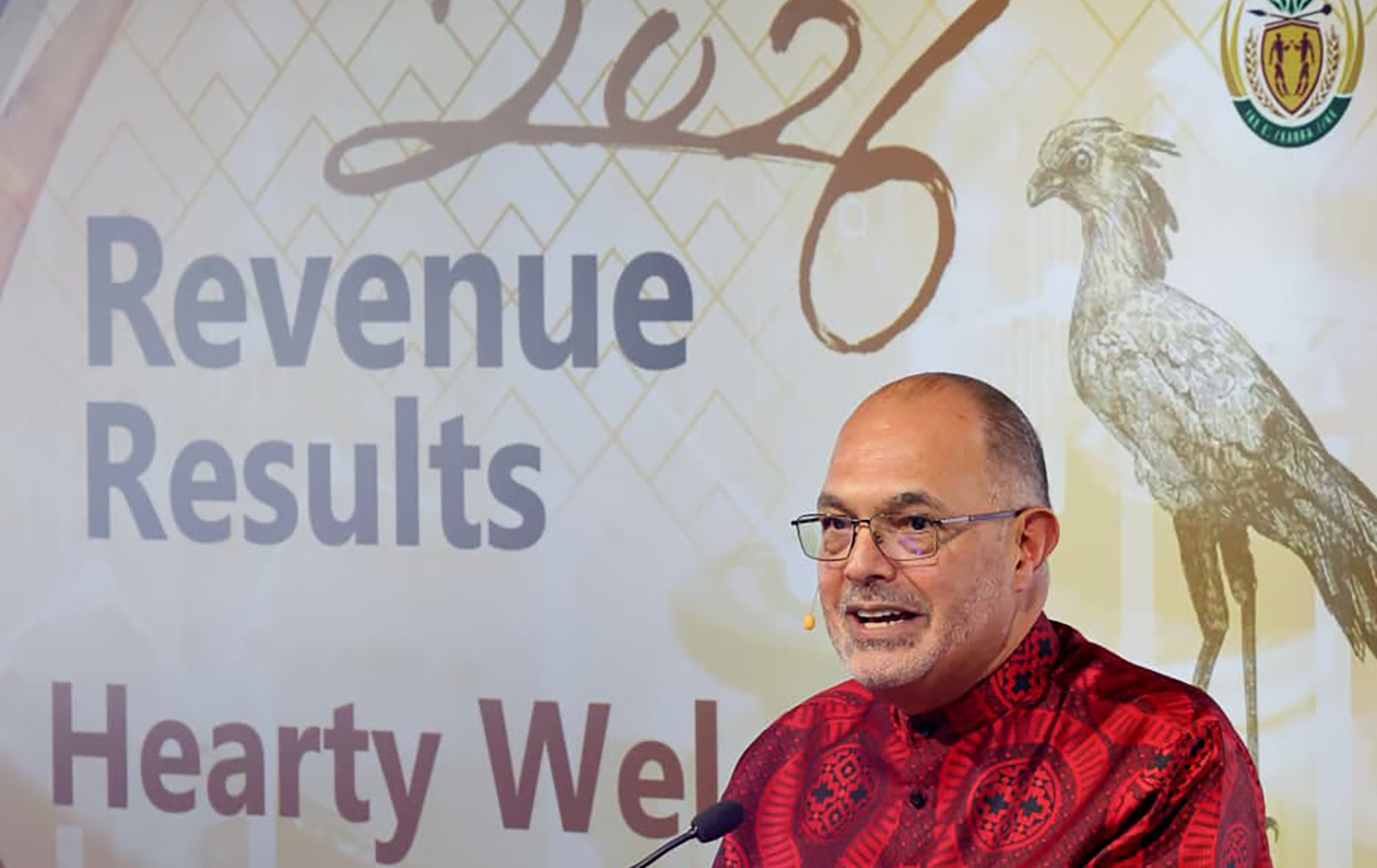
 South African Revenue Service Commissioner Edward Kieswetter announces the preliminary revenue collection figures for the 2025/26 financial year. (Photo: Siyabulela Duda / GCIS)
 South African tax revenue surpassed the R2.0-trillion mark for the first time in the financial year which ended at midnight on Tuesday, an 8.4% increase over the previous year, driven by hefty VAT, PAYE and corporate collections amid a relentless focus on compliance.
SARS Commissioner Edward Kieswetter described this as a “historic crossing”.
One might add that it will also cement his legacy.
The total reached R2.01-trillion, almost R25-billion more than the estimates in the 2025 budget, putting the target of R2.127-trillion for the 2026/27 financial year well on track. It also comes just a decade after the R1-trillion mark was first reached.
“This achievement reflects the focused and attentive work of SARS in its compliance initiatives; improved administrative efficiencies; and a marginal contribution from the mining sector. The revenue collection enabled the Minister of Finance to save the nation [an] additional VAT increase as he had originally communicated,” Kieswetter said in his presentation.
“These results have been achieved despite the challenges of a sluggish economy, geopolitical tensions, global supply-chain disruptions and the proliferation of the illicit economy.”
Domestic VAT collections rose 7.6% to R604-billion, defying the laws of economic gravity in a slow-growth environment. SARS officials attributed this in part to spending boosts enabled by withdrawals under the Two-Pot pensions reforms.
PAYE collections totalled R767-billion, recording growth of R59.9-billion or 8.5% versus the previous year. Mining revenue more than doubled from a low base to more than R25-billion, driven in part by surging metals prices.
There were disappointments. VAT revenue raised from imports rose only 2.2%. Imports barely grew in the past financial year compared with the previous one, a reflection of South Africa’s fragile economy.
From capture to compliance
Kieswetter’s tenure has been marked by a journey from capture to compliance, and his clean-up has included a focus on the illicit economy, which is estimated to cost SARS more than R100-billion a year in lost revenue.
“The illicit economy continues to drain the country’s resources, distort competition and undermine public confidence in the tax system ... We will not allow criminal syndicates to hollow out the tax system,” the commissioner said.
Highlights on this front in the past year included the launching of 17 criminal investigations into the illegal trade in tobacco and alcohol.
Kieswetter also introduced the latest SARS initiative, Modernisation 3.0.
“We envisage a future where taxpayers and their representatives will be provided with a Unique Digital Identity, which will use biometric and two-factor authentication to secure all interactions with SARS,” the commissioner said.
“This will empower taxpayers to have a comprehensive view of all their accounts with SARS, enabling them to change and update their status and pay as needed. This process will encourage self-reliance... Also central to Modernisation 3.0 is an intelligent case-management system, which will automate routine work, use big data, and apply AI to foster voluntary compliance.”
Kieswetter will not oversee this, but he has overseen the rebound of SARS over the past seven years. Finance Minister Enoch Godongwana, who made an appearance, said “... we owe the commissioner our deepest gratitude”.
Godongwana also said that the President had already selected Kieswetter’s successor to take over from 1 May, and he would make an announcement soon on that front.
Whoever steps in has big shoes to fill. DM