



 Lions and Bok prop Asenathi Ntlabakanye will need to wait a little longer for the decision in his doping hearing. (Photo: Sydney Seshibedi / Gallo Images)
 After five days of evidence last week, the South African Institute for Drug Free Sport’s (Saids) case against Lions and Springbok prop Asenathi Ntlabakanye will be adjourned until the end of April.
On 9 September, 2025, Saids formally charged Ntlabakanye for taking the non-specified (performance-enhancing) drug Dehydroepiandrosterone (DHEA), which he declared on a medical form. He did not test positive for the substance.
This was a separate charge to the one mentioned in a South African Rugby Union (Saru) press release on 24 August 2025. Saru confirmed an adverse finding for a specified (non-performance enhancing) substance found during a routine doping test while Ntlabakanye was on Springbok duty in July that year.
/file/attachments/2990/2244461756_258334.jpg "Asenathi Ntlabakanye playing for the Barbarians against an All Blacks XV in Brentford, England, last November. (Photo by Steve Bardens / Getty Images for Barbarians)")
However, Ntlabakanye also declared another prescribed drug, used to treat a medical condition, to testers on a form, which contains a non-specified (performance-enhancing) ingredient, DHEA.
This appears to be after he specifically checked it with two medical professionals and was cleared to take it.
Ntlabakanye, following protocol, listed the drugs he was on at a routine testing, after clearing the prescription with both the endocrinologist he had seen to address his weight issues, and another sports doctor.
Saids had no option to charge Ntlabakanye with a doping violation and set the wheels in motion for a hearing, which finally started on 23 March, 2026.
All listed witnesses gave testimony over the opening week of the hearing in Johannesburg last week, but closing arguments still need to be heard.
“Closing arguments set for last week of April, but parties still have to agree on an exact date,” Saids chief executive Khalid Galant told Daily Maverick.
“Thereafter, the panel will deliberate and render a decision (hopefully within two weeks). The reason for the adjournment is to allow time for parties to prepare closing arguments, in light of the different expert testimonies that were delivered.”
Ntlabakanye’s lawyer, Barend Kellerman, confirmed the news.
“The evidence was concluded last week Friday but a date needs to be determined by the anti-doping hearing panel for the parties to present their arguments on the basis of the evidence and the applicable case law,” Kellerman told Daily Maverick.
“The panel will render a decision within (up to) 60 days of the argument being concluded. We will be able to comment further once the decision has been rendered.”
Transparent
The non-specified (performance-enhancing) drug did not show up in the blood test results, probably because it was out of his system. But by declaring it on a form, Ntlabakanye incriminated himself, under the “strict liability” rule.
It’s important to emphasise that, according to several sources, both these drugs were prescribed and cleared by two medical professionals. Even though Ntlabakanye could face a lengthy ban, he is not currently suspended, and will now continue to play for the Lions.
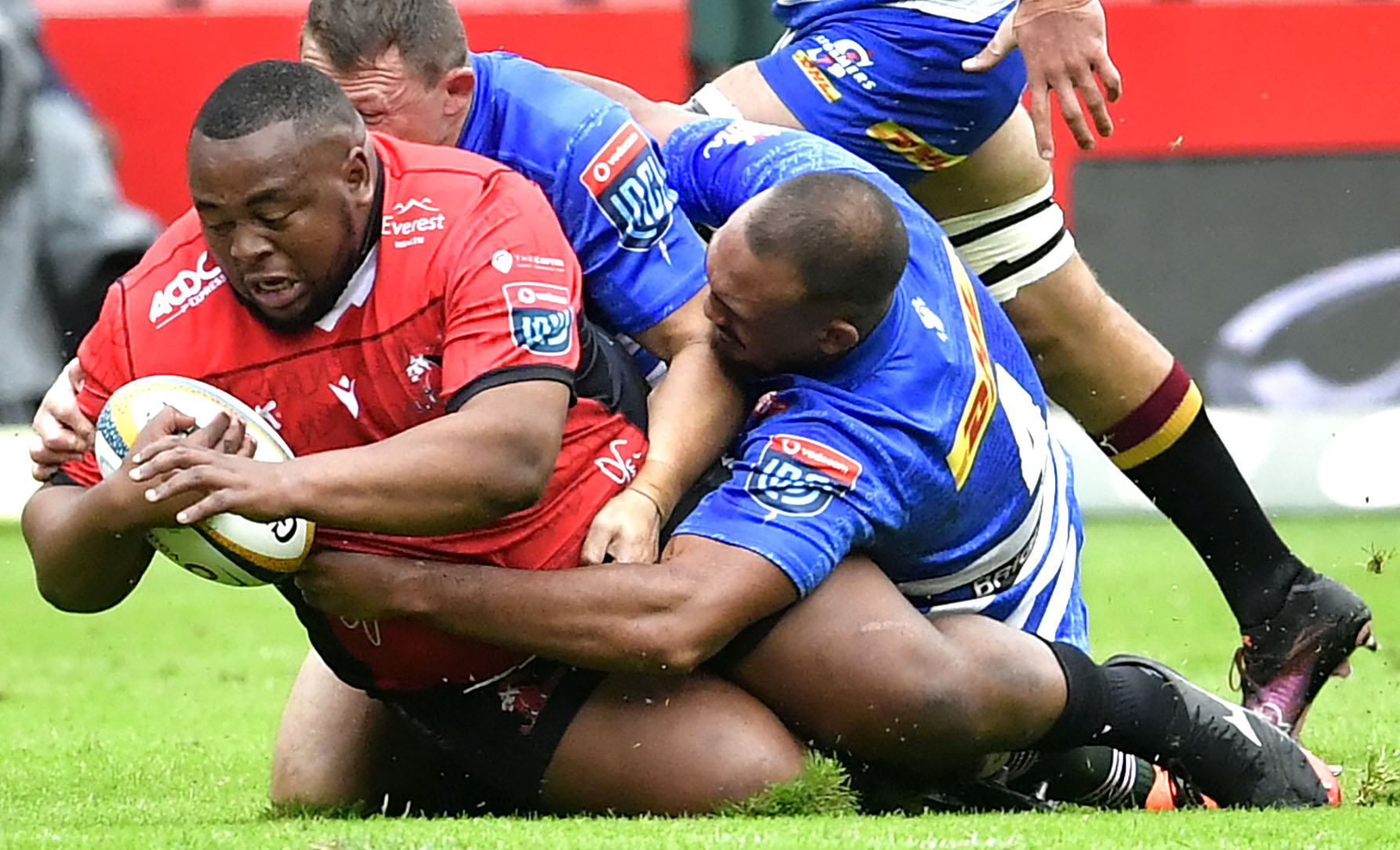
/file/attachments/2990/TL_2507596_102465.jpg "Lions prop Asenathi Ntlabakanye is tackled by Dewi Lake of Ospreys during a URC match in January. (Photo: Chris Fairweather / Gallo Images)")
Saru’s original statement last August was unusually direct in pointing the finger at the doctors involved in the case.
“The non-performance-enhancing substance for which he (Ntlabakanye) tested positive was prescribed by a specialist physician early in 2025 for medical reasons,” Saru’s 24 August statement reads.
“It was taken with the approval and the supervision of a medical doctor specifically appointed to manage the medical affairs of professional rugby players.
“Ntlabakanye was transparent in his declarations, acted in good faith and, at all times, followed the medical due process as prescribed by the industry.
“He relied on the relevant professional medical advice and at no time did he seek to obtain an unfair advantage, nor did he take any medical substance without prior medical authorisation.”
It also appears that doctors who prescribed the drug and who cleared it, also did not apply for a Therapeutic Use Exemption (TUE).
An athlete can be issued a TUE for certain drugs relating to treatment for a specific medical condition.
The anti-doping code places a heavy burden on athletes to prove their innocence, and there are very few cases where cases are overturned.
Even if Ntlabakanye can prove that he was acting under supervision and in good faith, relying on expert knowledge and advice, it might only lead to a reduced sentence from the maximum of four years. DM