




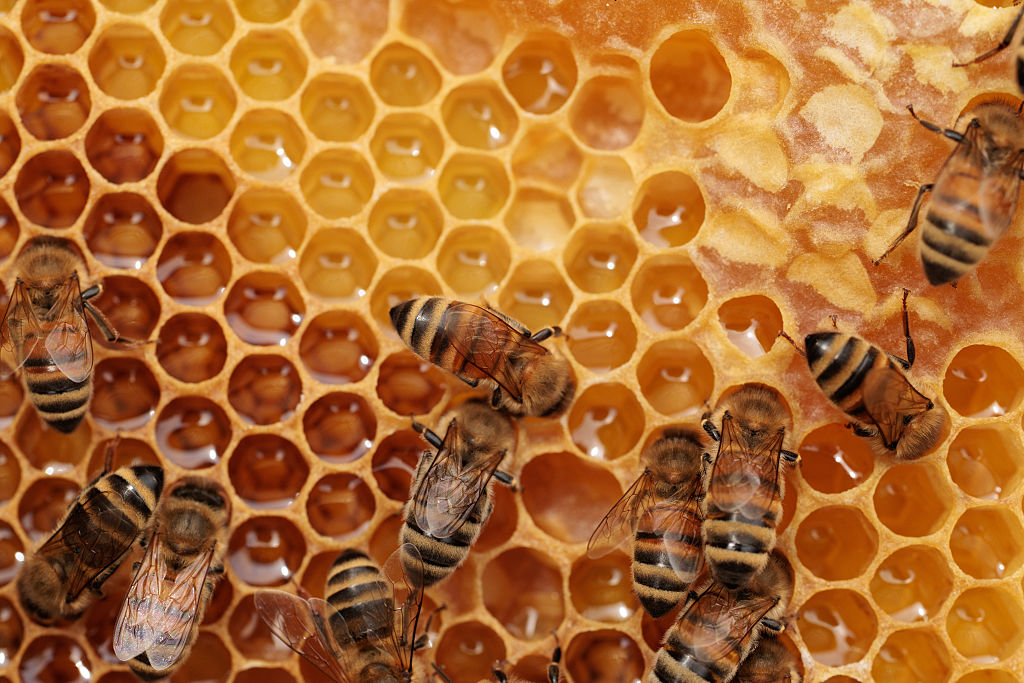
 Boulder Valley Honey bees eat honey in their hive. (Photo: Andrew Wevers/Getty Images)
 Honey is often praised for a range of health benefits, from soothing a sore throat and helping you get to sleep to healing wounds and lowering risk factors for diabetes and heart disease.
Honey’s acidity has the potential to prevent bacterial growth, while its density and stickiness generates osmotic pressure (in the same way as quicksand) which restrain bacteria. Other compounds in honey contribute anti-inflammatory and antioxidant effects.
But do the claims about honey for specific health problems and injuries stack up to science? Let’s check what the evidence says.
First, what’s in honey?
Honey contains up to 20% water. The remaining 80% is made of simple sugars: monasaccharides that we rapidly digest. Fructose (32-28%) and glucose (26-31%) are the main ones, followed by small amounts of sucrose and others.
This can increase blood sugar levels to varying degrees. The glycemic index (GI) measures how fast blood sugars rise after eating or drinking. The GI of different honeys ranges from 35 (low) to 72 (high), though most food labels don’t contain GI information.
Honey also has traces of vitamins (A, B1, B2, B6, C), minerals (potassium, magnesium, iron, zinc), amino acids (protein) and enzymes from plant, bee and insect secretions. Nutrients vary depending on where the honeybees collected pollen, the time of honey harvest and how long it has been stored.
Can honey heal wounds?
A 2015 Cochrane review update assessed the effects of honey in treating acute burns, lacerations and chronic wounds, compared to topical treatments or other dressings.
It found high-quality evidence that honey dressings healed second-degree burns 4–5 days faster than conventional dressings. There was moderate-quality evidence that wounds infected after surgery healed faster with honey.
A 2020 review evaluated antimicrobial activity of Manuka and medical-grade honeys against a range of multi-drug resistant bacterial species. It found all honeys were effective against most species and could be considered for use in antibiotic-resistant infections.
Only sterilised medical-grade honey that has been processed to remove contaminants, and meets safety and antibacterial standards, should be used, with guidance from your doctor.
Does honey help adults sleep?
Research on the effects of honey on sleep is limited. One trial compared sleep quality of 68 adults admitted to hospital. Half were given a mixture of milk (150mL) and honey (30g) twice a day, and half were not.
Those in the honey-mixture group said they slept better after day three. But these results could be biased, because participants were aware they were getting honey-milk and drinking it can be associated with feeling of comfort.
Can it soothe sore throats and coughs, or help kids sleep?
Five studies in children have compared honey mixtures to over-the-counter cough medicines or no medication. Each study linked honey to better sleep and less severe coughs in children.
But before you rush out to stock up on honey, there are major limitations related to the honey used. The quantity and type of honey given varies across the studies, with no certainty about which components are present. So the results need to be interpreted with caution.
Chemical analysis of some honey varieties found traces of the “feel-good” brain chemical serotonin and the hormone melatonin, which affects sleep and circadian rhythm. But the researchers concluded the small amounts detected were more likely to affect activity of the bees, rather than affecting human behaviour.
What about for diabetes, heart disease and cancer care?
For diabetes, a 2023 review of 48 clinical trials found honey had some positive effects on a range of risk factors, including glucose tolerance and wound healing. However, the honey dose and type weren’t standardised, so the researchers concluded that honey could be used in addition to, but not instead of, regular medications.
For heart disease, a 2022 analysis combining findings from trials evaluated the impact of honey on blood fats. It found no effect on several risk factors for heart disease: total cholesterol, triglycerides (another type of blood fat), low-density lipoprotein (LDL or bad) cholesterol or high-density lipoprotein (HDL or good) cholesterol.
However a 2025 meta-analysis of propolis (bee glue) did find significant reductions in triglycerides, LDL (bad) cholesterol, fasting blood sugars, insulin and systolic blood pressure (the top number on a reading). But given most propolis supplement trials have only lasted a few months and supplements are expensive, that money is likely better spent on healthy foods.
For cancer patients, a 2023 review found honey alleviated ulceration and inflammation in the mouth following chemotherapy or radiotherapy, and it reduced some of the toxic effects of chemotherapy.
Can it affect your mind?
Some honeys have psychotropic, or mind-altering effects. “Mad honey” comes from plant nectar of Rhododendron species and naturally contains grayanotoxins, which have pharmacological and toxic effects.
These include nausea, dizziness, low blood pressure, severe bradycardia (an abnormally slow heart rate), neurological complications and even life-threatening cardiac arrhythmia (irregular heart beat).
Who shouldn’t have honey?
Although commercial honey is pasteurised, the process does not kill spores of the bacteria Clostridium botulinum. This is why babies under one year and immunocompromised people shouldn’t have honey. DM
This article is republished from The Conversation under a Creative Commons license. Read the original article.