




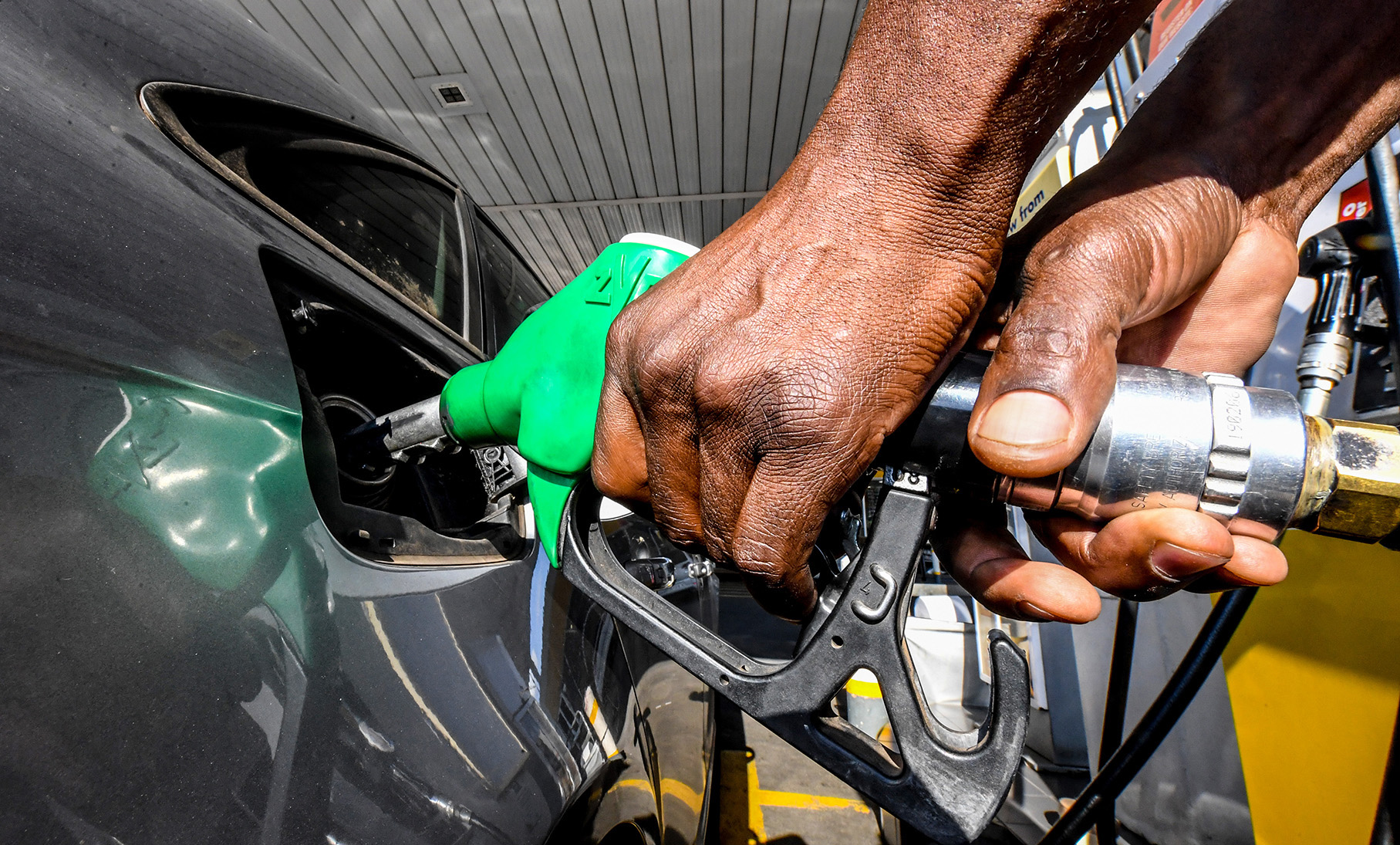
 The good news is that, while you can’t control the oil price, you can control how efficiently you burn it. (Photo: Gallo Images / Sydney Seshibedi)
 David caught me staring longingly at a Subaru Forester in the traffic over the weekend.
“Missing it?” he asked. “Yes, but I definitely don’t miss that fuel bill,” I replied, with a rueful glance in the rear-view mirror as we pulled away (slowly!).
Fuel prices are one of the fastest ways that global chaos lands in your daily life.
This is what you will pay at the fuel pump from April 1.
/file/attachments/2990/Gemini_Generated_Image_rb1rmarb1rmarb1r_597348.png)
Middle East tensions push up oil prices. A weaker rand adds pressure. And suddenly:
- Your monthly fuel spend jumps;
- Transport costs rise; and
- Food inflation quietly follows.
It’s the classic drip effect. One increase feeds into another until your budget starts to feel tighter in places you didn’t expect.
The good news is that, while you can’t control the oil price, you can control how efficiently you burn it.
Sherry Sibeko, executive head for personal lines at Miway Insurance, puts it simply: “Simple maintenance steps and informed vehicle decisions can have a noticeable impact on monthly fuel spending, especially during periods of rising prices.”
Practical steps to reduce your fuel use (and costs)
⛽Check your tyre pressure (yes, really). It’s the simplest fix with the fastest payoff. Underinflated tyres = more resistance = more fuel burned.
⛽Stick to your service schedule. Skipping a service doesn’t save money. It delays the bill and increases your fuel consumption in the meantime.
⛽Fix your wheel alignment. If your steering feels slightly off or your tyres wear unevenly, your fuel bill is already higher than it should be. Alignment reduces drag. Less drag = less fuel.
⛽Rethink your next vehicle (but don’t rush it). A fuel-efficient car can save you monthly. But only if the total cost makes sense.
⛽Consider hybrid or electric cars. Hybrids can reduce fuel use, especially in stop-start traffic. EVs remove petrol costs entirely.But this isn’t a simple swap:📌Upfront costs are higher.📌Charging infrastructure matters.📌Electricity prices still apply for electric cars.
⛽Make momentum work for you. A trick I learnt from driving a hybrid car is to use the momentum of the car so that it works in your favour. Build up speed before an uphill stretch, and when you crest a hill, take your foot off the accelerator pedal and use your car’s momentum to get you over.
Most vehicles are most fuel-efficient when driven at a steady 50km/h to 80km/h, with engine revs kept at about 2,000rpm and pushed to no higher than 3,000rpm when accelerating.
According to Bidvest Insurance, you use more fuel when your speed dips and bursts. Natural Resources Canada says that varying your speed up and down between 75km/h and 85km/h every 18 seconds can increase your fuel use by 20%.
⛽Avoid short trips. Trips of 2km or less use more fuel than longer trips. Even more so if your car’s engine is cold. Try not to make unnecessary trips to reduce your fuel bills.
⛽Cut the aircon. The Naked Insurance blog site states that the rule of thumb when it comes to efficient aircon use is to roll down your windows and switch your aircon off when you are driving below 60km/hour. But above 60km/hour, and especially at highway speeds, it’s far better to close the windows and put the aircon on, because “when you open the windows at highway speed, there will be so much drag and it creates extra work for the engine”, says Ciro De Siena of Cars.co.za.
⛽Reduce the load. Nedbank notes that the load in your car also plays a huge role in fuel consumption – a mid-size car uses about 1% more fuel for every 25kg of weight it carries. A Nedbank blog advises that you avoid carting around unnecessary clutter in your car. If you do find it necessary to carry more people or goods than usual, ensure that your tyre pressure is at the correct level for the increased weight. DM