





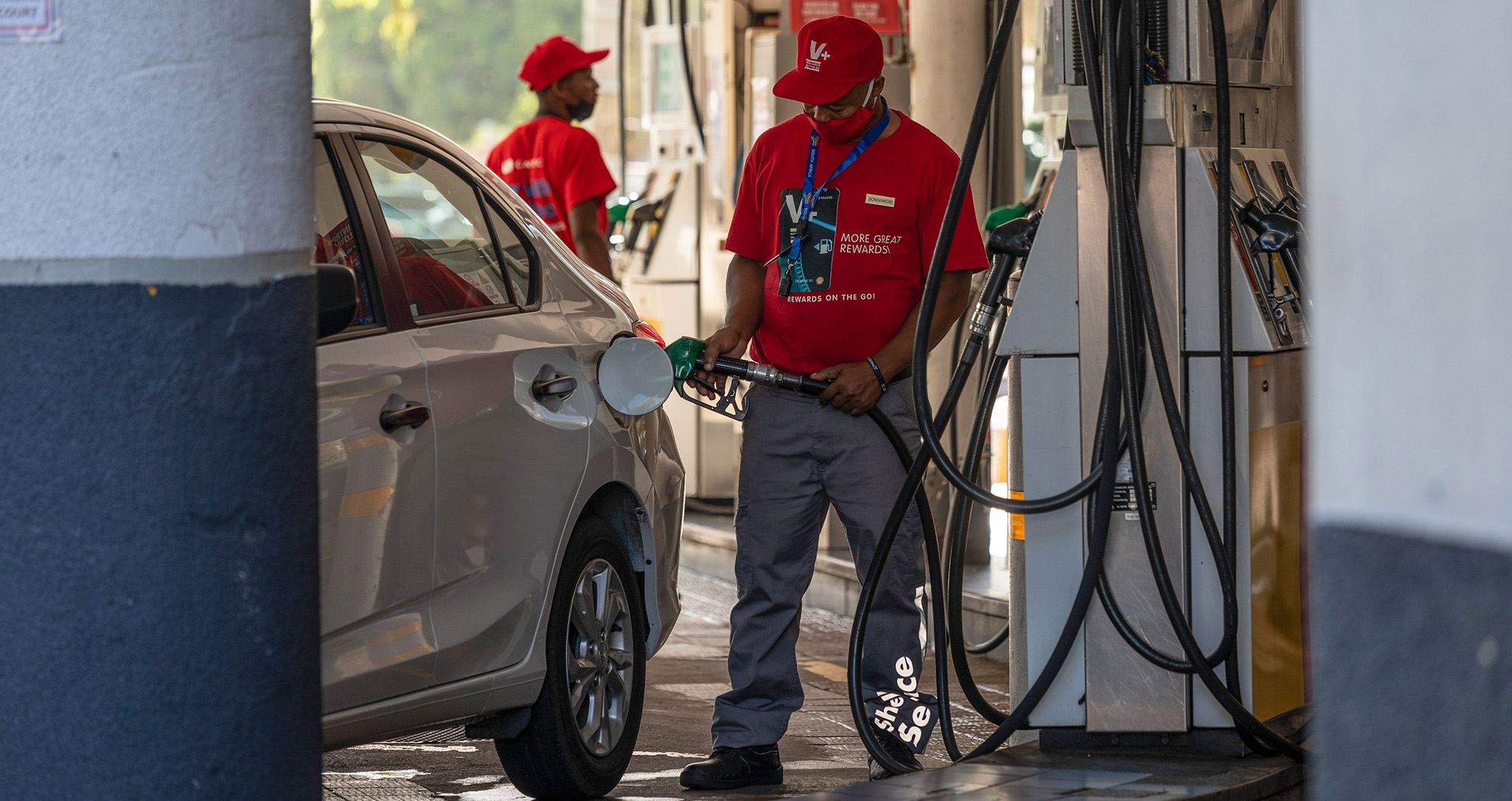
 South Africans are set to be hit by steep fuel price increases on Wednesday. (Photo: Dwayne Senior / Bloomberg via Getty Images)
On Saturday, the Fuels Industry Association of South Africa announced that the country’s fuel supply was stable, with adequate availability of all major petroleum products.
“However, product supply levels remain tight, particularly for diesel, which is experiencing the most significant strain ahead of the 1 April 2026 price adjustment. It is noted that the planned shutdown of the Cape Town refinery is expected to be completed in mid-April 2026. For the duration of the shutdown, imports had been arranged, and no widespread disruptions are anticipated,” said the association.
The association did acknowledge that “above‑normal service‑station demand is contributing to current supply tightness, while limited road tanker availability is adding pressure. This has resulted in delivery delays and intermittent stock‑outs in several regions.”
However, the association maintained that despite an increase in dry‑site reports driven by heightened diesel demand in anticipation of the price increase, suppliers were working to stabilise deliveries and maintain stock continuity.
Sleepless nights
Addressing the ANC Limpopo elective conference on Sunday, President Cyril Ramaphosa said that both he and Finance Minister Enoch Godongwana were losing sleep over the fuel situation.
/file/dailymaverick/wp-content/uploads/2025/01/cyril.jpg "President Cyril Ramaphosa says he is losing sleep because of the fuel situation. (Photo: Yves Herman / Reuters)")
A ministerial task team has been appointed to investigate interventions to reduce the impact on consumers and the SA economy.
However, Ramaphosa’s words, insomnia and reassurances are of cold comfort to consumers and businesses facing the prospect of steep fuel price increases on Wednesday and farmers dealing with rationing at fuel stations.
Bobby Ramagwede, the CEO of the Automobile Association (AA), said solutions hinged on the status of the national fuel reserves. “In 2016, we allegedly sold our strategic oil reserves and then later bought them back. Assuming we did buy them back, what we should do is ramp up the refining of those reserves to shelter consumers from higher global prices,” he said.
Cut the taxes
Ramagwede pointed out that those reserves would have been bought at about $29 a barrel.
“However, if we didn’t buy them back and we don’t have those reserves, it means that we’re price-taking right now and bringing in oil at an average price of $100 a barrel. The principal component of the fuel price, which is the actual commodity, is currently around R8 or R9 [per litre], and will shoot up to R13 or R14.
“In so doing, you’re going to see an increase of R2 and R5 [per litre] in the cost of fuel, if you blend it across the two types of fuel. What remains unchanged is the tax,” he told Daily Maverick.
Ramagwede said if the government wanted to shelter consumers from what is going to be a “violent price shock”, taxes were the place to look.
“And it’s not just the general fuel levy; we have the ill-administered RAF [Road Accident Fund] levy, and carbon tax as well. What they [the government] should do is set aside the tax — ie, abolish it for this period,” he said.
“It’s not a revenue issue that this government faces, but a ‘don’t know how to spend money wisely’ problem.”
He added that the government should focus on expense management so that, “When we circle back next year, and the finance minister talks about his Budget, he can talk about how he sharpened his pencil, curbed a few taxes in anticipation of a headwind and made SA Inc work more optimally.”
Bus and taxi concerns
Lindokuhle Xulu, the media liaison for the Putco bus company, said management had concerns about the imminent increase in the price of diesel, which is what their buses run on.
“They [management] have also engaged with the Gauteng Department of Transport. Their aim is to ensure that passengers do not bear the additional costs, as many rely on this bus service because they cannot afford alternative forms of transportation,” he said.
The Golden Arrow bus company shared similar concerns. However, its public relations manager, Bronwen Dyke-Beyer, said the company did not plan to implement a fare increase at this time, as it recognised the financial pressure consumers faced with rising living costs.
/file/dailymaverick/wp-content/uploads/2024/04/ED_422378.jpg "Golden Arrow buses on Mey Way, Khayelitsha, Cape Town. (Photo: Brenton Geach / Gallo Images)")
“However, should these pressures persist or intensify, there will come a point where a fare adjustment becomes unavoidable. We will continue to monitor the situation closely and will always communicate transparently with our passengers should any changes become necessary,” she said.
Dr Mark Burke, the DA spokesperson on finance, has called for the government to slash fuel levies in half for the duration of the crisis or as long as possible, which would provide relief of R3.17 per litre of petrol.
“A number of other countries have already acted. Namibia, Australia, Spain, Portugal, Vietnam, Brazil have all recently announced various forms of fuel tax relief; some of them implement exactly the best practice relief the DA proposed,” Burke pointed out.
Theo Malele, the spokesperson for the National Taxi Alliance, said the price increases were “[irritating], especially if the government is not willing to assist in softening the blow.”
Consumer impact
Daily Maverick canvassed consumers on Monday.
Christine Roberts said, “In my experience as a property practitioner, when people face uncertainty, they sit tight, often postponing decisions to sell or buy until things settle. The increased cost of living, combined with a possible increase in interest rates, may slow the market.”
Joy Roberts, a community service speech-language pathologist, said her commute costs were becoming unmanageable. “Working in rural KZN, I have to drive sometimes more than an hour just to buy groceries, and now petrol and food are becoming even more expensive.”
Environmental scientist Calvin Jones said the anticipated price hikes would increase his spending on transport and electricity from 7% of his income to about 10%. “I would first cut back on eating out, going out, takeaways and entertainment.
“The most worrying expense I see is the price of food. I will probably buy in bulk more and try to travel less to the shops. If prices keep rising, my savings will be affected, which means delaying things like getting a new vehicle, having to find cheaper accommodation,” he said.
The fuel price hikes are likely to also affect social relations.
A young couple based in Cape Town and Stellenbosch say rising petrol prices are beginning to affect how often they can see each other. The pair, both studying and working part-time, typically rely on weekend visits, with occasional midweek trips of about 50km one way.
Their spontaneous visits are becoming harder to justify: “Popping over during the week has put a bit of a strain… It’s obviously going to get a lot more expensive.” What was once a flexible routine now requires strict planning.
“We’ve had to actually plan around the price hikes,” said one. DM
Comments
Scroll down to load comments...