




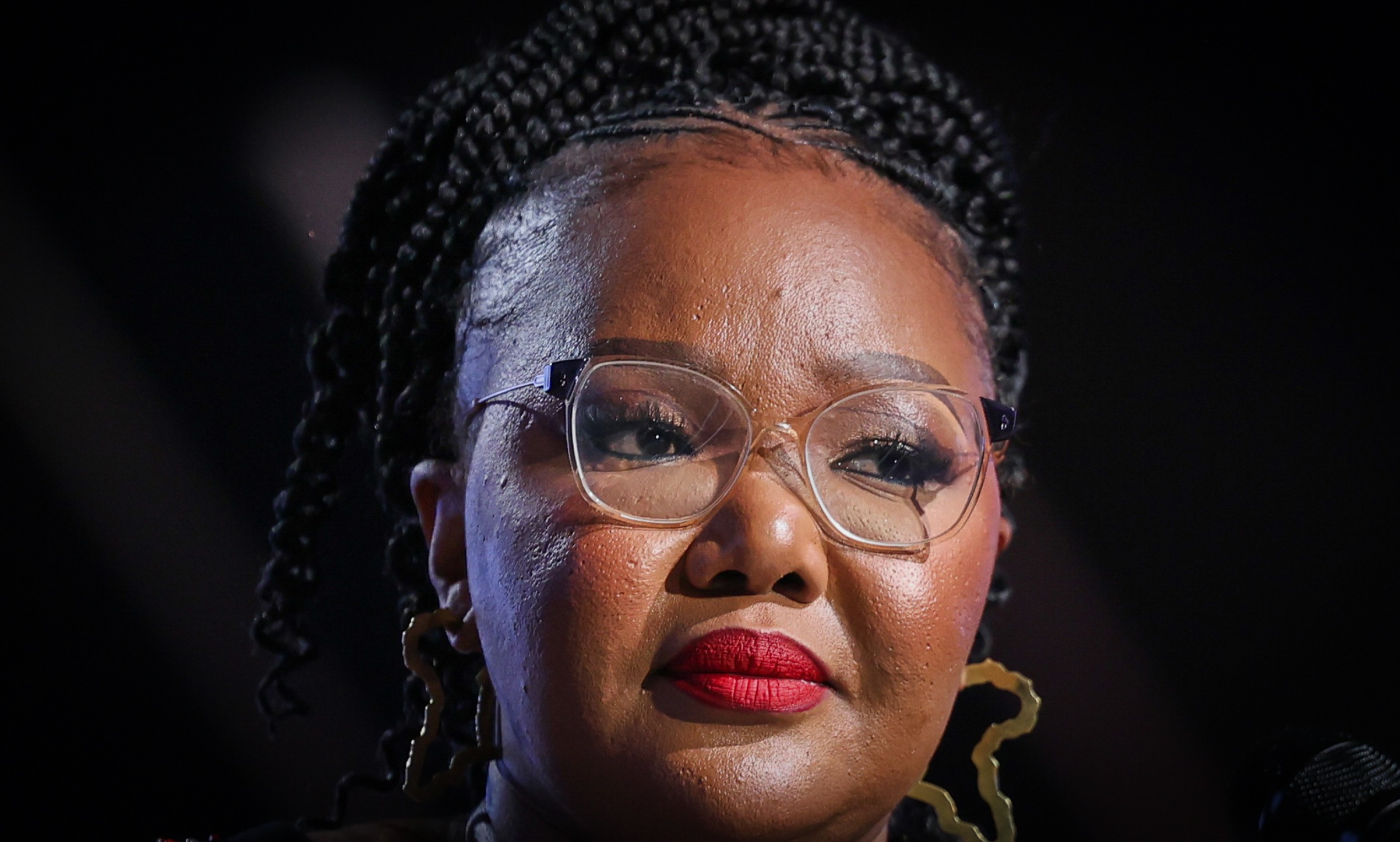
 Siviwe Gwarube, the minister of basic education. (Photo: Luba Lesolle / Gallo Imagea)
 Dear South Africans,
Many of you will no doubt have heard that I have formally requested the Special Investigating Unit (SIU) to enter the Department of Basic Education and conduct comprehensive lifestyle audits. I write to you today not through intermediaries, but directly, because this decision is not only about internal departmental processes; it is about you, your children, and the future we are trying to build for them.
When I accepted the responsibility to serve as minister of basic education, I did so with a full understanding of what was expected of me. South Africans expect a better quality of education for our country.
You expect a system in which children are not condemned by the circumstances of their birth or trapped in a cycle of poverty by poor-quality education. Instead, you want your children to be given a fair chance to succeed, to break free from poverty, and to live lives of dignity and opportunity.
You also expect what has too often been missing in government: leadership grounded in integrity, honesty and accountability.
I cannot walk away from those obligations, because public office demands that we strive, every day, to serve South Africans as honestly and as faithfully as we can.
That responsibility has guided every decision I have taken since assuming office.
Over the past 20 months, we have made meaningful progress towards meeting that responsibility. We have begun to fundamentally shift the strategic focus of the basic education system on what matters most: strengthening the foundations of learning.
We have committed R10-billion towards expanding access to early childhood development (ECD), recognising that the battle for educational success is won or lost in the early years.
In addition, we have allocated R496-million to create 115,000 new ECD spaces, particularly in rural provinces such as the Eastern Cape, Limpopo and KwaZulu-Natal, where access has historically been limited.
We have also begun the critical work of reviewing how teachers are distributed across the system, with a clear objective: to place more quality teachers in the Foundation Phase, where literacy and numeracy skills are first developed.
These reforms are practical interventions designed to give every child a stronger start in life.
But reform is not only about policy. It is also about the culture and conduct of the institution responsible for carrying that policy forward. From the beginning of my term, I have taken a hands-on approach to the lawful responsibilities of my office.
I have insisted on scrutinising submissions placed before me for approval. I have paid close attention to recruitment processes, because the public service must be strengthened by appointing the best possible people through lawful and credible processes.
I have carefully reviewed draft replies to parliamentary questions, because accountability to the people of South Africa cannot be treated as a box-ticking exercise. And I have required senior officials in the department to account regularly on their work, their progress and their decisions.
This has disrupted, in a positive manner, the ways of working that had become too comfortable over the past decade. It has made it harder for those with personal agendas to pursue them without scrutiny. That discomfort is not a problem; in many respects, it is the point. Public institutions should serve the public interest, not private networks.
But, fellow South Africans, I must speak plainly.
Greed and misconduct
All of this work, every reform, every investment, every gain we have made over these 20 months, stands to be derailed by the greed and misconduct of a few individuals within the system.
For too long, networks have been allowed to form and entrench themselves in ways that sustain the status quo.
So while my mission remains committed to your children, I cannot pursue that mission with an administration that is not ethical, accountable and equally committed to their success.
That requires difficult choices, and at times those choices come at a personal cost. One such choice is the one I have made to now require the senior officials to undergo SIU lifestyle audits.
I do not pretend that this work is easy. It is not easy to confront people who are determined to resist change. It is not easy to stand in the middle of a storm and keep going. But I would rather bear that burden than fail in the duty I owe to the children of this country.
There are relationships and practices within the system that will be used to try to stall this work. There will be mudslinging. There will be accusations that some hope will stick. We will not be deterred.
While I will always seek to unite the department behind its constitutional mission, I will not do so at the altar of your children’s future.
There will be resistance to change. It will come in many forms. It will include ad hominem attacks and the misuse of oversight and accountability processes to pursue personal agendas. As difficult as this fight will be, it has to be fought.
There are those who see public resources not as a sacred trust, but as an opportunity for personal enrichment. There are those who are willing to sacrifice the future of millions of children for their own benefit.
We saw this starkly in the attempt to divert the National School Nutrition Programme from its true purpose. This programme feeds 9.6 million children every day. For many of these children, it is the only reliable meal they will receive.
Yet despite this, there were efforts to shape the programme in ways that raised serious concerns about whether the interests of children were truly coming first.
The moment I became aware of these concerns, I acted decisively to stop the tender process. I demanded a redesign of the programme to stretch every rand further and cover more of our children. Weaknesses in the system may have taken root, but they cannot be allowed to continue.
There can be no compromise when it comes to the well-being of our children.
/file/dailymaverick/wp-content/uploads/2022/11/MC-Tuesday-Ed-1Nov_1.jpg "The National School Nutrition Programme feeds 9.6 million children every day. (Photo: African News Agency Archives / Wikipedia)")
The fight against corruption
But stopping one tender is not enough. Corruption is not an isolated incident. It is a system, a network, a culture that embeds itself within institutions and quietly erodes their ability to function.
If we are serious about improving education in South Africa, we must be equally serious about confronting and removing the scourge of corruption.
That is why I am bringing in the SIU.
The lifestyle audits that it will conduct are not punitive; they are part of the work of earning and restoring the trust of the people of this country.
They are a globally recognised tool to detect corruption. Where an individual’s lifestyle is inconsistent with their known sources of income, they must answer.
These audits will focus on senior officials within the department. They will also include officials working in high-risk areas, which are often used as entry points for corrupt activity.
The objective is simple: to identify, isolate and remove corruption risks within the department, so that we can restore integrity and focus on our core business of teaching and learning.
However, now that we have chosen this path of SIU lifestyle audits, I must prepare you, as the public, for what lies ahead.
Misinformation and confusion
In the coming days and weeks, you will witness a concerted fightback from those who stand to lose the most from this clean-up. This fightback will not always be obvious, but it will be deliberate.
You will see attempts to discredit this process, or to discredit me, through coordinated efforts to spread misinformation and confusion — including through the use of sponsored social media bot attacks online.
You may see parliamentary processes being misused. There may be oversight processes pursued in a manner that is not grounded in fact or fairness, driven not by a pursuit of truth, but by a desire among those seeking to resist accountability to protect themselves or others.
You will likely see selective leaks and planted stories, fed to willing intermediaries in an effort to distort the narrative and undermine public trust.
And if matters become desperate enough, you may see attempts to attack me, my personal life, and even my team.
Let me say this clearly: these tactics are not new. They have been used before against others who have fought corruption. They did not succeed then, and they will not succeed now.
I remain resolute in this mission. I did not enter public office to manage the decline of government. And I did not enter public service to accommodate corruption.
I entered public office to make a difference, to help build a system that works for every child in this country. I know that I cannot do this alone, and I do not claim perfection. But I will continue to fight, tooth and nail, to rid the Department of Basic Education of those who seek to steal from it.
As the people of South Africa, you must recognise the fightback for what it is: an attempt by the corrupt to protect the corrupt. I ask for your vigilance in the next few weeks, because what is at stake is not just the integrity of a department. At stake is the future of 13.7 million children.
And they are worth fighting for. DM