




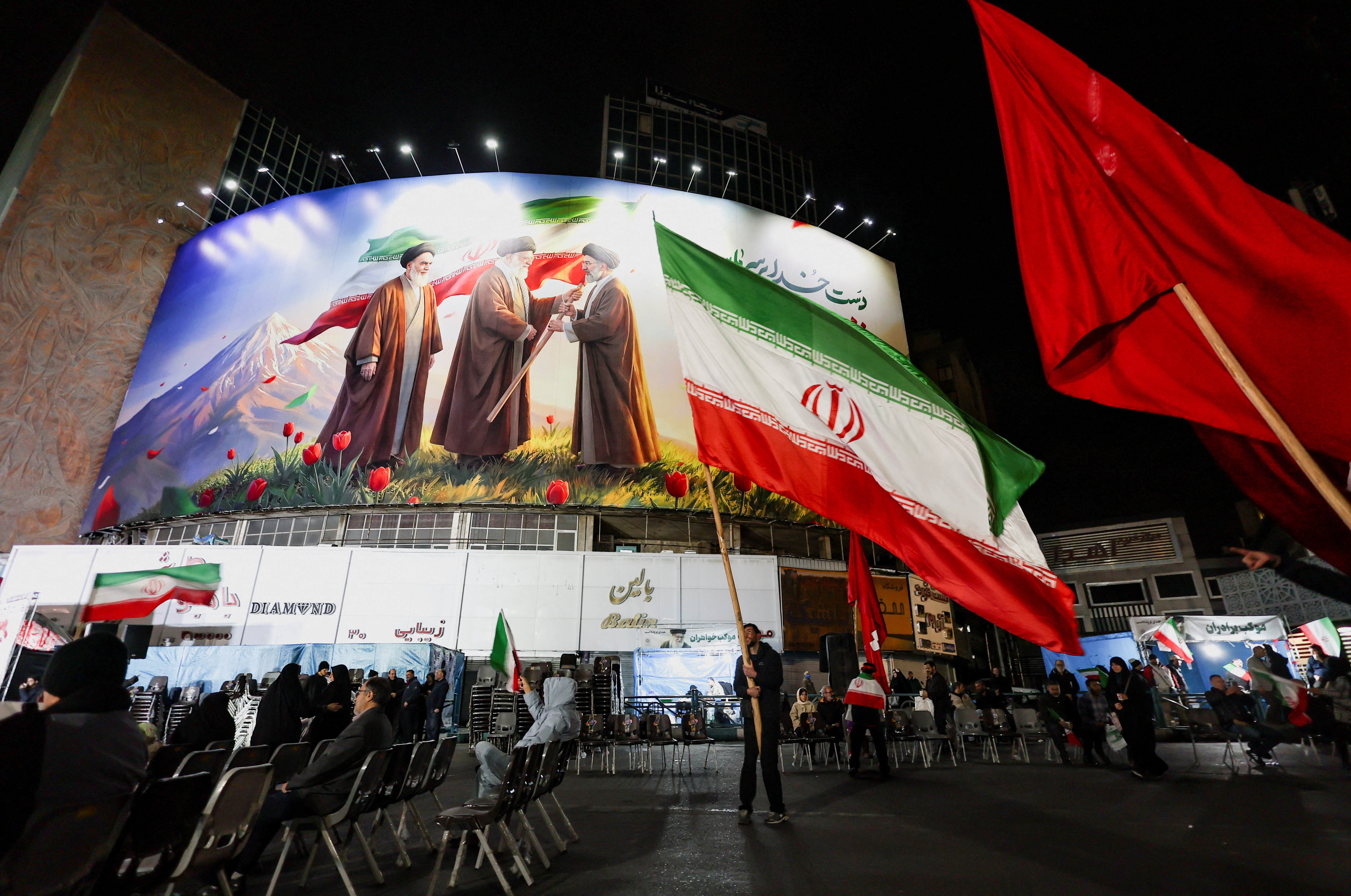
 People gather to show support for Iran’s new supreme leader at Valiasr Square in Tehran, amid the war against the US and Israel on 12 March 2026. (Photo: Reuters / Alaa Al Marjani)
/file/dailymaverick/wp-content/uploads/2025/10/label-analysis-2.jpg)
Just before World War 1, psychologist William James had written a widely read essay arguing that sports was a better, more moral, more rational behaviour – compared with war – as a way to channel patriotism.
Besides the obvious difference that military conflicts have a lethality that sports matches usually don’t have, games have definite endings, whereas military conflicts may not.
Still, drawing from sports, could we imagine a time-out enforced by some omnipotent force dealing with the current Middle East conflict? If so, might that guide us in evaluating winners and losers in this conflict?
Let’s begin with the main combatants.
The US
The US has demonstrated an overwhelming tactical prowess, delivering massive firepower against hundreds of Iranian missile and drone launching sites, anti-missile launchers and supplies of such weapons, as well as assembly facilities for those items. Largely this has come without suffering their own casualties by the Iranian defence response.
Targets struck by Americans have also included naval forces, government defence and security offices, and military command and control sites. Inevitably, too, there have been collateral deaths from the use of those precision weapons – presumably due to poor or outdated intelligence, rather than deliberate malice.
But this tactical success is a very different thing from obtaining a strategic victory. Throughout the current conflict, it has been impossible to draw a consistent, cogent strategic vision out of Donald Trump’s mercurial, conflicting utterances. Accordingly, it is difficult to measure strategic success by changes in Iranian policies and actions.
Most currently, the Trump administration has been veering between threats to destroy Iran’s electrical infrastructure and finding a way to entice or browbeat other nations into somehow becoming a maritime “police force” for reopening the Strait of Hormuz, now effectively closed by Iranian threats. Even a multilateral force is beyond finding a way to some kind of negotiated end to the conflict.
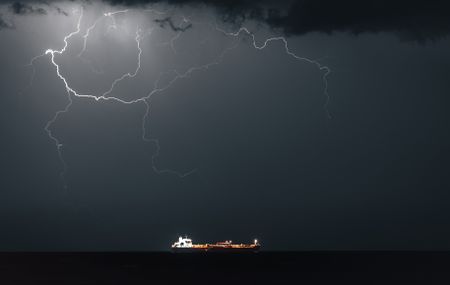
/file/attachments/orphans/GettyImages-2267952561_333501.jpg "Lightning appears as the META 4 oil tanker sails into Sultan Qaboos Port in Muscat, Oman, on 21 March 2026. President Donald Trump had threatened to attack Iran’s energy infrastructure if it did not end its de facto blockade of the Strait of Hormuz by midnight on 23 March. (Photo: Elke Scholiers / Getty Images)")
Trump has been so poor in building an alliance of cooperating nations, let alone having brushed away the more deliberate processes of diplomacy to move forward before bombing began, that he has also weakened the survival of important ideas about international norms of behaviour.
Scholar-correspondent Anne Applebaum has argued that the struggle over the Strait of Hormuz has crystallised the issues. Those countries that most need free passage for ships through the strait, such as Japan, South Korea and Europe, are the very nations Trump has spent more than a year insulting. Now that he needs (or demands) an international coalition on the strait, he has virtually no goodwill left to draw upon. Sadly, this should have been seen as the predictable output of a foreign policy with no memory and no strategy.
The rapidly fluctuating price of a barrel of oil as a result has been both predictable and a field day for speculators. In fact, Trump’s family and friends’ past business dealings have led to speculation that announcements of both possible diplomatic talks with Iran as well as threats of further attacks have generated profitable trading positions for insider investors to short the oil price.
Still, the longer-term strategic impact for the US from this conflict – whether it stops today or eventually draws to an end out of the exhaustion of the protagonists – will not generate a clear success. The blocking of the strait will remain a choice by Iran unless either a serious rapprochement is brokered between the two nations (unlikely) or the US commits thousands of ground troops and major naval forces (with the attendant casualties) to seize and hold the heights overlooking the seaway. But such a cost would be a virtual impossibility in the lead-up to this year’s mid-term election (even more unlikely).
Rather than Trump’s delusion of a prostrate Iran meekly taking orders like the new regime in Caracas, the more likely outcome is – again – a sullen stand-off between the two nations, just as has been true for decades. This would be the case even if negotiations began again. The US would claim those thwarted Iranian missile and nuclear ambitions represent a “win”, even if the strategic circumstances of geography and the Iranian government’s ethos of struggle argue otherwise.
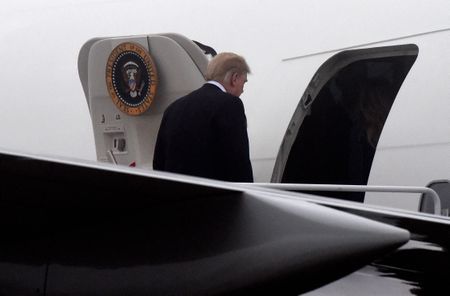
/file/attachments/orphans/GettyImages-2267269247_455130.jpg "US President Donald Trump departs Air Force One at Joint Base Andrews, Maryland, on 18 March 2026. He had travelled to Dover, Delaware, to attend a dignified transfer ceremony honouring six US service members killed in a KC-135 refuelling aircraft crash in Iraq. (Photo: Alex Wong / Getty Images)")
Meanwhile, Iranians will press for apologies and compensation and will attempt to rebuild their battered missile assembly lines as a future hedge. Naturally they will reserve the right to blockade the strait if they choose to make a point about their circumstances.
Further, one Iranian military tactic has become a game changer with repercussions well beyond the Middle East conflict. Those inexpensive drones equipped with warheads, fired in their thousands, can deliver destruction on foreign forces and facilities at a very low cost.
This has become a cost-effective force leveller versus much more expensive anti-missile defences deployed or supplied by the US. In fact, the supply of those defensive missiles is outrunning the ability of defence contractors to build them – and that will provoke the US into making invidious choices between restocking their supplies and aiding Western allies and others such as Ukraine which are dependent on such weapons.
The strategically incoherent way Americans embarked on this conflict of choice has now made formal and informal allies increasingly wary about their relationships with America. This is something that will play out for years to come.
In the “I told you so” department, had Trump insisted on thorough enforcement of the 2015 Joint Comprehensive Plan of Action that had been negotiated with Iran to restrict its uranium enrichment during the Obama years, rather than abrogating it, the nuclear question would have been postponed for years, instead of the increasingly disastrous turn of events we see now. We are now stuck with the mess, but with no easy way out.
While public support for the conflict, now, is relatively high (especially among Republicans), polling also suggests there is little support for a prolonged war as economic and human costs rise. Many, MAGA and non-MAGA alike, are flummoxed by the Trump administration’s call for a $200-billion supplemental defence appropriation.
Thus our judgement, despite massive, early tactical successes, that the US is already a net strategic loser. This valuation does not even include price rises in fuel and transportation already roiling domestic politics, even as the US mid-term election process is moving forward – likely to the detriment of the president’s lock on congressional power.
Israel
Well, what of Israel? Flowing from its sustained aerial attacks and the precision of those attacks that have included the decapitation of much of the Iranian leadership cadre, the back of Iran’s long-range attack capabilities has been substantially brought low. But it is not completely destroyed. Some Iranian missiles continue to be fired at Israeli locations, including at its Dimona nuclear reactor.
The pressure on Iran, however, has given the Israelis an opportunity to renew an assault on the Hezbollah militia in Southern Lebanon, even though those attacks have driven hundreds of thousands of non-Hezbollah Lebanese to flee northwards, out of harm’s way. Hezbollah has responded with sporadic missile and drone attacks on northern towns and settlements in the Galilee.
At the tactical level, in conjoining their air assault with that of the US, the Israelis have successfully humbled their major antagonist and rival for regional hegemony, something that has been a decades-long objective of Benjamin Netanyahu’s prime ministership.
/file/attachments/orphans/RC2KQIAV30GG_656895.jpg "US President Donald Trump and Israeli Prime Minister Benjamin Netanyahu at a press conference after meeting at Trump’s Mar-a-Lago club in Palm Beach, Florida, on 29 December 2025. (Photo: Reuters / Jonathan Ernst)")
Moreover, because Iran has been forced to so concentrate on its own defence, it has probably been constrained from providing substantial aid to its two regional non-state clients, Hezbollah and Hamas, whose capabilities are similarly diminished. In the wake of Iranian attacks on its neighbours among the Arab Gulf states, one unanticipated outcome has been a tacit, quiet coming-together between those states and Israel vis-à-vis Iran.
Further, despite the ferocity of the Israeli move into Lebanon, the government there has now insisted that Hezbollah restrain its attacks. Further, it must accede to the authority of the Lebanese government and army, and it has even declared an Iranian diplomat to be persona non grata for his ties to Hezbollah.
But from such presumed success comes some major downsides. Support for Israel more generally continues to dip internationally beyond the region (despite that tacit support from the Arab Gulf states), and especially within the populations of the US and Western Europe. Moreover, while its initial success may assist in the current prime minister’s bid for a victory in the next parliamentary election, at the same time, Israelis must come to grips with the reality that – if their current policies continue – they will be driven to engage repeatedly in what they call “mowing the grass”.
This will mean periodic attacks on a reconstituted Hezbollah and Hamas, even as they must still contend with an Iran looking for payback for all the early violence – but now likely with a government that has an even more hardline leadership. The missiles and Shahed drones are not so difficult to fabricate, even if the nation has been hammered for several weeks. In sum, while the Israelis have achieved their stunning tactical win, the longer-term strategic outlook is less rosy and may yet be a losing hand.
Iran
And what of the US and Israel’s chief regional antagonist? While they have had to endure major attacks on government, military and security-related targets, as well as the killing of significant members of its national leadership cadre, its ability to reply with missiles and drones remains, albeit at a diminished level. It has occasionally even reached as far afield as strikes on the joint US/UK air base on Diego Garcia in the Indian Ocean as well as closer targets in Saudi Arabia and major natural gas infrastructure installations in Qatar, among others.
/file/attachments/2989/13841749_489026.jpg "Iranian mourners take part in a funeral procession in Tehran on 18 March 2026. Thousands gathered in Enghelab Square to honour Ali Larijani, secretary of the Supreme National Security Council, and Major General Gholamreza Soleimani, head of the Basij paramilitary forces, who were killed in air strikes on 17 March. (Photo: EPA / Abedin Taherkenareh)")
Despite the attacks and destruction, the Iranians have fixed on their most crucial geopolitical asset – to the evident surprise of the US. They are able to threaten – or actually carry out – a chokehold on the flow of oil and natural gas at the narrowest point of the Strait of Hormuz. This is possible, almost no matter how many air strikes take place on Iranian territory, by deploying low-tech mines in the water or placing drones in cliffs or caves near the strait.
Simultaneously, with the nation focused on the danger from air attacks, civilian opposition to the regime has been reined in and off the streets, despite the regime’s clear unpopularity due to repression and its economic mismanagement.
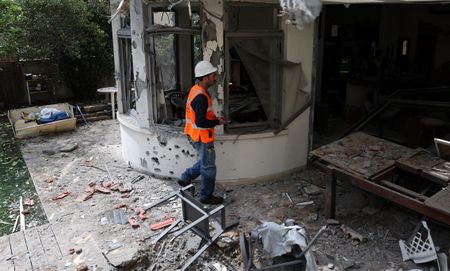
/file/attachments/orphans/13855428_276488.jpg "Damaged residential buildings in northern Tehran on 23 March 2026. The joint Israeli and US military operation continues to target locations across Iran. (Photo: EPA / Abedin Taherkenareh)")
The result is that Iran has embraced its best trump card (pun intended) with its Strait of Hormuz gambit. It affects countries around the world, even those not dependent on fuel flows from the Persian Gulf. Those commodities are globally traded and priced and the immutable laws of supply and demand prevail, regardless.
Given its ability to continue with some missile and drone strikes and its control over the flow of tankers from Persian Gulf terminals, despite the damage – human and material – it is absorbing, the Iranians must be scored as having achieved a deadly tie. Given their apparently unbreakable control over that flow absent a massive multilateral military effort to clear the strait, Iran’s strategic position may even rise to a win, despite the great cost.
The rest of us
The biggest dangers from the conflict are, first of all, disruptions to individual national and global economic circumstances, and second, one more body blow to any pretence of adherence to a global international order.
There are the additional points of how this conflict is enhancing Russia’s war on Ukraine (through an Iranian supply of those drones and the willingness of the Trump administration to allow Russia to sell some oil despite sanctions). Then there is China’s longer-term ability to play on economic forces driving increasing reliance on electric vehicles and solar power – technologies where they are already manufacturing leaders.
As consumer costs rise and access to oil and natural gas becomes uncertain, users in the nations of the South and others dependent on imported energy – especially those in the lower tiers of the respective economies – are already being adversely affected by rapid price rises and restrictions on purchases. Such impacts are a vivid depiction of the interconnectedness of national economies, and especially the deep dependence on hydrocarbon energy extracted from one region of the globe.
Other things being equal, this current crisis will be driving greater efforts to build robust solar and other renewable energy sources, although some national leaders like Trump remain resolutely opposed to them. Over time, though, such a shift should shift downward global dependence on the flow of Persian Gulf energy, but moving that needle will take years.
China may thus be a big winner from the current crisis. It is already the global leader in the production of electric vehicles and solar panels and any shifts away from an addiction to Persian Gulf hydrocarbons will resound to China’s economic benefit.
The lockdown of the Strait of Hormuz, meanwhile, is refocusing attention on other key global shipping key points such as the Panama and Suez canals, the Cape of Good Hope route and the Straits of Malacca, a busy waterway that is also a prime route for energy to East and South East Asia and exports from those nations to the world. Such attention could – over time – become beneficial to the adjacent nations and their transportation servicing sectors. Mark them possible winners, too.
Finally, there has been the rapid shift in military technology using autonomous drones, primarily by Iran. Iran has been supplying these weapons to Russia for its own attacks on Ukraine, even as Ukraine has been manufacturing its own versions of similar weapons. This shift to such inexpensive but highly versatile weaponry (largely built out of generic parts and fibreglass, and with readily made software) will have a major impact on the defence capabilities of militaries around the globe, rendering previous strategic and tactical doctrines outmoded.
But this shift will make it much easier for insurgent groups, terrorist groups and small nations with an irredentist itch to confront their antagonists, even without significant industrial bases. Thus the winners here will be groups like those above. Likely losers will be major weapons manufacturers and nations that depend upon them for their weaponry. There will be little to prevent the spread of such weaponry in future – or its deployment. This will not be good for global security or international stability.
Combine that – given the examples of the invasion of Ukraine and the current Middle East fighting – with a further decay in the idea that international disputes should be settled without a reliance on force and the future may become a dismal and dangerous place for us all. If so, Thomas Hobbes will have been proven right after all. DM