



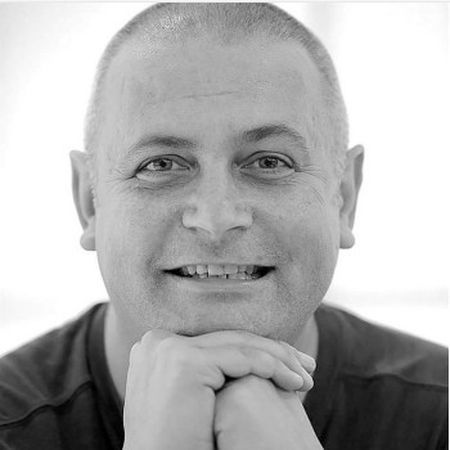
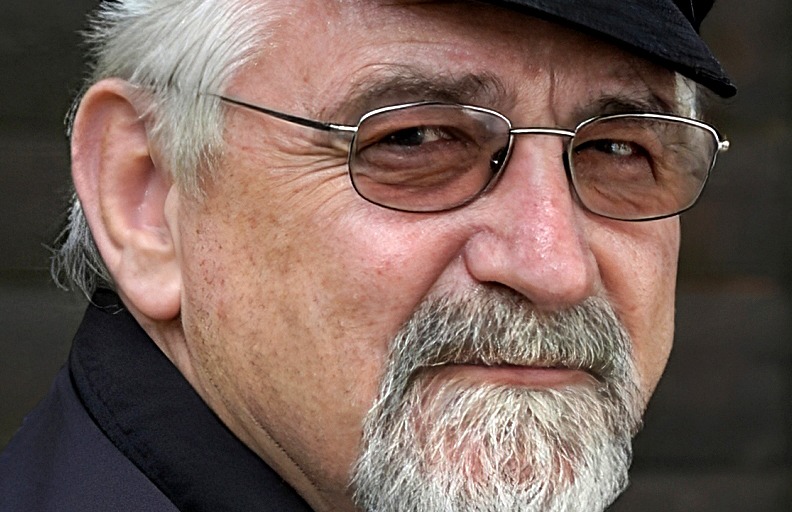
 Terry Bell, a renowned journalist, died at 84 after a heart attack, leaving a legacy of fearless activism against apartheid and ongoing injustice. (Photo: Supplied)
 Born 12 September 1942 • Died 25 March 2026
Terry Bell, who has died aged 84 after a heart attack while on a family trip to Graaff-Reinet in the Karoo, was one of South Africa’s most tenacious and uncompromising journalists, a man who began his career on the East Rand papers, the Germiston Advocate, the Benoni City Times and the Boksburg Advertiser, spent nearly three decades in exile fighting apartheid from afar, and returned home to spend the rest of his life holding the new dispensation to the same exacting standards he had always demanded of the old.
His final blog post, published just six days before his death, on 19 March 2026, was a typically rigorous corrective to received wisdom about the Sharpeville massacre of 1960. The confirmed toll, Bell insisted, was not sixty-nine dead, but ninety-one “men, women and children”, with at least 238 wounded.
He praised the courage of journalist Humphrey Tyler and photographer Ian Berry, who had attended the protest on their own initiative when the mainstream media could not be bothered.
“If Tyler and Berry had not been present on that fateful day,” Bell wrote, “the slaughter at Sharpeville might have ended as little more than another footnote in a catalogue of oppression. Instead, it became the trigger for a global campaign against apartheid.” It was, in miniature, a summary of his own life’s work.
Personal credo
Bell signed off with a reflection that doubled as a personal credo: “Much has obviously changed. But one vital factor has not: we, the overwhelming majority of humanity who wish only to live in peace, remain the many while those who continue, as they did in the past, to divide, exploit and destroy, are the few.” He was, to the last, a man of the left who had never made his peace with injustice.
/file/dailymaverick/wp-content/uploads/2022/06/Terry-Bell-picketing-for-the-release-of-SA-Metalworkers-Union-General-Secretary-Moses-Mayekiso.jpeg "Terry Bell picketing for the release of SA Metalworkers Union General Secretary Moses Mayekiso. (Photo: Supplied)")
/file/dailymaverick/wp-content/uploads/2022/06/Barbara-and-Terry-Bell-march-for-the-release-of-SA-Metalworkers-Union-General-Secretary-Moses-Mayekiso.jpeg "Barbara and Terry Bell march for the release of SA Metalworkers Union general secretary Moses Mayekiso. (Photo: Supplied)")
Terence Albert Bell was born in Pretoria on 12 September 1942, and his political conscience was forged young. As a student he was recruited into underground operations by Joe Gqabi, a senior figure in the African National Congress, and went on to join the Congress of Democrats, heading an underground cell in southwest Johannesburg and editing its clandestine publication, Combat. The apartheid state responded in kind: in 1964 he was detained under the 90-day law, and exile followed.
/file/dailymaverick/wp-content/uploads/2021/06/Bell-Wayward-StolenTW-option-2.jpeg "Barbara Edmunds and Terry Bell on the day of their wedding at the Houselow registry office. (Photo: Supplied)")
/file/dailymaverick/wp-content/uploads/2021/10/Wayward-Bell-BabyTW1.jpg "Terry and Barbara Bell, December 1969, with daughter Ceiren, aged three months. (Photo: Supplied)")
It was in London that he met Barbara, his fellow exile and the person who would be, by his own account, the essential companion in everything that followed. They married in 1966. Together they would have two children, Ceiren and Brendan, and together they would do rather more than most couples manage.
In December 1965, in a smoke-filled Moroccan hotel room, a Canadian friend named Kent Warmington issued a challenge: paddle a kayak from London to Tangier. By the time the Bells were ready to return to Africa, not yet to SA but to the liberation movement’s “frontline states”, the challenge had grown, characteristically, into something far more ambitious.
Amandla
In August 1967, they set off from the River Thames at Chiswick in a five-metre fibreglass kayak they named Amandla, a Zulu and Xhosa word for “power” and a watchword of the liberation Struggle, aiming to paddle 11,000km to Dar es Salaam, Tanzania.
The departure was, in retrospect, a foretaste of what was to come. A quiet send-off with fellow ANC Youth League exiles, among them a young Thabo Mbeki, and the future ministers Pallo Jordan and the Pahad brothers, was ambushed by television cameras and journalists. In the chaos, the couple managed to discard their sail and portable barbecue, missed the optimal tide, and Terry navigated the Thames Estuary with a Michelin road map rather than a marine chart.
“It doesn’t show where there are slipways or anything like that!” Barbara informed him, with entirely justified exasperation.
/file/dailymaverick/wp-content/uploads/2021/04/Bell-Wayward-PaddlingTW-Main.jpeg "A wave from South African-born Terry and Barbara Bell as they prepare to launch their 5m fibreglass canoe Amandla on the River Thames at Chiswick, London, at the start of their 11,200km journey to Dar es Salaam, Tanzania. (Photo: Supplied)")
/file/dailymaverick/wp-content/uploads/2021/06/Bell-Wayward-StolenTW.jpg "Terry Bell, 24, and his wife Barbara, 27, beside their fibreglass canoe Amandla. (Photo: Supplied)")
The journey that followed was, by Terry’s own admission, “hopelessly ill-prepared”, and all the more extraordinary for it. They battled the Mistral in the south of France, blundered into a nudist colony in fog, relied on the hospitality of strangers and hitchhiked overland when waterways proved impassable. Barbara contributed recipes for what she termed “canoe cuisine”. And they did, eventually, reach Dar es Salaam, though the voyage unfolded over 13 years, in stages punctuated by work, the raising of their children, and the practical realities of sustaining an expedition on a journalist’s income.
Fifty years after leaving London, Terry published his memoir of the adventure, A Hat, a Kayak and Dreams of Dar (2017), a book as full of self-deprecating humour as it is of wonder. It is a crazy journey, as one reviewer noted, that only true love could tolerate.
The Bells’ years in exile were far from idle. In 1972, they co-founded the anti-apartheid movement in New Zealand, which grew, on a per capita basis, into the largest such movement in the world. They campaigned for Springbok boycotts. They taught at the Solomon Mahlangu Freedom College in Tanzania and jointly drafted the first ANC primary school curriculum. When SA was finally free, they came home. They settled in Cape Town, in Muizenberg, in 1991, and he threw himself into the business of democratic accountability with the same energy he had brought to the Struggle.
/file/dailymaverick/wp-content/uploads/2022/01/Bell-Wayward-TrialTW.jpg "Terry Bell on asssignment in New Zealand in 1973. (Photo: Supplied)")
Unfinished Business
His journalism ranged across labour, politics and economics. He contributed an Inside Labour column to Business Report, Fin24 and City Press for many years, and edited Africa Analysis, but his most significant single work was the book Unfinished Business: South Africa, Apartheid and Truth (2001), co-written with jurist Dumisa Ntsebeza.
The book meticulously documented how South African businesses and multinational corporations had aided and abetted the apartheid system in deliberate violation of United Nations resolutions, and its publication triggered a series of class-action legal claims against banks and companies that had profited from apartheid.
/file/dailymaverick/wp-content/uploads/Bell-Wayward-ExileTW.jpg "Terry Bell on his way into exile, adopting his ‘James Dean pose’. (Photo: BBC / Baboo Bilai)")
/file/dailymaverick/wp-content/uploads/terry-reflectionboy10-inset.jpg "Young reporter Terry Bell joking around with a Bren gun found while covering an army night training exercise. (Photo: Selwyn Tait)")
/file/dailymaverick/wp-content/uploads/Us.Somafco.jpeg "Terry, left, and Barbara Bell, right, with OR Tambo, seated, centre, and some of the Somafco primary school students in Tanzania. Seated, far right, is secondary school principal Tim Maseko. (Photo: Eli Weinberg)")
Sean Jacobs, professor of International Affairs at The New School in New York and founder of Africa Is a Country, reviewed the book on publication and recalled it with admiration: Bell’s work demonstrated, with unsparing documentation, that apartheid was not merely a moral aberration but a system of race and class exploitation in which the corporate world was a willing, calculating participant.
Bell’s critique never softened as SA changed. He remained, in the words of Patric Tariq Mellet, a Cape Town-based public historian and heritage activist, “unashamedly a man of the left” who “challenged opportunism, bling culture, corruption and neo-colonialism” with the same relish he had once brought to fighting the apartheid regime. When his pro-Palestine reporting led to a ban from Facebook in his later years, he simply continued via his personal blog, Terry Bell Writes, which he maintained until the week of his death.
Always willing to speak truth to power
“From exile days to the present, Terry Bell always, with no holds barred, spoke his mind,” said Mellet. “Sometimes one agreed and sometimes disagreed, but at all times admired his feisty voice, always willing to challenge and speak truth to power.” His former colleague Alide Dasnois, writing in GroundUp, wrote: “Terry Bell was a big man, big in size, big in heart, big in intellect. He was also a ballet dancer who danced well into his seventies.”
He died on 25 March 2026 in Graaff-Reinet, while on a family trip with his daughter Ceiren and son-in-law Steve Wybourn. He was predeceased by his beloved wife Barbara, who died in June last year, a death that placed an enormous emotional strain on him.
He is survived by his son Brendan, his daughter Ceiren, his brother Neill, and their families. In keeping with his convictions to the end, Terry Bell donated his body to medical science, as did Barbara before him. It was, characteristically, one last act of usefulness. DM
Herman Lategan is a journalist and writer based in Cape Town.