



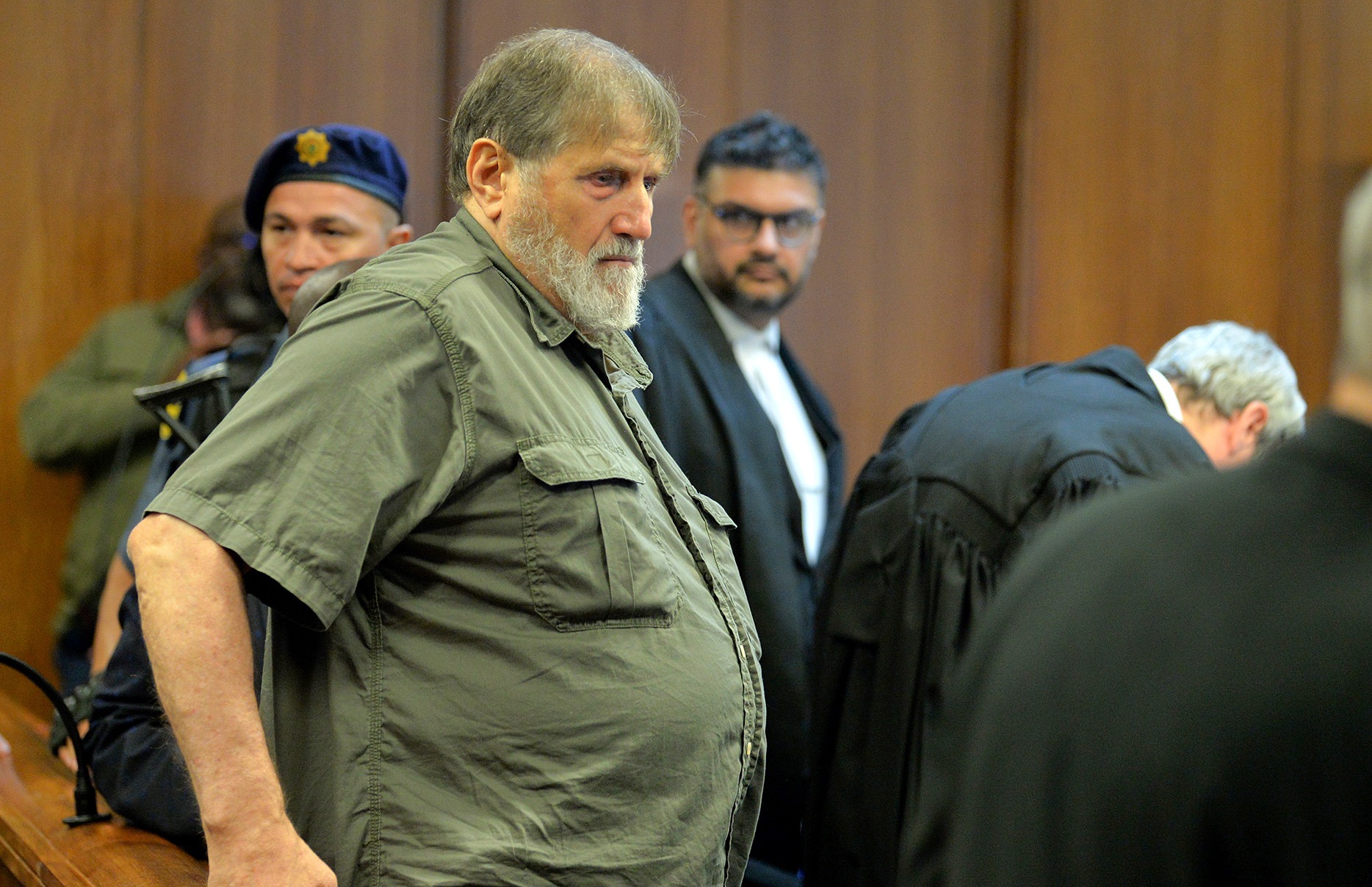
 Eugene de Kock in the Eastern Cape High Court in Gqeberha on 23 March, where he testified at the inquest into the deaths of the Cradock Four. (Photo: Deon Ferreira)
 /file/dailymaverick/wp-content/uploads/2025/10/label-analysis-2.jpg)
In the Eastern Cape Division of the High Court in Gqeberha, the former assassin and “professional torturer” Eugene de Kock appeared as a man weighed by the burden of his history, a horror story he has had to repeat over and over again, like a personalised mantra, starting in 1998 at the Truth and Reconciliation Commission (TRC).
His appearance at the inquest into the Cradock Four coincides with the Khampepe Commission of Inquiry into alleged political interference in the prosecution of TRC cases.
His information about the inner machinations of the apartheid state will bolster the argument of the families of apartheid-era victims that political interference and backroom political agreements stalled these prosecutions.
The man who took the fall
Established by President Cyril Ramaphosa in May 2025, the commission was the result of two decades of advocacy by the families of apartheid-era victims. These families sought the truth behind the atrocities and an explanation for the long-standing lack of criminal prosecutions.
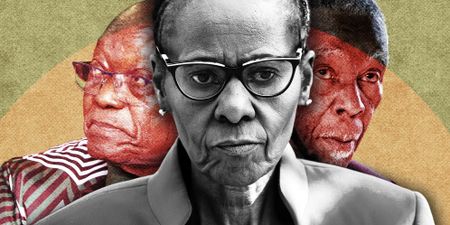
Former presidents Thabo Mbeki and Jacob Zuma have tried to have retired Justice Sisi Khampepe removed as chair. Ramaphosa has joined his two predecessors in the court action. Various applications by Mbeki and Zuma have delayed proceedings from the start.
/file/attachments/orphans/000074935_971657.jpg "ANC president Thabo Mbeki (centre) and national chairperson Mosiuoa Lekota share a light moment at the 52nd ANC National Conference on 16 December 2007, while Jacob Zuma looks on. (Photo: Johnny Onverwacht)")
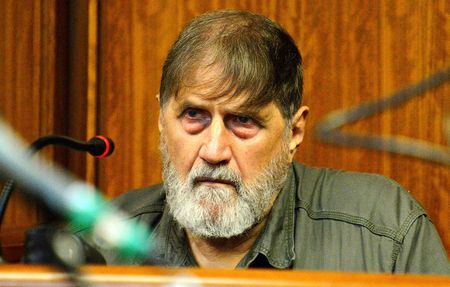
Eugene de Kock, the man who was called “Prime Evil”, is old and shuffling now and surely hopes this will be the last time that he has to rewind and repeat the atrocities that must haunt his inner life.
This is the man whom the apartheid generals and even the late former president, FW De Klerk, left to take the fall for heinous acts of kidnapping, torture and murder — a man shaped by an amoral system he believed in, which dropped him when the game was up.
De Kock told the court this week that he had played no part in the murder of the Cradock Four. He said he did not regard the activists as a threat and his job was to hunt “terrorists”.
Crimes against humanity
The sadistic killing of Matthew Goniwe, Fort Calata, Sparrow Mkhonto and Sicelo Mhlauli on 27 June 1985 was planned and executed by Security Branch policemen Hermanus Barend du Plessis and Eric Taylor, who had no connection to De Kock.
However, many other atrocities and crimes were planned and committed under De Kock, the former commander of the apartheid-era police counterinsurgency unit C10 at the farm Vlakplaas outside Pretoria.
He was the Judas goat who led a unit of men and Askaris (former liberation movement fighters) who did his bidding.
In October 1996, he was convicted of charges that included murder, kidnapping and crimes against humanity and sentenced to two life sentences plus 212 years. He served his sentence in the C-Max section of the Pretoria Central Prison and was released on parole in 2015.
On Monday, De Kock was accompanied to court by heavily armed police guards. After he testified, Lukhanyo Calata, son of Fort Calata, told the Herald that while De Kock was not responsible for the killing of his father, he was responsible for the deaths of many others.
/file/attachments/orphans/ED_561725_705285.jpg "Lukhanyo Calata testifies at the Cradock Four inquest at the Eastern Cape High Court in Gqeberha on 9 June 2025. (Photo: Lulama Zenzile / Gallo Images / Die Burger)")
Calata said, “I wanted to introduce myself and wanted to express my gratitude for him coming here.”
While De Kock had done a “small thing right” by coming to court, it was important to remember that “he was the same person who caused a lot of loss and hurt and pain to other families. He is not a hero.”
‘I feel dirty’
In 1997, after his sentencing, De Kock faced the TRC Amnesty Committee and said in Afrikaans: “Daar is tye wat ek wens dat ek nooit gebore is nie. Ek kan julle nie vertel hoe vuil ek voel nie. Ek moes nooit by die Suid-Afrikaanse Polisie aangesluit het nie. Ons het niks bereik nie. Ons het net haat agtergelaat.”
(“There are times that I wish I had never been born. I cannot explain how dirty I feel. I should never have joined the South African Police. We achieved nothing. We left only hate behind.”)
In 2015, Annemari Jansen published the book Eugene De Kock — Sluipmoordenaar van die Staat (Eugene De Kock — The State’s Assassin), a personal portrait of “Prime Evil” after she began visiting him in prison in 2011.
Jansen, who grew up in the same milieu as De Kock, wanted to understand what had shaped him and led him to become a ruthless killer who showed no mercy.
/file/attachments/orphans/DSC_3874copy_422423.jpg "Eugene de Kock testifies at the Cradock Four inquest on 23 March. (Photo Deon Ferreira)")
For the nation and the fatherland
Eugene de Kock was born in 1949 and named after the writer Eugene Marais. His father, Lourens, was a State prosecutor in Springs. His mother, Jean, was English-speaking and gentle, a widow when she married Lourens. The family, including his brother “Vossie”, lived on a plot near the town.
/file/attachments/orphans/WhatsAppImage2026-03-25at132627_810486.jpg "De Kock shortly after graduating from the Army Gymnasium in Pretoria in 1967. (Photo: Supplied / Annermari Jansen)")
/file/attachments/orphans/WhatsAppImage2026-03-25at124621_428382.jpg "De Kock in the ‘Rhodesian’ bush war. (Photo: Supplied / Annermari Jansen)")
The family’s stable domestic life crumbled as they ran out of money. Eugene’s father turned to drink and became abusive, inflicting violence on his wife. Sundays were reserved for NG Kerk services.
At school at the Hoërskool Voortrekker in Boksburg, physical punishment was meted out with a cane, a wooden blackboard compass, or a thick plank.
De Kock harboured a long-time ambition of becoming an officer, and after matriculating in 1967, he performed his compulsory year-long military service in Pretoria. He graduated as an infantry soldier, but chose the police over a military career in part because his stutter made him feel unsuitable for the SADF Officers’ College.
In the late 1970s, he was transferred to South West Africa (now called Namibia), where he joined the Security Branch at Oshakati. He co-founded Koevoet, a ruthless counterinsurgency unit. Its primary role was to track and eliminate members of the South West African People’s Organisation (Swapo) and its armed wing, the People’s Liberation Army of Namibia (Plan).
In 1983, De Kock was transferred to the C10 unit at Vlakplaas and promoted as the unit’s commander. Under his leadership, it became a roving death squad.
/file/attachments/orphans/0000105089_922764.jpg "Vlakplaas, a farm 20km west of Pretoria, was the headquarters of the South African Police counterinsurgency unit C10 in the apartheid years. (Photo: Craig Nieuwenhuizen / Gallo Images / Foto24)")
Sentencing De Kock in 1996, Judge Willem van der Merwe noted, “He strove to act according to an ideology that had influenced him since his youth and by following the example and influence of other senior police members who amplified this.”
De Kock’s strong religious beliefs, his patriotism and conviction that, through his actions, he would prevent “the demise of a civilised order”, had prompted him to act “against norms that he would have otherwise followed”, said Van der Merwe.
Eugene de Kock is the poster boy for the horror that befalls young men caught up in politicians’ wars driven by fear, hatred and malice and who are then abandoned, broken and alone. DM