




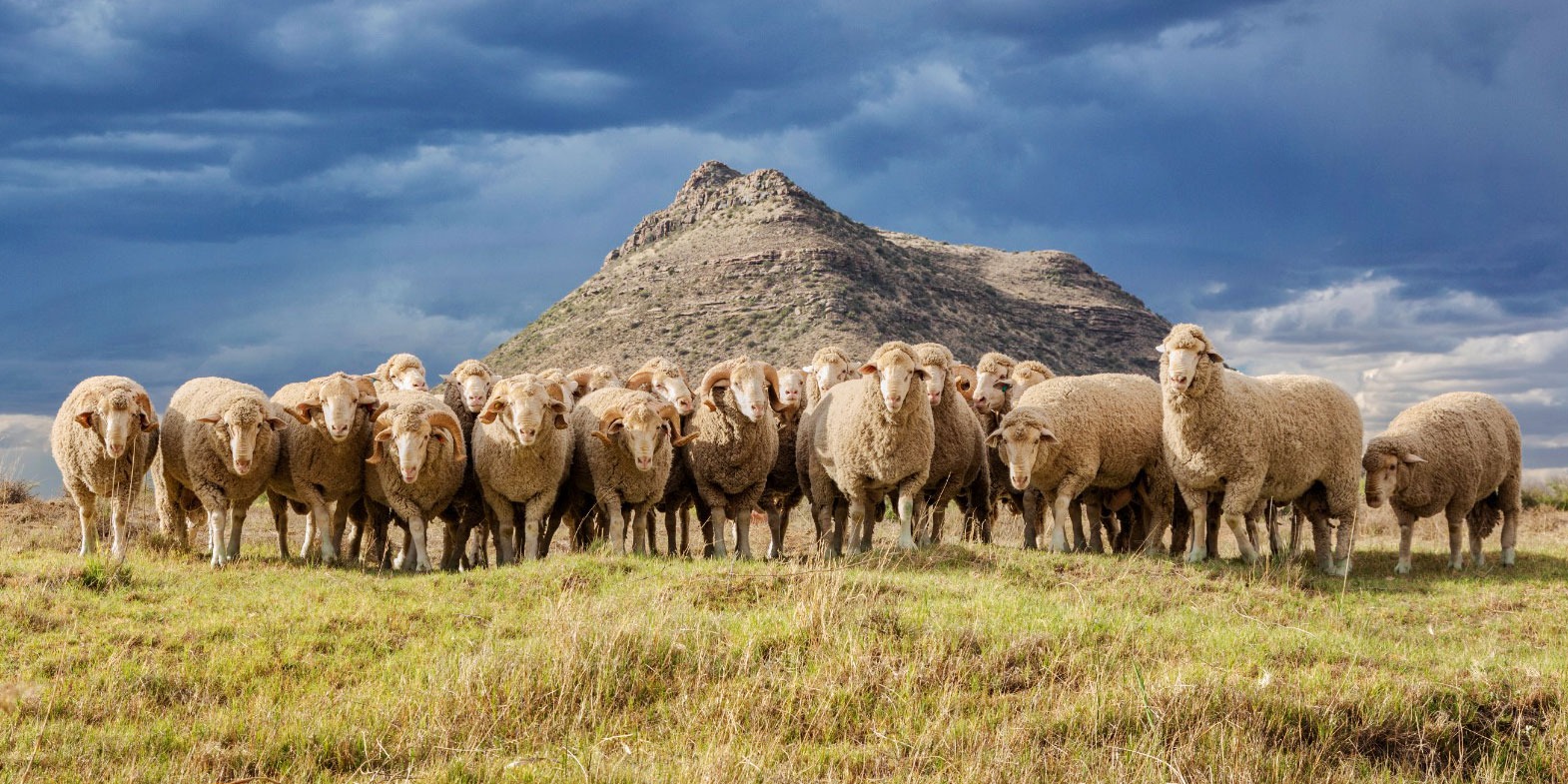
 South African wool markets have shown substantial growth in recent months as global demand for locally produced Merino wool has increased. Between August 2025 and March 2026, average wool prices at auction have increased by 40%. (Photo: BKB Group)
By filling a special niche in global trade, South African wool prices have surged to near-record levels, and demand for locally produced, certified sustainable wool shows no sign of slowing.
With the country’s largest wool broker situated in Nelson Mandela Bay, the metro plays a vital role in the continued growth of the booming industry.
Running from August 2025 to July 2026, the wool auction season has seen prices increase by more than 40%, reaching levels last seen in 2018.
Much like the rest of the world, the wool market took a knock after the Covid-19 restrictions, but has slowly clawed its way back to pre-pandemic levels.
While the world’s largest wool producer, Australia, faces crippling drought and other production challenges, smaller markets like South Africa can fill those gaps.
“South Africa produced about 40-million kilograms of wool in the previous season, and processed a further five million kilograms from producers in Lesotho. We only produce 2.4% of global supply, but we provide an exceptional product that is in high demand worldwide,” Cape Wool SA chief executive Deon Saayman said.
Wool exports totalled R4.5-billion in the 2024/25 season.
/file/attachments/orphans/Merino-Wool-2_356388.jpg "South Africa is the world’s second-largest producer of Merino wool and the top producer of certified sustainable wool. (Photo: BKB Group)")
At the first auction of the current season, the average wool price closed at R175.04 per kg, but that price has increased by leaps and bounds, and after the 26th auction, held on Wednesday, the market closed at R245.43 per kg.
Saayman said South Africa was the second-largest producer of sought-after Merino wool, and further set itself apart from other countries as the biggest producer of certified sustainable wool, adhering to the highest standards of environmental, animal and social responsibility.
The BKB Group, with a head office in Gqeberha, markets roughly 60% of the South African wool clip, and its wool auctioneer Leon du Plessis said that while certain sections of the market remained stable, others had shown exceptional growth.
“Finer varieties of wool, measuring below 18 microns, have remained fairly stable recently. Stronger classes, between 18.5 and 21 microns, which is the bulk of our wool, have seen the biggest jump.
“And our auctions sell out consistently, which reflects the demand for the product we produce here.”
Du Plessis labelled the most recent auction on Wednesday as quite small. Nonetheless, 6,600 bales of greasy (unprocessed) wool were sold.
He said finer varieties of wool were often destined for Europe, while the vast majority of South African wool was exported to China.
Du Plessis says South African wool classing standards and the quality of production conditions are the secret to its global success.
/file/attachments/orphans/Merino-Wool-1_824271.jpg "While wool volumes remain a concern for local brokers, South African wool prices have reached near-record levels for the 2025/26 season. (Photo: BKB Group)")
“Opinions on the quality of wool may vary, but I can say with certainty we have some of the best conditions for producing wool, which translates to cleaner wool with less dust, vegetation and other matter stuck to the wool prior to processing.
“Our classing is also world-class, and buyers appreciate wool that has been sorted well and labelled accurately according to what is in the bale,” Du Plessis said.
When asked about the biggest challenges to the industry, he said declining production volume was always problematic.
“Varying factors, from drought and veld conditions to animal health and global trade, can impact local production. Wool will always be a volume business and we need to ensure we can get as much wool of a certain type to fill shipping containers for our buyers.”
He said that while foot-and-mouth disease was not currently an issue, as they adhered to all the necessary protocols put in place by global importers, it was constantly on their minds.
“We have good relationships with importers, especially in China, that ensure we are kept up to date with any changes in their requirements, and so far we have been fortunate.”
Du Plessis said animal fibres, such as wool and mohair, remained at the core of BKB’s business, and as long as there was a positive outlook in the markets, the Gqeberha-based company would thrive. DM
Comments
Scroll down to load comments...