




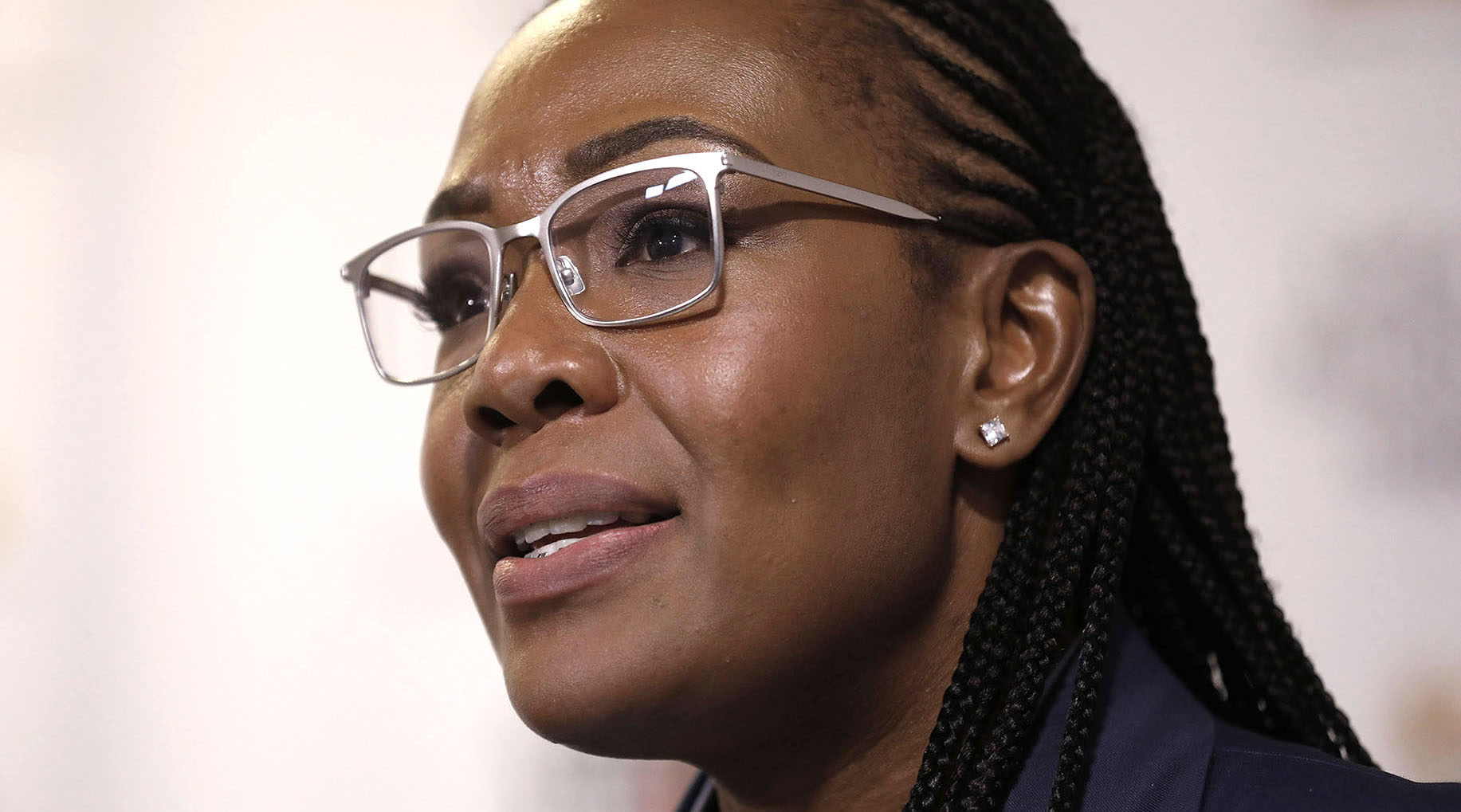
 Auditor-General Tsakani Maluleke. (Photo: Phill Magakoe)
The Auditor-General’s (AG’s) latest report on government departments and state-owned enterprises reveals that ongoing delays and systemic failures in delivering and maintaining public infrastructure remain the Achilles’ heel of service delivery in South Africa.
The 2024-25 consolidated general report on the national and provincial audit outcomes, released by AG Tsakani Maluleke on Thursday, 26 March, found that of 152 infrastructure projects that were audited by her office, 109 (72%) experienced delays.
The average project delay, the AG report revealed, was 41 months (almost 3.5 years), with some projects being delayed for almost 10 years.
This is an increase of 17% from the average delays of 35 months recorded in the 2023-24 financial year.
“Delays were often linked to a failure to appoint replacement contractors promptly, a lack of consequences for poor-performing contractors, administrative inefficiencies and delayed payments. These issues not only delay service delivery but also expose infrastructure to vandalism and theft, especially in the absence of security measures,” said Maluleke in her report.
The 152 infrastructure projects, implemented across South Africa by provincial and national departments and five public entities, had a combined estimated cost of R47.39-billion. They covered critical infrastructure such as schools, health facilities, housing, roads, water infrastructure and government buildings.
‘Slow down the spending’
In his 2026 State of the Nation Address, President Cyril Ramaphosa repeated his promise to turn the country into a giant construction site. He linked the infrastructure roll-out to addressing a wide range of challenges, from the water crisis to unemployment, economic growth and energy.
“Infrastructure is much more than an investment in brick, mortar, concrete and steel. It is an investment in jobs, productivity and growth. For many years, fixed investment has been declining. We are now changing that.
“Government has committed more than R1-trillion in public investment over three years to build and maintain infrastructure. This is the largest allocation of its kind in our country’s history. It will be transformative,” said Ramaphosa.
/file/attachments/orphans/WhatsAppImage2026-02-12at222451_996754.jpeg "President Cyril Ramaphosa delivers the 2026 State of the Nation Address. (Photo: Phando Jikelo/ Parliament RSA)")
Over the medium term, public-sector infrastructure spending is set to clock in at R1.07-trillion, reported Daily Maverick’s Lindsey Schutters. Of this, state-owned enterprises are expected to spend R577.4-billion, provinces R217.8-billion and municipalities R205.7-billion.
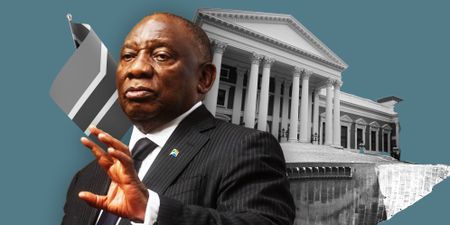
On Thursday, Maluleke cautioned against trying to get the job done too quickly.
“Somehow we have to accept that if we are going to give ourselves the best chance of rolling out infrastructure on time, at the right quality, at the right price, we might have to slow down the spending so that it is commensurate with our capabilities,” she said.
She added that many departments and entities across different sectors did not have the capabilities needed to match the scale of infrastructure development.
“We might have to be selective on what we do, when, so that it is matched by adequate capability to ensure that the money goes where it’s supposed to go. One of my anxieties is that money will continue to be sent to different entities and departments, and we’ll wonder why there’s still no cranes across South Africa,” she said.
Daily Maverick has reported that the government has struggled to get infrastructure projects off the ground in the past due to a shortage of engineers and project managers in local government and provinces to initiate and manage projects.
‘Project failures in human settlements’
According to the 2024-25 report, the human settlements sector experienced the longest infrastructure project delays, with some projects delayed for almost 20 years.
“These delays highlight deep-rooted weaknesses in project planning, execution and oversight,” said Maluleke.
The average delay in this sector, the report found, was 71 months — almost six years. (South Africa’s ailing water sector was not too far behind, with an average delay of 69 months.)
Maluleke’s office audited 24 housing projects across all nine provinces with a combined value of R5.67-billion. Of those 24 projects, the AG made findings on 23, while 20 (83%) experienced project delays.
“The high prevalence of findings indicates a systematic breakdown across the project life-cycle. Some projects have been delayed for close to two decades, pointing to chronic weaknesses in project management and delivery. KwaZulu-Natal reflected the most challenges, and all the province’s projects had findings in the project management and commissioning phases,” said Maluleke.
/file/dailymaverick/wp-content/uploads/2025/05/2025-05-07-11-04-55-566-1.jpg "The abandoned Montrose Mega City development in Middelvlei, Randfontein, on the West Rand, 7 May 2025. (Photo: Felix Dlangamandla).")
“Some projects were signed off as complete without addressing end-user needs such as connecting electricity, water and sanitation, due to poor project planning and weak intergovernmental coordination. The quality defects identified at over 60% of the projects may place the safety of residents at risk and are likely to result in additional remedial costs,” she added.
The four housing projects the AG’s office focused on in KwaZulu-Natal experienced delays ranging from nine to 19 years.
“For example, the Fitty Park housing project in uMnambithi (Ladysmith) was initially planned to deliver 300 houses by July 2021, but only 15 houses had been completed by 2025,” said Maluleke in her report.
‘Infrastructure maintenance is neglected’
In her report, the AG found that maintenance of public infrastructure remains neglected.
Daily Maverick has reported on the lack of maintenance in the water sector, which has led to residents in areas across South Africa experiencing prolonged water disruptions.
“The condition of infrastructure is heavily influenced by the adequacy of maintenance budgets and the effectiveness of systems and policies guiding upkeep.
“Our key maintenance-related findings include failure to conduct condition assessments as required by the Government Immovable Asset Management Act; a lack of approved maintenance plans; and non-compliance with fire, electrical and general safety standards,” said Maluleke.
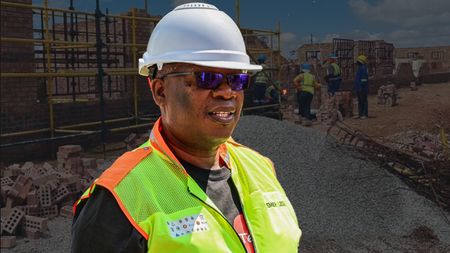
According to the report, the public works sector, as the custodian of government properties, is tasked with the maintenance of these properties, which include schools, health facilities, police stations and government buildings.
In the 2024-25 financial year, the sector was allocated R4.40-billion for maintenance.
The AG’s office audited 74 facilities to determine whether their maintenance needs had been adequately identified by their user departments.
Of these 74 facilities, the AG found:
- Condition assessments were not performed as required at 37 (50%) of the facilities;
- Fire and electrical safety standards were not adhered to at 56 (76%) of the facilities; and
- General safety requirements were not adhered to at 46 (62%) of the facilities.
One of the facilities the AG assessed was Matloding Primary School in North West, after a classroom ceiling at the school collapsed in February 2025 while learners were inside.
“In May 2025, we assessed the condition of the school and found it to be poor and requiring extensive repairs due to structural defects. Several buildings, including classrooms, were not in use because of structural damage. We found cracks in walls and walkways, non-functional toilets and lighting; rotten roof trusses; broken tiles, doors and windows; exposed electrical wiring; a blocked sewage system and vandalised computers,” said Maluleke.
Her report also revealed that the school did not have a reliable water supply after its borehole had dried up and the communal tap to fill the school’s water tank was vandalised.
“The deteriorated state of the school is primarily due to a lack of preventive maintenance, repairs and refurbishments over time. There is also no maintenance or infrastructure plan to address the maintenance needs of the school and improve the quality of learning,” said Maluleke. DM
Comments
Scroll down to load comments...