




 Image: supplied
 Access is a rights issue
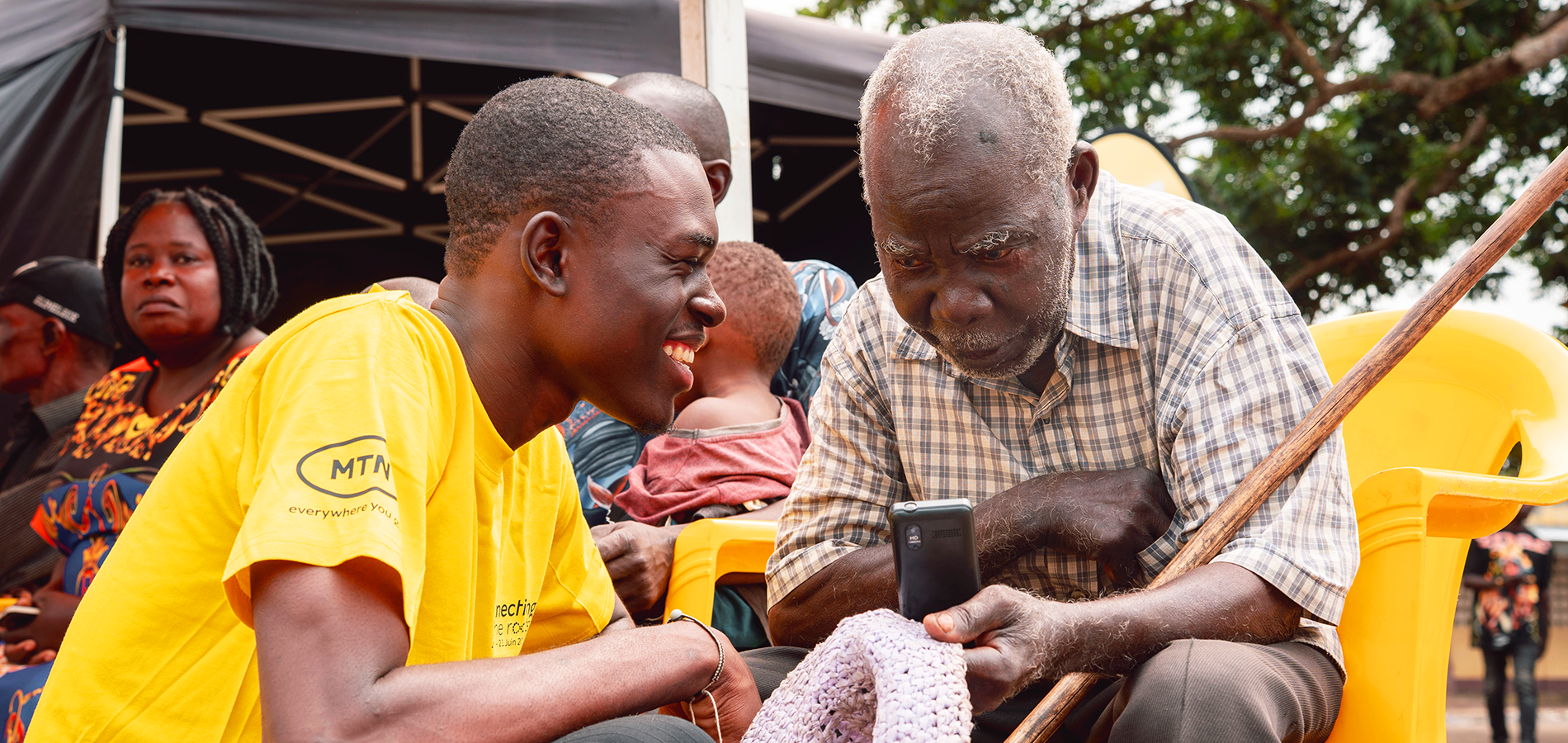
Across Sub-Saharan Africa, most people who remain offline already live within mobile broadband coverage; they are disconnected because devices, reliable connectivity and digital literacy remain out of reach. In South Africa, population coverage for 4G exceeds 95 percent, yet an estimated 20 to 25 percent of adults remain offline. Global research continues to show that the cost of an entry-level smartphone is the biggest obstacle to first-time adoption, and that affordable 4G devices could enable tens of millions of people to connect.
This is why operators, including MTN, are part of a continent-wide coalition developing minimum specifications for affordable smartphones and piloting early devices in selected markets. This includes South Africa, where device financing and entry-level smartphone initiatives are being scaled. These efforts are intentional interventions aimed at turning first connections into first opportunities.
Safety must be engineered, not assumed
Digital opportunity cannot exist without digital safety. Law enforcement bodies and industry analysts warn that scams, ransomware and business email compromise attacks are rising across Africa, with AI-driven deception becoming more common. In South Africa, cybercrime is among the fastest-growing offences, with thousands of cases reported annually and financial losses running into billions of rand. Consumers and small businesses are especially affected.
A rights-based digital society cannot rest on insecurity. MTN’s approach is practical and layered, investing where harms are most acute, especially in protecting children, pairing education with enforcement.
This includes long-standing collaboration with the Internet Watch Foundation to identify and block child sexual abuse material at source. Between July and December 2025, MTN South Africa inspected more than 33 million suspect URLs and blocked more than 800,000 of them, removing thousands of harmful URLs each day before they could reach vulnerable users.
Safety also extends beyond the network. In 2025, MTN partnered with MTV to launch the Room of Safety, a youth-led movement that reached more than 50 million people across Africa. The initiative offers young people safe spaces, both online and on the ground, to understand abuse, seek help and speak up. South Africa represented one of the largest audiences and a key focus. Complementing this, our work with Web Rangers enabled more than 3,000 learners to recognise risks, report harms and help build safer school communities.
Cybersecurity and privacy: trust is earned in practice
People will only embrace a digital life they can trust. South Africa’s data protection regime has strengthened, with the Information Regulator showing a clear willingness to enforce compliance and demand faster breach response. Privacy is not an administrative task; it is a responsibility grounded in rights.
MTN South Africa’s posture reflects this commitment. In 2025, we completed a nationwide rollout of real-time biometric identity verification across our stores to curb identity theft. A six-month pilot showed significant reductions in fraudulent attempts. The system, based on facial and fingerprint biometrics, now acts as a practical safeguard for customers at one of the most vulnerable touchpoints in the digital ecosystem.
For businesses, MTN offers advanced cybersecurity capabilities, including managed Zero Trust services and DDoS protection, helping South African firms strengthen their defences without large internal security teams. These measures work alongside disciplined governance, continuous training and rigorous information security controls.
Responsible AI means ethics from the start
AI can expand access to information and essential services, but it can also reproduce harmful bias if deployed without safeguards. International evidence shows that generative models may entrench stereotypes if governance falls behind innovation. Africa has responded with intent. The African Union’s continental AI strategy, developed with UNESCO, places human rights, inclusivity and linguistic diversity at its core.
At MTN, we embed these principles through strong governance, guided by our Responsible AI Policy and the BRAIN framework (Balance, Responsibility, Awareness, Integrity, Nurturing). This ensures ethical, safe and accountable AI aligned with global standards.
Accessibility is non-negotiable
Equal participation depends on communication access. In South Africa, MTN’s National Relay Service enables real-time text and video relay calls, including South African Sign Language interpretation, for customers who are Deaf, hard of hearing or living with speech disabilities. This supports everyday communication, access to emergency services, and the fundamental principle of independence and dignity. Accessibility is not an add-on; it is a baseline for an inclusive digital society.
Technology should advance social justice
Technology should advance and enable fundamental human rights and social justice. Connectivity must improve life chances, not only connection statistics, by expanding access to education, healthcare, economic participation and freedom of expression.
This is why we pair infrastructure with initiatives that lower device costs, strengthen online safety and build inclusive digital skills. By advancing access, skills, capability and protection together, we help realise digital rights in practice. Access, skills and safeguards must move forward together so that technology opens doors rather than deepens divides.
Our work is intentional, rooted in the belief that dignity should shape every digital experience and that opportunity should reach everyone. We build with Africa, listening and learning, and remaining accountable for the future we help shape.
A call for partnership and purpose
The outcome we seek is not a faster internet for the few, but a dignified digital life for everyone. Achieving this requires recognising digital access as a rights imperative, designing safety into networks, platforms and behaviours, especially for children, strengthening governance and privacy beyond compliance, and embedding ethical AI and accessibility into every layer of digital transformation.
South Africa has the talent and institutional depth to lead Africa’s digital future. A digital society built on dignity is within reach. DM
Author: Nompilo Morafo, Group Chief Sustainability and Corporate Affairs Officer
/file/attachments/2990/NompiloMorafoGroupChiefSustainabilityandCorporateAffairsOfficer_857843.jpeg)