




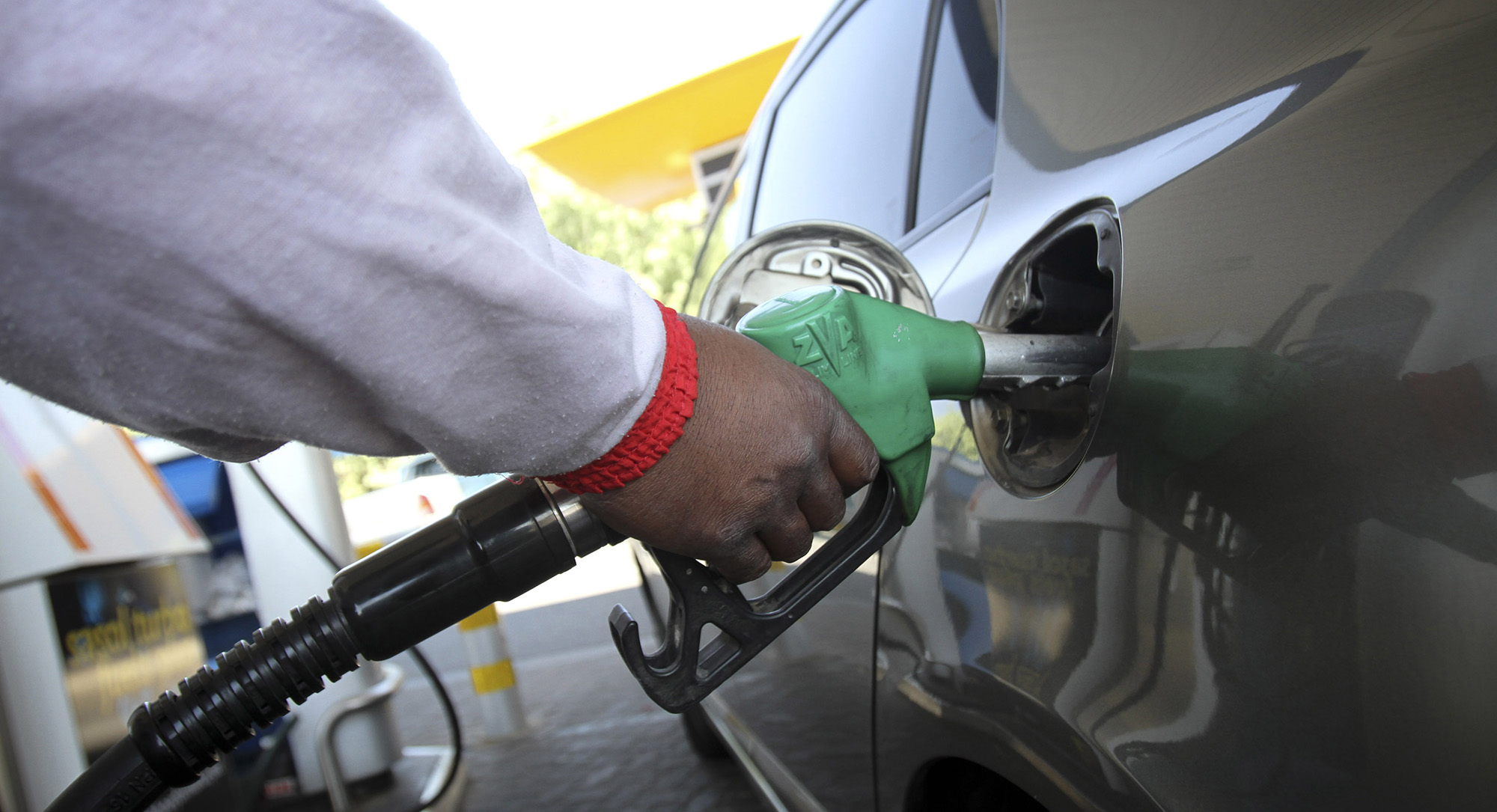
 A petrol attendant fills a car with fuel at a Sasol station in Johannesburg. (Photo: Nadine Hutton / Bloomberg via Getty Images)
 “Let me explain this in simple terms. Our crude oil is sourced from Africa, not in the Middle East,” Minister Gwede Mantashe of the Department of Mineral and Petroleum Resources (DMPR) told the National Assembly on Wednesday, 25 March.
Fielding questions in the National Assembly on widespread reports and rumours of fuel shortages, Mantashe said the Strait of Hormuz was allowing cargo ships to come to South Africa without interruption. “So that means we have a chance of a stable supply over the long term. There should be no panic in society,” he said, adding that fuel supplies had been secured until the end of April.
/file/attachments/orphans/ED_5772951_167374.jpg "The minister of mineral and petroleum resources, Gwede Mantashe. (Photo: Sharon Seretlo / Gallo Images)")
Mantashe said South Africa currently had eight million barrels of oil in its strategic reserves, to be used “only when there is a real crisis”.
“We import crude, we will continue rebuilding Sapref [SA’s largest crude oil refinery] and PetroSA [SA’s national oil and gas company] to increase our refining capacity, but for this current crisis, we depend on what is in place. We have a reliable supply of energy, and people should relax and not be panicking,” he told Parliament.
/file/dailymaverick/wp-content/uploads/2025/11/sed-5-sapref-refinery-image-Linkedin.jpg "The Sapref fuel refinery in Durban. Photo: Sapref LinkedIn page)")
On the question of energy supply, he said there was a 60/40 split, with 60% of refined products imported and 40% processed in SA refineries.
Mantashe’s words echoed those of Avhapfani Tshifularo, chief executive of the Fuels Industry Association of South Africa (Fiasa), who had told journalists at a media briefing earlier in the day that South Africa’s biggest suppliers were Nigeria, Ghana and Angola.
Pressed for an answer about companies withholding stock, Mantashe retorted that the situation was being monitored and he had reports that “people are holding diesel in anticipation of increased prices. That is illegal. If we find you doing that, we are going to pursue you legally because it is unfair. Anybody holding diesel in anticipation of an increased price is actually behaving in a difficult way.”
Agricultural sector
There have been isolated reports of shortages due to suppliers not releasing fuel to customers, which is affecting the agricultural sector. Agri WC reports that some farmers are only receiving ~20% of their usual monthly diesel allocations. These effects are most acute in the Garden Route and West Coast Districts.
Tshifularo said that in terms of reports of fuel stations running dry on diesel, it was a function of the logistics supply system. “If you are going to see unusual demand in an area that gets its supply from a particular depot, that is what is likely to happen. We have heard reports of people going to the sites with bowsers of 3,000 litres, even attempting to buy 16,000 litres at a service station,” he said.
“That is a function of people panic buying; it does not reflect the product available at the ports, the depots. We have product, there is no shortage,” he explained, adding that the country had not run out of diesel.
Daily Maverick contacted a few fuel stations in Caledon, where it was reported that there were shortages. While two fuel stations reported no problems, the third told us, “It is a supplier problem. For example, we ordered 20,000 litres of diesel, and we only received 5,000 litres.”
Western Cape Premier Alan Winde said, “There is no cause for concern. There is more than enough fuel in reserve. All suppliers must immediately release full orders of fuel to all clients. We will not tolerate suppliers unethically holding onto fuel while our agricultural sector is under pressure.
“Fuel is a critical resource for the agricultural sector, particularly as we head into the fruit picking and winter grain planting season. This is a sector already under pressure as a result of foot-and-mouth disease; it is unacceptable that unnecessary fuel rationing now poses an additional stressor.”
/file/attachments/orphans/ED_597012_537826.jpg "Western Cape Premier Alan Winde. (Photo: ER Lombard / Gallo Images)")
Other provinces have reported fuel shortages.
The Nelson Mandela Bay Chamber of Commerce says a snapshot survey among its membership revealed that 25% of respondents do not have immediate access to fuel, while 26% indicated that they had been rationed. These businesses are expecting increases in operational and input costs, which are likely to reduce profit margins as they absorb the additional costs, which may later cause inflation levels to increase.
Raphi Maake, the director for fuel pricing mechanism at the DMPR, said the issue of people trying to buy fuel before prices are adjusted “happens all the time. It’s just that this time, it’s magnified, maybe because of the amount of the increase we anticipate.”
NMB Chamber of Commerce chief executive Denise van Huyssteen pointed out that the fuel price had a direct bearing on all sectors of the economy and as it increases, so too does the cost of transporting goods to export and domestic markets, which in turn results in the prices of consumables, intermediate goods and finished products increasing. This will further increase the cost base for local businesses, which may need to reduce expenses, restructure their operations or even close.
“A further concern compounding the issue is the reliability and security of fuel supply. South Africa is highly reliant on refined petrochemicals such as diesel, petrol and paraffin, and over the past few years, it has reduced the number of its fuel refineries, further increasing reliance on imported fuel supplies. Our survey further revealed that 32% of businesses are directly aware of specific fuel and service stations, which are experiencing shortages of petrol and diesel,” she said.
Van Huyssteen said it was “vital” that South Africa had mitigation measures to ensure that alternative fuel sources are secured, so that there are no disruptions to supply and that fuel price increases are contained as far as possible.
“Furthermore, it is critical that urgent measures are implemented to prevent price gouging, panic-buying and stockpiling by opportunistic sellers,” she said. DM