




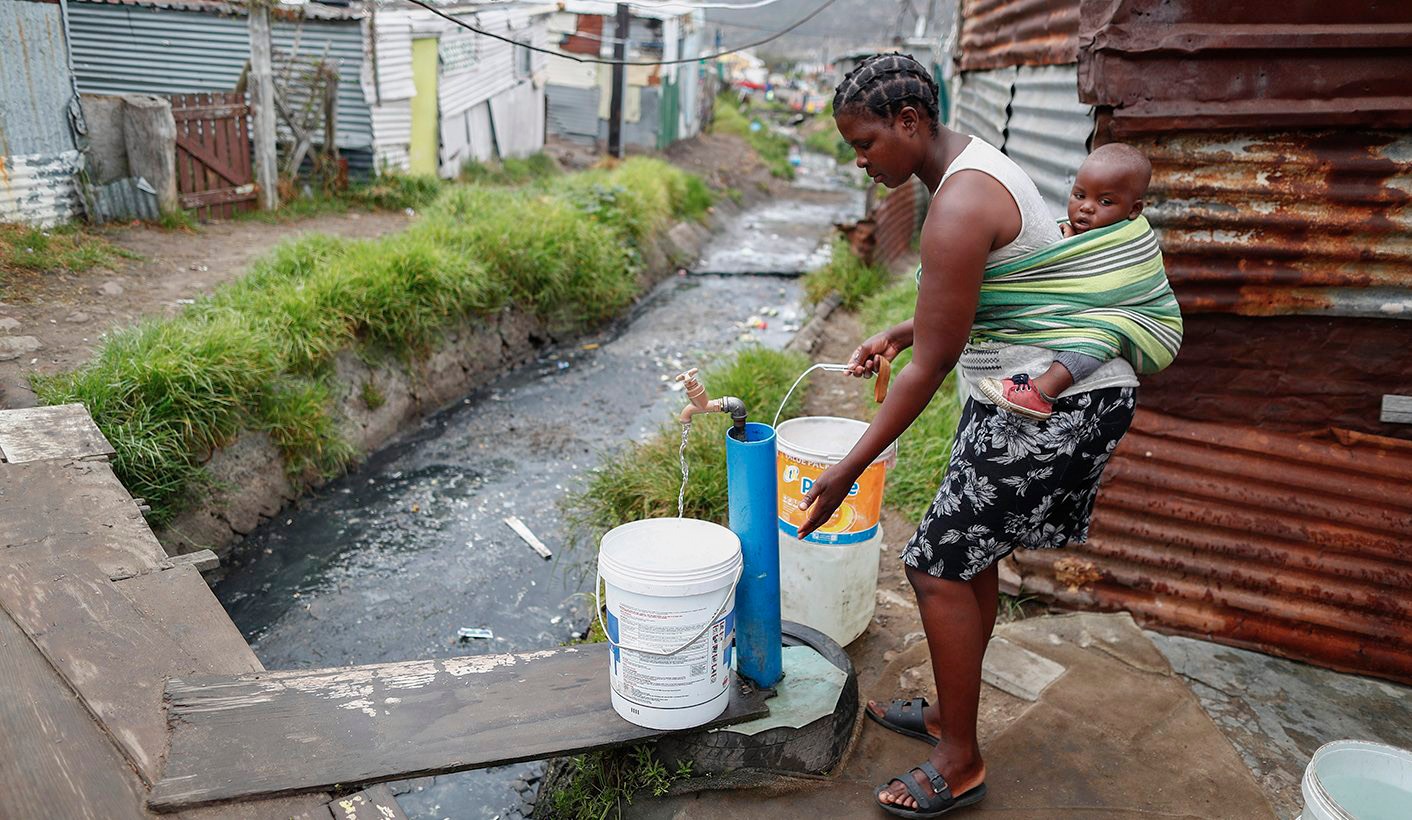
 A resident of Masiphumelele collects drinking water from a communal municipal tap in Cape Town, South Africa. (Photo: EPA-EFE / Nic Bothma)
 /file/attachments/2989/label-Op-Ed_407469.jpg)
Water is fundamental to sustaining life. However, in South Africa, dependable access to this vital resource is becoming increasingly uncertain – not due to lack of water in the country’s reservoirs, but as a result of aging and deteriorating infrastructure systems. According to PwC’s Economic Impact of water Insecurity report, SA may experience a 17% gap between water demand and supply 20230 if critical investments in infrastructure are not undertaken.
The 2023 No Drop Report by the Water Research Commission indicates that non-revenue water has increased from 41% to 47%, primarily due to leaks, illegal connections, pipe bursts, and weaknesses in municipal billing systems. These issues were further emphasised by SA’s minister of water and sanitation during the 39th African Union Assembly of Heads of State and Government in Addis Ababa in February 2026, who highlighted that nearly half of the country’s treated water is lost due to aging infrastructure and vandalism, and that more than 50% of wastewater treatment plants are operating in poor or critically poor condition.
As the world commemorated World Water Day 2026, under the theme “Water and Gender”, we are reminded that reliable water infrastructure is a key enabler of gender equality. Unreliable water supply is not just a technical problem, it is a social justice issue that disproportionately affects women and girls. When water supplies become unpredictable, the responsibility for securing household water often falls to women.
According to Unicef, the UN’s children fund, women and girls around the world, including in SA, collectively spend an estimated 250 million hours every day collecting water in areas where reliable access is lacking. In the absence of dependable water supply systems, the burden of water insecurity continues to perpetuate and deepen gender inequality.
/file/dailymaverick/wp-content/uploads/2025/08/DSC_3356.jpg "A Johannesburg Water technician at the damaged 375mm bulk water pipe at the corner of Milner Avenue and John Adamson Drive in Montgomery Park, Randburg, after flooding was stopped on 5 August 2025. (Photo: Julia Evans)")
Infrastructure and operational realities
SA’s water challenge stems less from scarcity and more from shortcomings in infrastructure performance and system management. Municipal reticulation networks – that convey treated water from plants to communities – are under mounting pressure due to aging distribution systems, illegal connections and vulnerable pumping stations. Many pipes and joints have become increasingly susceptible to leaks and bursts, while numerous pumping stations struggle to meet rising demand.
Electricity instability further exacerbates the challenge. Water systems depend heavily on consistent and uninterrupted power supply to operate pumps and maintain adequate pressure throughout distribution networks. When outages or voltage fluctuations occur, pumps cease to function, pressure drops and water supply is disrupted. Subsequent power surges, once electricity is restored, can inflict additional damage fragile infrastructure, increasing the likelihood of further failures.
Collectively, these factors result in millions of litres of treated water being lost before reaching households and businesses, underscoring the urgent need for resilient and modernised water infrastructure.
/file/dailymaverick/wp-content/uploads/2024/03/MC-Chwebeni-Water-Estelle-water006.jpg "Women in Cwebeni Village, Eastern Cape, brave a narrow path daily to collect water from a source shared with cattle. (Photo: Deon Ferreira)")
System failures and social impact
In many cases, faults develop gradually, such as rising vibration or temperature in a pump, but remain unnoticed until a complete failure occurs. Without digital monitoring, municipalities often only respond after the issue has escalated. Response times to such failures typically range from four to 12 hours, with repairs taking 12 to 48 hours depending on location and the availability of spare parts. This can leave communities without water for 16 to 60 hours per incident, with each pumping station experiencing an average of eight to 15 unplanned outages annually.
Such outages result in prolonged outages that leave communities without water for extended periods. At the household level the impact is felt most acutely, where women are often responsible for managing water access, reinforcing the direct link between infrastructure performance and gender inequality.
/file/dailymaverick/wp-content/uploads/2021/12/MC-RuralWomen-GBV_1-1.jpg "Infrastructure failures lead to significant water loss, leaving communities without access for extended periods – reinforcing gender inequalities in household management. (Photo: Black Star / Spotlight)")
Collaboration and innovation
Addressing these challenges requires a coordinated effort across government, water boards, communities and industry. Strengthening infrastructure resilience, improving operational visibility and embracing digital technologies are critical steps toward ensuring reliable supply.
Smart solutions that combine electrification, automation and digital monitoring enable water boards to optimise pump performance, detect leaks early and maintain stable pressure, significantly reducing unplanned outages and improving service consistency. Beyond operational benefits, these solutions also support social equity by alleviating the daily burden on households, particularly women and girls.
With targeted investments and strong public-private partnerships, infrastructure can be transformed into resilient systems that deliver reliable, sustainable and equitable water for all.
This World Water Day serves as a reminder that water is far more than pipes and pumps, it is fundamental to sustaining livelihoods, safeguarding public health and advancing gender equality. By modernising water systems today, SA can help ensure that in the future, women and girls are no longer disproportionately burdened by water scarcity, thereby fostering resilient and inclusive communities for generations to come. DM
Joyce Moganedi is the Local Division Solutions Sales Manager at ABB Automation: Energy Industries South Africa, and Ritesh Rughoonandan is the Head Of Product & System Drive Sales – ABB Motion business ZA & SSA.