




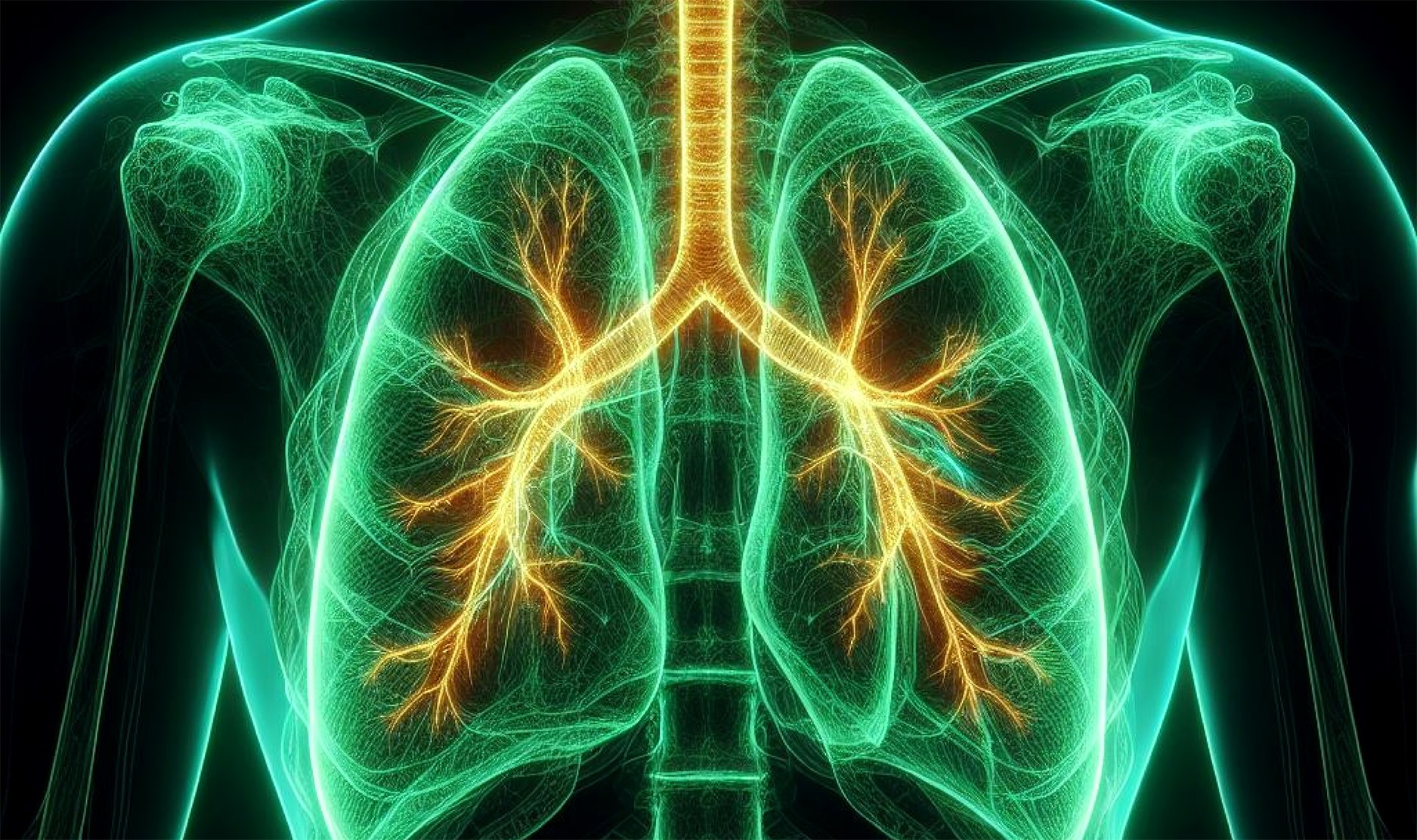
 Even in the absence of clear TB symptoms, the disease might silently be causing damage to the lungs. (Image: David Sánchez-Medina Calderón / Pixabay)
 /file/dailymaverick/wp-content/uploads/2025/10/label-Op-Ed.jpg)
Tuberculosis (TB) is a tenacious bug. The disease, caused by the bacterium Mycobacterium tuberculosis, has survived and thrived among humans for millennia, even though it can be cured by antibiotics. About 10.7 million people around the world fell ill with TB in 2024. In South Africa, it claims more than 50,000 lives a year, according to the World Health Organization (WHO).
The bug has adapted extremely well to evade our immune systems and to spread among humans through tiny droplets in the air. Inhaling these droplets doesn’t automatically mean it will flourish in your lungs and cause TB disease. In fact, only around one in 10 people exposed to the bug will go on to develop TB disease. People with compromised immune systems are at increased risk.
We know a good deal about TB and its complicated interactions with the human body, but there are still big gaps in our understanding of the bug. Fortunately, some important research into these gaps is continuing, despite cuts to medical research funding from the United States government, which had been the largest funder of TB research for the past decade.
On arguably the most exciting frontier in the science of TB, researchers have recently been lifting the lid on what may be one of the most effective weapons in the bug’s armoury – stealth. In short, someone might have TB in their lungs and be infectious but be completely unaware of the fact. In this Spotlight special briefing, we take stock of what we know about this state, called “asymptomatic TB”, and try to come to terms with its far-reaching implications for our ongoing battle against this age-old illness.
What is asymptomatic TB?
The classic symptoms of TB are persistent cough, night sweats, fever, fatigue, chest pain and weight loss. At its simplest level, asymptomatic TB is a state where the bug is active in someone’s body, but it is not, or not yet, resulting in these symptoms.
Yet, as is the case with most illnesses and people’s individual immune responses, the reality is often more complicated. Instead of a simple on-off switch, TB disease manifests in a wide variety of ways. The precise symptoms and their severity can differ widely from person to person. When symptoms are mild, it can be particularly difficult to distinguish TB from other infections, or even to identify them as anything unusual.
One might be tempted to dismiss concerns about mild or asymptomatic TB disease – after all, why be concerned about a disease with little or no symptoms? But appearances can be deceiving. Even in the absence of clear symptoms, TB disease might silently be causing damage to the lungs. This damage could lead to irritation and inflammation that could result in symptoms months, or even years, down the line. Precisely because asymptomatic disease often presents without symptoms, TB may go undetected for longer, resulting in more damage to the lungs and leading to a person eventually becoming sicker.
To further complicate matters, asymptomatic TB itself presents as a spectrum of disease, points out Thomas Scriba, a professor of immunology at the SA Tuberculosis Vaccine Initiative, a large research group at the University of Cape Town. Some people with active TB disease and no symptoms may have mild illness, while others with active TB disease and no symptoms may have more severe disease.
Inflammation is considered a good indicator of how intensely the immune system is responding to a threat, like an infection with TB. Scriba was involved in research (for now only published as a preprint) suggesting that, on average, asymptomatic TB causes less inflammation in the body than symptomatic disease. TB disease typically causes inflammation in the lungs and lymph nodes around the lungs, which in turn is responsible for some of the classic TB symptoms. It thus fits that a lack of symptoms should go hand in hand with lower levels of inflammation.
And then there is the risk to others. While one person’s TB might be mild or asymptomatic, they might transmit the bug to a friend or colleague in whose body the bug causes life-threatening illness.
Many infections have an asymptomatic component, says Scriba. With the SARS-CoV-2 virus, some people get very ill, others just have “the sniffles” or lose their sense of taste but are otherwise fine, and some are completely asymptomatic. This asymptomatic group contributed to the spread of SARS-CoV-2, though we don’t have a clear picture of how much. A similar dynamic is likely at play with TB.
Lack of symptoms or lack of reporting?
A further complication is that symptom reporting for TB can be unreliable for a number of reasons, as explained by Dr Keertan Dheda, a leading TB researcher, in a recent commentary in the Lancet medical journal. These include recall bias and TB stigma. He cited community-based TB prevalence surveys where about half of people with confirmed TB said they have no symptoms.
Part of the challenge here is how one defines what qualifies as TB symptoms and what does not. It would after all be absurd for everyone with a slight cough and some fatigue to suspect they have TB. Set the threshold for symptoms to low and you throw the net too wide – set the threshold too high and you’ll miss cases. There is yet a further complexity in that asymptomatic TB may have its own set of much more subtle symptoms.
“I think the take-home message really is we can’t wait for people to develop symptoms and for those people to self-present for care because there are people that are not experiencing symptoms or noticing symptoms and are not presenting for care, who also have TB and are probably transmitting [it] onwards. And so, fuelling the epidemic in that way,” Scriba says.
How infectious is it?
One of the big scientific unknowns about asymptomatic TB is how infectious it is. Scriba says there haven’t been any large, well-designed studies looking at this yet.
“Studying the successful transmission of TB from one person to another person is not easy and requires very large and expensive studies,” he says.
Based on what we do know from TB research in general, Scriba says that usually the amount of TB bacteria that can be detected in sputum (a thick mucus coughed up from the lungs) does correlate with infectiousness. Simply put, the more TB bacteria someone has in their sputum, the more likely it is that they will transmit the disease to others when they cough or breathe.
Because there have been people in studies who are asymptomatic but test positive for TB through sputum-based smear microscopy – a test which requires a lot of TB bug to be present in order to show a positive result – researchers like Scriba think it’s highly likely that some people with asymptomatic TB are contributing to TB transmission. The big unknown is by how much.
How prevalent is it?
There is also significant uncertainty about how common asymptomatic TB is, although some rough numbers have been emerging.
Global figures from a systematic review and meta-analysis of TB prevalence surveys from Africa and Asia found that about 50% of people diagnosed with TB did not report any symptoms.
Simon Mendelsohn, a clinical investigator at the SA Tuberculosis Vaccine Initiative, cautions that this might be an underestimate because of how these surveys are conducted. Speaking on a webinar in January, he explains there is usually a pre-screening component to surveys, where participants are asked about symptoms and have their chests X-rayed. If they are negative on both these counts, the participants aren’t investigated further, meaning those with asymptomatic TB or mild TB disease might be going undetected.
SA’s first National TB Prevalence Survey found that just over half of the participants with TB that was confirmed through molecular testing, did not report having any TB symptoms.
Changes to TB testing
Until just a few years ago, SA’s strategy for testing people for TB relied largely on waiting on people to report to clinics with symptoms, or because they were identified during screening drives. This approach meant that asymptomatic TB was going largely undetected and untreated.
But as it became clear that this approach was missing many TB cases and evidence mounted of the substantial burden of asymptomatic TB, pressure grew for a more active approach to TB detection. For example, in a commentary published in April 2021, Dr Yogan Pillay, then with the Clinton Health Access Initiative, argued: “For asymptomatic TB, screening and testing of all TB contacts should be expanded and the use of digital hand-held portable X-ray machines should be considered.”
As we outlined in a previous Spotlight special briefing on South Africa’s TB testing efforts, an important shift occurred with the introduction of the country’s targeted universal testing. The approach involves testing people who are considered to be at high risk of TB, whether or not they have symptoms. High risk is typically defined as household or close contacts of people diagnosed with TB, people living with HIV, and people who have had TB disease within the last two years. Targeted universal testing was shown to improve TB detection in a landmark study first reported in late 2020.
Linked to the targeted universal testing strategy, there is also the EndTB campaign that was launched by the national Department of Health on World TB Day in 2025. The aim is to conduct five million TB tests in 12 months – since this number is much larger than the number of people with TB symptoms, it will include lots of people who do not have symptoms.
Since the campaign started, about 2.9 million people have been tested for TB and around 150,000 tested positive, according to a National Institute of Communicable Diseases dashboard. Though the five million target will thus be missed, it does look like more TB tests will be done this year than in any other year in the last decade.
But there are also some concerns about how well the targeted universal testing programme is working. According to estimates from the Thembisa model, about 1.2 million people living with HIV were tested for TB in 2024 as part of the targeted universal testing programme. Of those, only about 12,000 (one in 94) started TB treatment. Dr Leigh Johnson, the lead developer of the model, however cautions that these estimates are highly uncertain. Either way, there is a suggestion that at least the HIV part of the targeted universal testing programme could probably be better targeted.
Will we get better tests?
One challenge in testing for TB is that the accuracy of most tests depends on whether people can cough up sputum and how much bacteria there are in the sputum sample. As it is, many TB cases treated in SA are not confirmed with a laboratory test. The lab tests we have are more likely to miss TB in people with HIV, since the concentration of bacteria is lower in their sputum samples. On average, the bacterial load is also lower in samples from people with asymptomatic TB.
As Scriba points out, there simply isn’t a diagnostic test yet that will be able to detect all cases of asymptomatic TB.
There is also a question of what screening to do prior to asking someone to provide a sputum sample for molecular testing. Here there is evidence that screening with chest X-rays and symptoms is better than either are on its own. For example, in a small South African study published in the Lancet medical journal, of 979 household contacts of TB patients, researchers found that symptom screening alone would miss about eight in every 10 cases of TB, chest X-ray screening alone would miss three, and symptom and chest X-ray screening combined would miss only two.
According to a meta-analysis by Mendelsohn and others, symptom screening has a sensitivity of only about 50%. X-rays were estimated at around 62% and the two combined were at 67%. Sensitivity refers to a test’s ability to correctly indicate the presence of a bug in a test sample.
There are still many unanswered questions here, says Mendelsohn, like the cost implications of performing universal sputum testing versus using pre-screening approaches of symptoms or chest X-ray. Because of cost constraints, there might be a role for universal sputum testing in high-risk groups instead of pre-screening them.
One of the ways in which researchers are hoping to improve the identification of asymptomatic TB is by using blood-based biomarkers. These are tests that look for a specific marker in someone’s blood that is caused by the TB bacterium or the body’s response to it.
A well-known type of blood-based biomarker test for TB is the interferon gamma release assay. However, this type of test has limited value since it can only show you if someone has been exposed to TB before, not if they currently have TB disease. There were hopes that an inflammatory marker called C-Reactive Protein might help us distinguish between asymptomatic TB and non-TB, but findings from a recent study on the approach were underwhelming.
Scriba says that there isn’t currently a clear front runner for an asymptomatic TB test, but it is important that researchers keep looking, as they will indeed be doing.
A large asymptomatic TB study is set to start later in 2026 in SA and Indonesia. It will contain a sub-study evaluating how well several novel TB tests are able to detect asymptomatic TB. The researchers plan to evaluate tongue swabs, a bioaerosol collection face mask, exhaled breath condensate and two blood tests.
How is it treated?
According to SA’s TB treatment guidelines, everyone who is diagnosed with TB, whether symptomatic or not, is treated using the same six-month treatment course. Treatment for drug resistant forms of TB can take longer.
People typically become non-infectious within a few weeks of starting the standard TB treatment. As with symptomatic TB, treatment of asymptomatic TB should thus prevent further transmission of the bug.
One tantalising idea is that people with asymptomatic TB, who are not very ill, could be cured with a shorter TB treatment course, possibly also consisting of fewer medicines than the standard four antibiotics used to treat symptomatic disease. However, it isn’t yet clear how to identify which people meet the criteria of less-severe disease, and if you could identify them, which combination of medicines you’d use to treat them, and for how long.
Based on the success of TB preventative therapy, where someone exposed to TB takes one or two antibiotics to kill the bug before they become ill, Scriba suggests that mild asymptomatic TB might be cured with simpler, shorter regimens. Ultimately, as he points out, we will need large, well-designed clinical trials to answer such questions.
There is also a more immediate concern. Preventative therapy is sufficient for the treatment of healthy people with latent TB infection – where the body essentially has the bug under control. However, it is likely not to be sufficient for people with asymptomatic TB – where, even though there are no symptoms, there is already disease and the immune system does not have the bug under control.
The fear around accidentally treating people with asymptomatic TB with TB preventative therapy is twofold. Firstly, it may not work for the individual in question since the drug combination is not strong and varied enough. Secondly, it might encourage the development of drug resistance. How we should deal with this risk, and how big this risk actually is, is unclear at this point.
And then there is the exciting possibility of a new TB vaccine. A vaccine called M72 has already shown potential for preventing the development of TB disease in people with latent TB infection in a large phase 2 clinical trial. The vaccine is being assessed in a massive phase 3 study, partly being conducted in SA. It is likely that a vaccine that prevents active TB disease will also provide some protection against asymptomatic TB.
/file/attachments/orphans/ThemanyunansweredquestionsofasymptomaticTB_397670.jpg)
The way forward
As we’ve outlined in this Spotlight special briefing, there are many unanswered questions about asymptomatic TB. We don’t know exactly how many people have it. We don’t know how infectious it is. We don’t know the optimal way to treat it. And we don’t know how much it is contributing to the transmission of TB in SA.
But what we do know for sure is that there are many people in SA who have asymptomatic TB and that we won’t find them if we rely mostly on symptom screening.
This knowledge makes it vital that we invest in finding answers in the areas where we for now have mostly unanswered questions. If we want to combat TB more effectively, investing in research on asymptomatic TB is non-negotiable.
This is not just a matter of advancing our scientific understanding of asymptomatic TB, it is also about making sure our TB programmes focus in the right areas. Better information about asymptomatic TB will help us to better allocate resources in our public healthcare system. In addition, if asymptomatic TB is as widespread as we suspect it might be, we’ll need good evidence to advocate for the additional resources we might need for new diagnostics or testing programmes.
But we need not wait for all the answers before we act. The government’s targeted universal testing strategy and ambitious testing targets are steps in the right direction. After all, if you are failing to diagnose many people, simply testing more people makes sense.
The challenge now is to continuously refine and improve the TB testing programme and to introduce new tests when and where it makes sense to do so. We may also have to rethink some of our testing algorithms. Until there are new, better tests, Scriba suggests diagnostic efforts among high-risk groups should use both X-ray screening and a sputum-based test.
Take a step back from such details, and there is a wider context to consider. Until now, the story of asymptomatic TB – or sub-clinical TB as it used to be called – has mainly been told in medical journals, WHO press releases, and at scientific meetings. That is understandable, but it needs to change. After all, as you read this, asymptomatic TB is a dangerous threat in the lungs of tens of many thousands of people in SA. That is a reality that many more of us need to come to terms with. DM
Additional reporting by Marcus Low. Reviewed by Professor Thomas Scriba. Spotlight takes full responsibility for any errors.
/file/dailymaverick/wp-content/uploads/2025/07/MC-TB-tight-grip-spotlight-logo.png)
This special briefing is part of a series by Spotlight – health journalism in the public interest. Sign up to the Spotlight newsletter.