



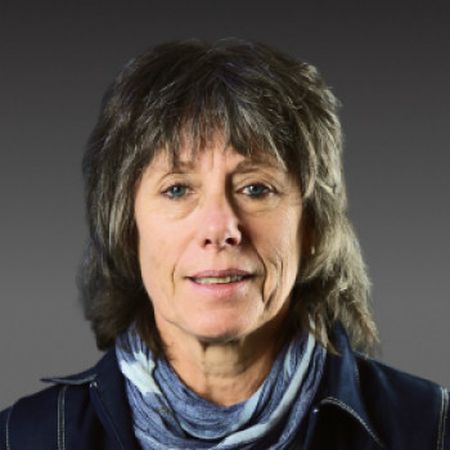
 Menzi Simelane, former NPA head, disputes claims of having a direct hand in stalling TRC investigations following Advocate Anton Ackermann’s testimony at the Khampepe Commission. (Photo: Paul Botes)
 Last week, Ackermann, who has been key witness in revealing a “secret hand” that guided and directed the National Prosecuting Authority (NPA) when Truth And Reconciliation Commission (TRC) cases he was investigating were removed from his office, apologised to Simelane.
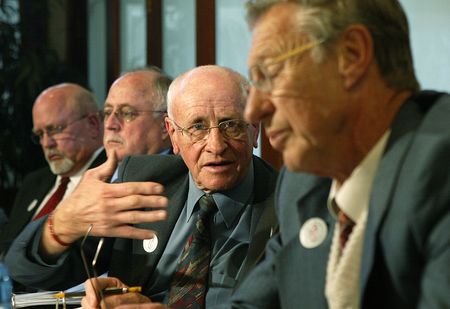
The former seasoned prosecutor previously testified at the Khampepe Commission of Inquiry into possible political interference in TRC prosecutions that an internal office note, originally drafted in 2003 to track the status of police Truth and Reconciliation Commission (TRC) dockets, had later been falsified to justify claims that ANC senior members were about to be arrested and charged.
The date of the memo been altered and re-written to appear as 2006, and it then served as a political weapon against the prosecutors responsible for resolving TRC cases. Former national police commissioner, Jackie Selebi, used this forgery to justify his repeated claims of imminent high-profile ANC arrests.
This all occurred in a post-apartheid environment where a newly installed democratic ANC-led government came up against the might and influence of the old guard, who were enjoying their freedom without having applied for amnesty at the TRC.
The forgery was not merely a clerical error, Ackermann told the inquiry, but a calculated attempt to frame him as a “rogue” prosecutor who was obsessively pursuing the arrest of then president Thabo Mbeki and other high-ranking ANC leaders in 2006.
Misunderstanding
Five parties have applied to cross-examine Ackermann, including Simelane (represented by advocate Thabani Masuku), the NPA, the SA Police Service, the Department of Justice and the president.
Ackermann told the inquiry last week that he wanted to apologise to Simelane as he had, on thinking through his earlier testimony, found room for a “misunderstanding” with regard to the NPA head’s role in his removal.
After reflecting “long and deep”, Ackermann admitted that his assertion that Simelane had personally engineered his removal might have been incorrect and that Simelane was a “mere messenger” for broader government concerns rather than the individual who initiated the request for his removal.
Ackermann apologised for the “sting” his evidence created, specifically the impression that Simelane was involved in “underhand” meetings similar to those of “drug dealers or diamond smugglers” typically held at airports or patrol stations.
Ackermann conceded to Masuku that, to his knowledge, there were no cases that Simelane had personally interfered with while Ackermann was at the Priority Crimes Litigation Unit.
However, asked by Masuku, Ackermann maintained his personal view that Simelane had been an “untruthful person” due to his experience at the Ginwala Commission, established between 2007 and 2008 to investigate the fitness of National Director of Public Prosecutions (NDPP) Vusi Pikoli to hold office.
The exchange between the two men highlighted the complexities of finding yourself a “civil servant” offering a legal service across different political regimes, specifically whether serving the apartheid state inherently compromised a prosecutor’s credibility in the new constitutional order.
/file/attachments/2990/Gemini_Generated_Image_dx2mz9dx2mz9dx2m1_483498.png "Advocate Anton Ackermann testifying remotely at the Khampepe Commission. (Image: Gemini AI)")
Apartheid prosecutor
One of Masuku’s points of attack was the fact that Ackermann had worked as a prosecutor during the apartheid-era and that he should have expected caution about his motives.
However, Ackerman said that while he had worked within the system, he had never applied any “unjust law”, including the Group Areas Act in the 1970s. He explained that he joined the Department of Justice at 23 as a young married man with no financial backing and needed to “put food on the table”.
With a government bursary he was obligated to worked for the department and had lacked the opportunity to join private firms. In a 1999 matter involving anti-apartheid activist Allan Boesak, Ackermann had insisted the transgression was an economic crime and not a matter for the Terrorism Act. This led to his removal from the case.
Ackermann carved several significant notches in his prosecuting stick, including several high-profile apartheid security operatives including Eugene de Kock, Wouter Basson and Ferdi Barnard.
/file/attachments/orphans/ED_0143240_487320.jpg "Advocate Silas Ramaite during an interview for the position of National Director of Public Prosecutions at the Union Buildings on 14 November 2018 in Pretoria, South Africa. (Photo: Gallo Images / Phill Magakoe)<br>")
Scapegoating
Masuku argued that Ackermann’s testimony regarding his removal from TRC cases was not a mere “misunderstanding”, as Ackermann had claimed at the start of the session.
Instead, he said Ackermann’s position had been “contrived” and “carefully thought through” with the intention of finding a “scapegoat” for the problems the commission was investigating.
He labelled Ackermann as a “diligent” and “loyal servant of the apartheid state” who had been promoted to senior positions under that regime. He challenged Ackermann’s refusal to accept the label of “apartheid prosecutor”, arguing that his past created a “legitimate debate” and a “general distrust” among government officials and victims like Reverend Frank Chikane.
The men who were responsible for his poisoning in 1989 were about to be arrested and charged when the call came from the Department of Justice and Minister Brigitte Mabandla to halt all prosecutions, the commission has heard.
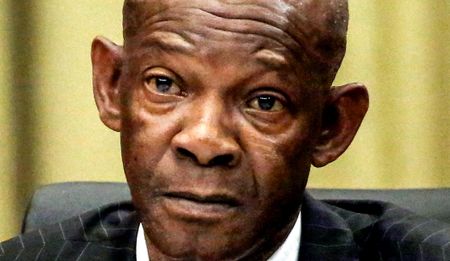
Placeholder NPA head Dr Silas Ramaite told the inquiry that in November 2004 he had learned that Jan Wagenaar, who was representing the accused in the Chikane matter, Major-General Christopher Smith, Gert Otto and Johannes van Staden, had contacted Ackermann.
“Wagenaar told him he would be getting a call from the Ministry of Justice advising him not to proceed against the case and that the prosecution should be put on hold,” said Ramaite.
Masuku maintained that the discussion about Ackermann’s past was a responsible government inquiry into whether a prosecutor from the old regime was the right person to handle sensitive post-TRC matters.
Security Police ghosts in the machine
One of Ackermann’s early objections as head of the Priority Crimes Litigation Unit was the presence of Detective Henny Britz, a former Security Branch officer appointed to assist Ackermann at the unit.
He was against Britz’s involvement for several reasons, said Ackermann, including his “bias and clear political motivation” and that he had informed him that he was “bent on prosecuting the ANC”.
Britz, said Ackermann, had told him he was still loyal to apartheid-era security structures. Ackermann also testified that Britz repeatedly tried to persuade him and his deputies that there was a “provable case of terrorism” against Mbeki. Despite Ackermann’s insistence that no such case existed, Britz continued to refer to the “president’s case” every time they discussed investigations.
/file/attachments/orphans/000065683_789244.jpg "Former minister of law and order, Adriaan Vlok, with former police commissioner Johan van der Merwe, Gert Otto, Hermanus van Staden and Christoffel Smith after their trial at the high court relating to the attempted murder of Frank Chikane, on 17 August 2007. (Photo: Johnny Onverwacht / City Press / Gallo Images)")
Leaking of documents
Ackermann alleged in a memo to the National Director of Public Prosecutions that Britz had released documents to former police commissioner Johan van der Merwe who was then the head of the Foundation for Equality Before the Law, an organisation representing former apartheid-era security officials.
Because of Britz’ background and his persistent focus on prosecuting the ANC leadership rather than apartheid-era perpetrators, Ackermann formally requested at a task team meeting that Britz be removed from all TRC-related investigations.
Ackermann used his objection to Britz to counter the “apartheid prosecutor” label, arguing that his actions showed he was sensitive to the risks of using investigators who remained loyal to the old regime.
The commision resumes this week. DM