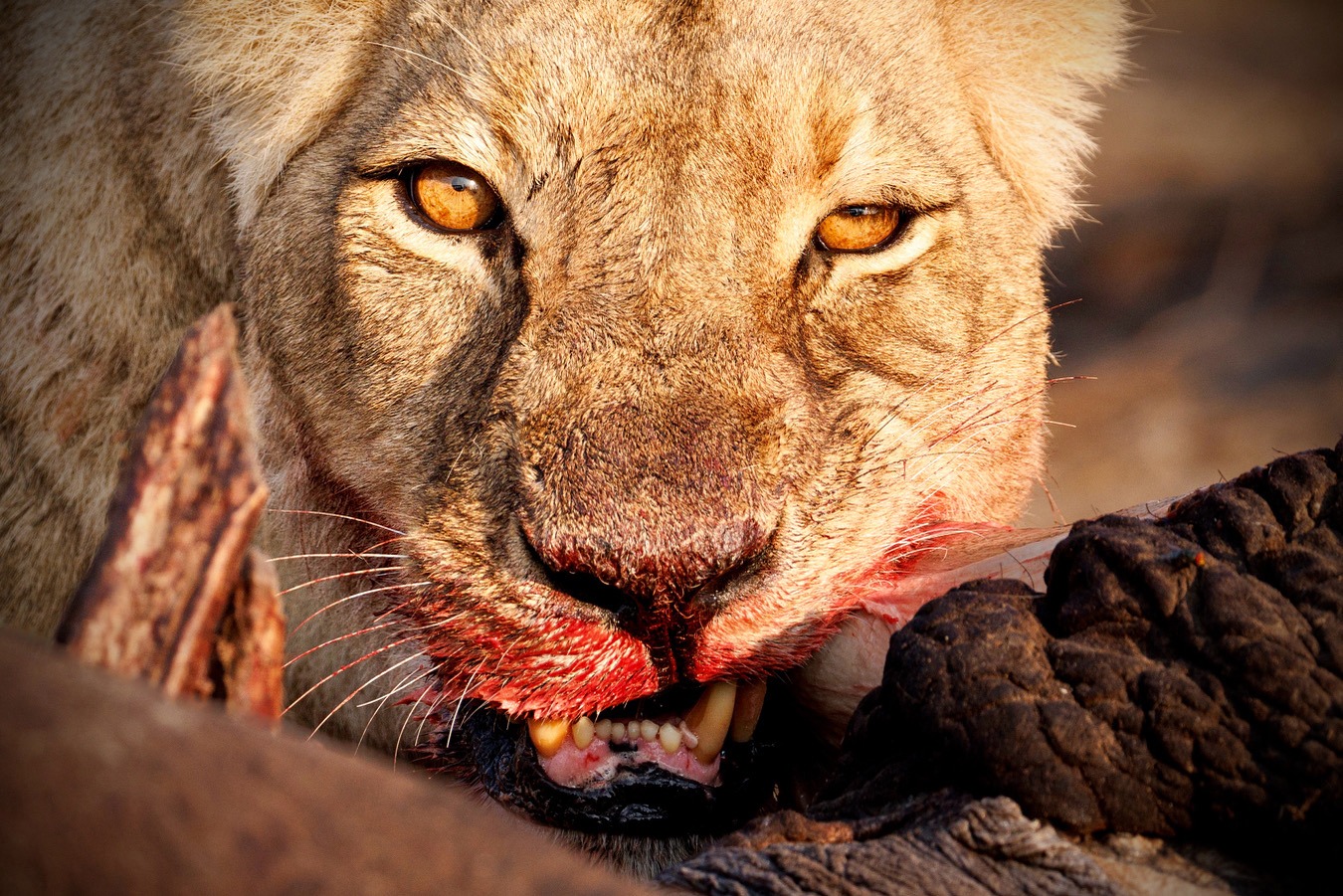
 Raw reality, not AI Disneyfication, in Hwange, Zimbabwe. (Photo: Lotte Varndell-van Rooij)
 /file/dailymaverick/wp-content/uploads/2025/10/label-Op-Ed.jpg)
In the world of wildlife photography there is a sacred pact between the photographer and the viewer. A promise of a real moment, stuck in time. It is the result of hours of patience, a deep understanding of animal behaviour, and often, significant physical hardship. But that pact is being broken. From the dusty plains of the savannas to the emerald hues of the ocean, a new predator has emerged: generative AI.
While we marvel at the technical “perfection” of AI-generated animals, we are witnessing the slow death of authentic storytelling. When we replace real photography with synthetic pixels, we aren’t just creating “content”, we are eroding the very foundation of conservation.
Social media now overflows with incredible wildlife moments: a lioness placing her newborn cub inside a safari vehicle beside a tourist for protection from hyenas, an elephant reaching out to touch a child’s hand, or a wild cheetah calmly resting on a picnic blanket. These scenes may seem heartwarming or awe-inspiring, but many are entirely fabricated by artificial intelligence and presented as reality.
This is not harmless entertainment. It threatens how people perceive wildlife and, ultimately, global conservation efforts. The consequences are already unfolding.
A case in point: when the industry responds
Recently, an influencer posted AI-generated images of herself posing with baby leopards and lions. When I first saw the content, I called it out publicly by sharing it in my Instagram stories and commenting on the post. I also reached out privately, explaining the harm this imagery causes. It normalises interactions with cubs, fuels exploitative tourism and undermines decades of conservation messaging. Hundreds of others in the conservation community joined in, privately and publicly, attempting to educate.
Her response? She refused to acknowledge the problem and instead accused critics of sabotaging her business, claiming harassment and bad faith.
/file/attachments/orphans/WhatsAppImage2026-02-24at112641_423613.jpeg "AI-generated images of people with wild animals aren’t real, but followers often don’t realise that. They normalise dangerous interactions, distort perceptions of wildlife behaviour and erode understanding of ecosystems that conservation work has spent years building. (AI Image: Facebook)")
I advised her at the time that she could still salvage the situation: apologise, demonstrate understanding, own the mistake. I told her we’d all celebrate that turnaround and she’d win everyone back. The path to redemption was clear and straightforward.
She refused.
High-end lodges and safari specialists responded swiftly. They publicly criticised her, removed all of her content from their platforms and severed partnerships. She eventually deleted the post, but her partner continued defending their position on LinkedIn, demonstrating that they still fundamentally misunderstood the issue. The damage was irreversible. She lost access to partnerships with many premium operators across the region.
/file/attachments/orphans/pic1_201896.jpg)
/file/attachments/orphans/pic4_552139.jpg)
/file/attachments/orphans/pic2_739937.jpg)
This was not cancel culture. It was the industry defending decades of conservation credibility and responsible messaging. When lodges and operators have spent years educating guests about ethical wildlife encounters, they cannot partner with those who undermine that work, even unintentionally. This case highlights what’s at stake when synthetic wildlife imagery spreads unchecked.
The safari mirage: selling a lie
In the terrestrial world, AI is being used to create the “perfect safari”. We’ve seen travel agencies and lifestyle media outlets using AI to generate images of leopards in golden light or elephants at sunset.
Why is this a problem? Because it sets an impossible standard. Real wildlife doesn’t always pose. Real leopards are often hidden in thickets, and real conservation is messy. When a media company uses an AI image for an ad campaign because it’s “cheaper than a flight to Botswana”, they are stealing bread from the mouths of local guides and photographers who spend their lives documenting these animals.
More dangerously, we are seeing a rise in AI imagery depicting humans interacting directly with wildlife, feeding lion cubs or posing with “tame” predators. These synthetic scenes aren’t just fake; they are harmful. They promote an unethical tourism sector that thrives on the exploitation of animals for “likes” and “encounters”, fundamentally jeopardising years of work by conservationists to teach the public that wild animals must remain wild. It creates a “Disney-fied” version of nature that makes the real, struggling and often scarred animals we are trying to save look “disappointing” or “unfriendly” by comparison.
AI has revolutionised creative potential, allowing anyone to generate lifelike images from text prompts without safari experience or animal knowledge. These tools conjure vivid illusions: a lion nuzzling a toddler, a hyena playing fetch. These polished fictions thrive online, rewarded by algorithms that prize sensationalism over truth.
/file/attachments/orphans/ImmersedinacloudofhundredsofstingingjellyfishAIcanrecreatethemomentbutnotthefeelingofadrenaline_894672.jpg "Immersed in a cloud of hundreds of stinging jellyfish. AI can recreate the moment, but not the feeling of adrenalin. (Photo: Danel Wentzel)")
Demanding scientific proof that AI wildlife content causes harm is a convenient deflection. Those working in conservation and ethical tourism already know from decades of experience how imagery shapes tourist behaviour and expectations. We don’t promote close animal interactions like cub petting, whether in real photos or AI-generated ones. The influencer’s followers proved the danger: comments like “so cute” and “I would never leave” showed they believed the images were desirable experiences.
Responsible tourism professionals know that waiting while harmful content spreads is reckless. The industry must act swiftly: owning mistakes, removing damaging content and educating travellers about respectful wildlife encounters.
Sensationalism in wildlife media is nothing new, but AI obliterates previous barriers to fabrication and dissemination. The result is a flood of instantly shareable fantasies drowning out the slow, complex realities conservationists strive to communicate.
The underwater void: pixels don’t need protection
Underwater, the deception is even more sinister. We’ve seen recent viral campaigns featuring “underwater” shots that are physically impossible. Light rays that don’t follow the laws of refraction, coral reefs that don’t exist in nature.
This synthetic tide is already washing over our social feeds. I’ve watched “conservation” accounts share viral videos of whales “sky-hopping” in ways that defy their actual anatomy, and influencers posing in front of generated kelp forests that look more like high-fantasy landscapes than the complex, nutrient-dense ecosystems I explore here in Cape Town. We are seeing travel agencies promote “marine safaris” with AI images in which great white sharks are depicted swimming peacefully alongside clownfish, a “mash-up” that completely ignores temperature thresholds and predator-prey dynamics. Perhaps most damaging are the “ocean awareness” creators using AI to “reimagine” bleached reefs as neon-coloured paradises under the disguise of “inspiring hope”. In reality, this masks the skeletal grey of a dying ecosystem, replacing the urgency of a crisis with a digital lie.
/file/attachments/orphans/DiversenteractingwithharmlessblacktipsharksinAliwalshoal_217754.jpg "Divers enteract with harmless blacktip sharks in Aliwal shoal. (Photo: Danel Wentzel)")
As a marine scientist and diver, I find this heartbreaking. We are in a race against time to document the “unseen” threats to our oceans. When a media outlet uses a beautiful AI-generated reef to talk about “ocean health”, they are bypassing the reality. If we start accepting synthetic oceans, we lose the urgency to protect the real ones. If the “ocean” on our screens is always pixel-perfect, the public will find it harder to believe that our actual oceans are in a state of emergency.
The danger is not momentary disbelief but a gradual disconnect from reality. When people believe marine life is endlessly resilient or reefs remain pristine, policies become misguided and conservation support wanes.
The real cost of cheap content
The rise of AI in wildlife media is a direct threat to the local industry. Southern Africa is home to some of the world’s most talented wildlife photographers and marine documentarians.
These are the people who:
- Act as sentinels: Their presence in the field often deters poaching and documents coral bleaching and species decline;
- Fund science: Many photographers partner with researchers to provide ID shots and data: leopard rosette patterns, shark fin identification; and
- Bridge the gap: They use their craft to help people fall in love with the ocean and the bush, because, as I always say, we won’t protect what we don’t understand and love.
An algorithm cannot love a shark. A prompt cannot understand the smell of the first rain on the savanna.
The safari specialists who dropped the influencer were not being petty. They were protecting their conservation credibility. Their reputations rely on ethical practices and accurate messaging about wildlife behaviour. They cannot partner with those undermining that work, even unintentionally.
When AI content sets impossible standards (golden-hour lighting always, perfectly posed animals, calm predator encounters), it makes real wildlife disappointing by comparison. Real safari doesn’t deliver “perfect” moments. Animals are hidden, weather is unpredictable, encounters are fleeting. But that is authentic and worth protecting.
A call for authenticity: what needs to happen
To consumers:
Do not engage directly with AI wildlife content. Every like, share or angry comment boosts it algorithmically.
First step: Direct-message the creator privately. Explain the harm. Give them the chance to correct it.
If ignored or dismissed: Screenshot and share your critique without amplifying the original post. Or, if possible, report the content as harmful or misleading.
To tourism operators:
Speak out publicly when you see this. Comment. Pull partnerships. Make it clear that this behaviour is unacceptable. You have more power than you think. The case above proves that industry action works.
Your ethical reputation is your strongest asset. Protect it. Silence equals complicity in perpetuating harmful myths about wildlife.
To platforms:
Mandatory AI labelling is not enough. Wildlife content needs stricter rules and verification processes. The stakes are too high to rely on user honesty alone.
To media outlets:
Commission real photographers or do not run wildlife content at all. There is no ethical middle ground when synthetic imagery undermines conservation messaging.
To educators and conservationists:
Promote critical thinking and media literacy. Teach people how to identify AI-generated content and why it matters. Recommit to authentic storytelling, even when it’s less sensational.
/file/attachments/orphans/Leopardemergingfromthicketsafteralongwait_NdutuTanzania_913881.jpg "A leopard emerges from thickets after a long wait in Ndutu, Tanzania. (Photo: Lotte Varndell-van Rooij)")
/file/attachments/orphans/RespectfulencountersrequiredistanceandpatientwaitinginahideManaPools_Zimbabwe_118694.jpg "Respectful encounters require distance and patient waiting in a hide. Mana Pools, Zimbabwe. (Photo: Lotte Varndell-van Rooij)")
/file/attachments/orphans/SpecialencounterwithacommonoctopusinCapeTown_589837.jpg "A special encounter with a common octopus in Cape Town. (Photo: Danel Wentzel)")
Why this matters
Technology holds immense promise for conservation when used responsibly. But its misuse demands urgent action. As consumers, we must demand transparency. If an image is AI-generated, it should be labelled as such. But better yet, we should vote with our eyes and our wallets. Support the photographers who brave the 4am cold, who deal with the gusting winds at sea and who wait days for a single frame.
In an age of synthetic perfection, the most radical thing we can do is value the truth. We must protect the decisive moment, because if we lose the reality of our wildlife, we lose the will to save it.
No AI-generated image, however flawless, can replace the profound impact of witnessing wild animals thriving in their natural habitats. Protecting that reality is essential not just for the survival of wildlife, but for the future of responsible tourism and humanity itself.
The next generation needs to inherit actual oceans and savannas, not just pretty algorithms. DM
Danel Wentzel is a marine biologist, ocean storyteller and underwater photographer based in Cape Town. Lotte Varndell-van Rooij is a safari specialist with more than 20 years’ experience and an aspiring wildlife photographer based in Malawi.