



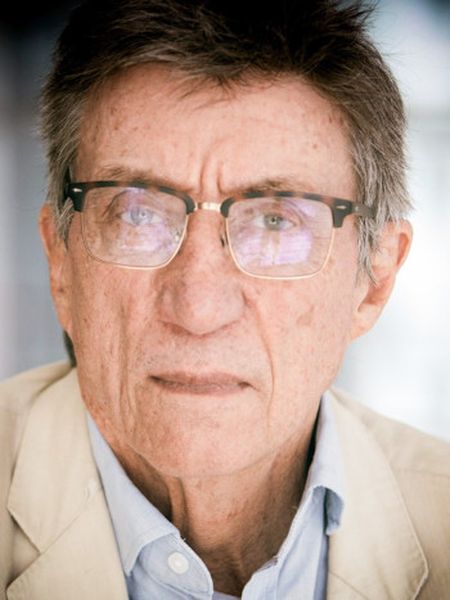
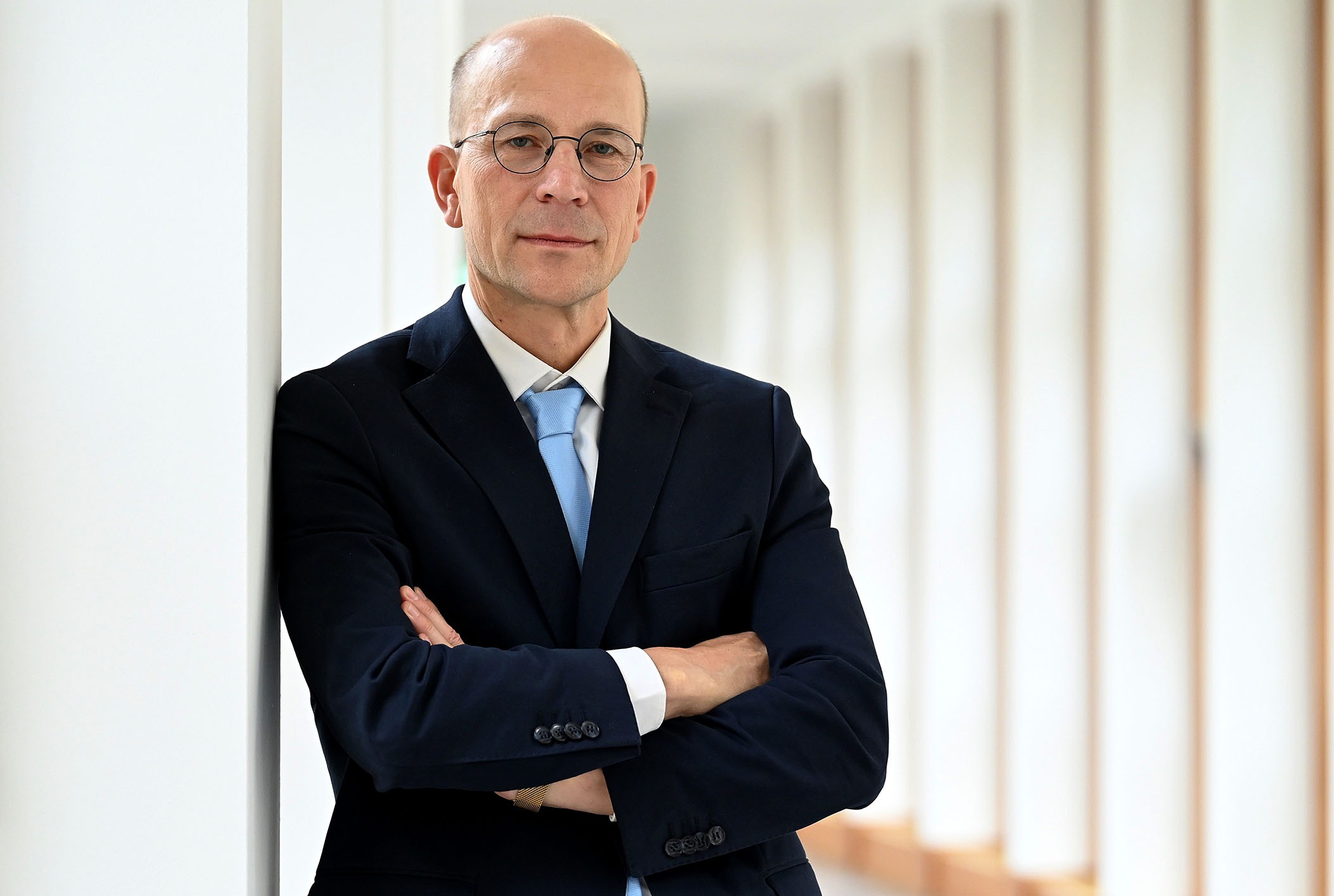
 Germany’s ambassador to South Africa, Andreas Peschke. (Photo: Supplied / German Embassy)
 German Ambassador Andreas Peschke has become the envy of the diplomatic corps in South Africa for his ability to deliver fluent speeches in isiZulu.
In an interview in his office in the German consulate-general in Cape Town last week, overlooking District Six and the city, he explained that he had started studying isiZulu as a young student of African studies in Germany “because I was enthusiastic about the transition in South Africa and Nelson Mandela and the end of apartheid, never knowing that I would one day become an ambassador to South Africa”.
So, when he got here in September 2021, he decided to speak isiZulu as much as possible and became fluent.
Then he started Sepedi lessons because of its prominence in Pretoria, where he is based. That helped him pick up Afrikaans because most of his fellow students were Afrikaners.
Learning these local languages, he found, “is a great way to value the diversity of South Africa, to reach out to people and to open a conversation”.
He is inspired by Mandela’s maxim that “if you speak a language a person understands, you reach their mind. If you try to speak his or her language, you reach their heart”. That seems to have happened as “people appreciate the effort, it shows respect”.
Polylinguism aside, Peschke presides over a very important relationship, for South Africa especially.
/file/attachments/orphans/Peschke2_101145.jpg "Germany’s ambassador to South Africa, Andreas Peschke, at the German consulate-general in Cape Town. (Photo: Peter Fabricius)")
Germany is South Africa’s second-biggest bilateral trading partner, with more than R294-billion in trade last year, after China with more than R642-billion, according to the South African Revenue Service. Germany is also part of the European Union, which is South Africa’s biggest trading partner, accounting for about 40%.
Germany is also one of the top foreign investors in South Africa, much of it in motor vehicles, with increasing amounts in renewable energy.
Peschke noted that there are more than 600 German companies invested in South Africa, providing more than 100,000 jobs directly and probably about double that indirectly.
During his time here, investment has expanded further, much of it reinvestment or maintenance investment, such as BMW’s R4.2-billion expansion of its Rosslyn production facility in 2023 to produce the BMW X3 plug-in hybrid for export to the world, and the chemical company BASF expanding and modernising its production facility in Durban.
“But we are still waiting for a big breakthrough,” Peschke said.
The Government of National Unity had helped by easing the issuing of visas for German companies, but more could be done.
South Africa has high investor potential but “infrastructure has been a bottleneck, skilled labour sometimes has been a bottleneck, bureaucracy has been a bottleneck”.
/file/dailymaverick/wp-content/uploads/2025/03/BMW-X3.jpg "The BMW X3 30e xDrive, a plug-in electric vehicle, is exclusively manufactured at BMW’s Plant in Rosslyn, Pretoria. (Photo: BMW Group)")
B-BBEE concerns
Peschke said German investors also raised concerns about Broad-Based Black Economic Empowerment (B-BBEE).
“So everybody understands the necessity of transformation, but maybe some of the implementation of these transformation laws is a bit bureaucratic and is slowing down investment.”
He noted that in B-BBEE, sharing equity is valued very highly, but the creation of employment, less so.
“If you think of a German medium-sized, family-owned company that has kept their equity to themselves for decades, so now they are looking at South Africa and then they are being told to share equity… They would think twice... ‘Maybe I go to another place’.”
Peschke suggested that other industries could perhaps replicate the Automotive Industry Transformation Fund, in which auto companies can invest instead of sharing equity.
“Or the value of actually creating jobs maybe could be also valued more highly.”
“Some companies tell us that even more difficult to implement than B-BBEE is employment equity. Because this can be very bureaucratic and there are cases where it doesn’t make sense.
“So, if you have a facility in a majority-black area and you have workers from that area, then theoretically via employment equity you would need to reduce the number of black workers, to bring whites or to bring Indians, who are not readily available in that area. So that doesn’t make sense in this context.”
Peschke said that overall a little more flexibility would be helpful, including perhaps granting new investors a grace period to comply with the B-BBEE and employment equity requirements.
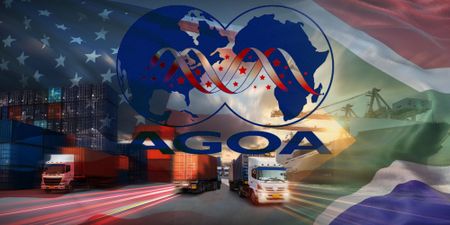
He also said well-established German auto companies were having great difficulty navigating the unpredictable changes to the African Growth and Opportunity Act (Agoa), which provides duty-free access to the US market.
Some of the companies had been doing well exporting through Agoa. Agoa expired in September 2025 and revived earlier in 2026, but only until the end of this year. And South Africa’s continued participation is uncertain because of US hostility.
Peschke said some companies had managed to diversify to other markets while others that were more dependent on the US were struggling.
‘We are important to each other’
Beyond pure business, Germany cooperated with South Africa across a wide economic field, particularly partnering with the country to modernise its energy supply through the Just Energy Transition Partnership (JETP), Peschke said.
Several other countries and the EU have also contributed to this programme to help South Africa shift from its heavy dependence on coal to renewable energy, while ensuring coal miners and communities are not left behind.
Peschke said Germany had already invested more than R50-billion in the JETP, “and I think we are seeing progress so we are encouraged to invest further”.
Germany’s focus would now shift from improving regulations, creating renewable capacity and making more alternative employment, to modernising the transmission system, he said, referring to the government’s plans to erect tens of thousands of kilometres of transmission lines to connect renewable energy plants to the national grid.
Germany is trying to mobilise public and private investment in the project.
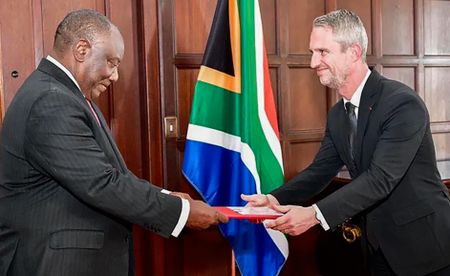
More generally, Peschke said Germany was helping to develop South African skills, focusing on those which would best provide employment. This includes skills in energy transition, such as training solar panel and wind turbine engineers, digital skills and very practical maintenance and repair skills.
He noted that Germany was subsidising students from the Cape Flats, Soweto and Mamelodi to study at the German schools in Cape Town, Johannesburg and Pretoria, respectively.
This month, as foot-and-mouth disease spread in South Africa, German agriculture minister Alois Rainer visited Cape Town to sign an agreement with his South African counterpart, John Steenhuisen, to join forces in fighting the disease.
Peschke said the visit was timely because Germany had just had an outbreak of FMD last year and so was able to share its experience with South Africa in combating its own outbreak. The agreement also intended to boost agricultural exports both ways.
Peschke also disclosed that Germany and South Africa were looking at a new edition of their regular joint naval Exercise Good Hope, last held in February 2024. Germany was also considering ways to provide maintenance for the South African Navy’s German-made frigates and submarines.
So, overall, bilateral relations between Germany and South Africa were “on a good trajectory”, he said.
“For us, South Africa is obviously the most intensive and strategic relationship on the African continent. It’s our largest trading partner in Africa, our largest investment destination in Africa.”
And Germany was South Africa’s second-largest trading partner and one of its largest investors. “So we are important to each other.”
In April, the German and South African foreign ministers would co-chair the biannual, bi-national commission between the two countries in Berlin, where cabinet ministers would plan cooperation in various areas.
Reliability amid turmoil
Last year, a time of great geopolitical turbulence, Germany and the EU had put a particular strategic focus on the relationship with South Africa “to be deepened and to be reliable and predictable partners for each other”, Peschke said, particularly when South Africa’s relations with the US were so strained.
This included many exchanges. German Chancellor Friedrich Merz had visited South Africa for the G20 summit in November, while president of the EU Commission Ursula von der Leyen and president of the EU Council António Costa had visited South Africa twice and President Cyril Ramaphosa had also met them in Brussels. That would continue.
/file/dailymaverick/wp-content/uploads/2025/11/12892071.jpg "President Cyril Ramaphosa, European Union president Ursula von der Leyen and president of the European Council António Costa during the 8th South Africa-European Union Summit in Cape Town on 13 March 2025. (Photo: EPA / Halden Krog)")
Peschke said he hoped the strains between the US and South Africa could be resolved because the relationship was clearly very important to South Africa.
“But I think it gave us also an opportunity to work on our own relationship with South Africa.”
The turbulence for South Africa included Donald Trump kicking it out of events during its G20 presidency this year. Peschke noted that Merz had been clear that “South Africa, as the biggest economy on the African continent, belongs at the table”.
He was optimistic that South Africa would be invited back by the next G20 president (probably the UK). And he said Germany was already fully supporting French President Emmanuel Macron’s promise to ensure that South Africa’s key G20 issues, such as financing of development and the reform of international institutions, were addressed during France’s presidency of the G7 this year.
“And that’s one of the ways to follow up on some of the achievements during South Africa’s G20 presidency.”
Did it bother him, given Germany’s commitment to the relationship, that South Africa did not have an ambassador in Berlin? He tactfully referred that question to the South African government.
And does Germany have issues, as other Western nations do, with some South African foreign policy positions, such as its failure to condemn Russia’s invasion of Ukraine, its hostility to Israel and its hosting of a joint naval exercise with Iran, Russia, China and others in January?
“Obviously our reaction to Russia’s aggression to Ukraine has been a bit different,” he said, though Germany appreciated that South Africa had underscored the principles of non-intervention and territorial inviolability in statements about the war at the United Nations.
/file/attachments/orphans/iranships_3298_137364.jpg "Three Iranian navy ships in False Bay on 13 January 2026. (Photo: Brenton Geach)")
Germany also appreciated South Africa’s efforts to bring home Ukrainian children abducted by Russia during the war.
He noted the two countries had also had disagreements on the Middle East. When South Africa brought a charge of genocide against Israel at the International Court of Justice (ICJ) in 2023, Germany said that the case had “no basis” and pledged to support Israel in the case.
But Peschke acknowledged that South Africa taking the case to the ICJ was “actually in a way the right thing to do. If you think it’s a violation of international norms, that you return to our joint international legal institutions.
“But obviously, we didn't agree with all the contents that were brought forward to the court.”
Just last week, a German foreign ministry spokesperson said Germany would not, after all, intervene on Israel’s behalf in the case.
On South Africa’s relations with Iran, particularly its joint naval exercise, Peschke said: “It’s perfectly the right of South Africa – they have manoeuvres and exercises with us – to do with other partners as well.”
But he added that questions had been asked in Germany “about what kind of signal South Africa wanted to send” by holding a naval exercise with Iran at the same time that reports were emerging about Iran killing protesters.
‘Make a plan’
Peschke has been ambassador here for nearly five years, so may not have much longer to serve. What impressions would he take from South Africa when he goes?
He said he loved the nature and the landscape.
“But actually, what I love most is the friendliness and the resilience and the diversity of South Africa’s people. So that’s actually what I really enjoy most, interacting with South Africans.
“And this is a daily pleasure, and one thing I’m going to take home with me is the resilience that becomes tangible in the saying, ‘Let's make a plan’.
“So in Germany, we complain a lot, and we tend to be discouraged by adversity quite fast. And in South Africa, it’s exactly the contrary. Whenever things go wrong… what you hear is, ‘Let’s make a plan’.
“And that is a very optimistic and healthy attitude, and I have grown quite accustomed to it here in South Africa, and I want to keep it, even when I have left, as long as possible.” DM