




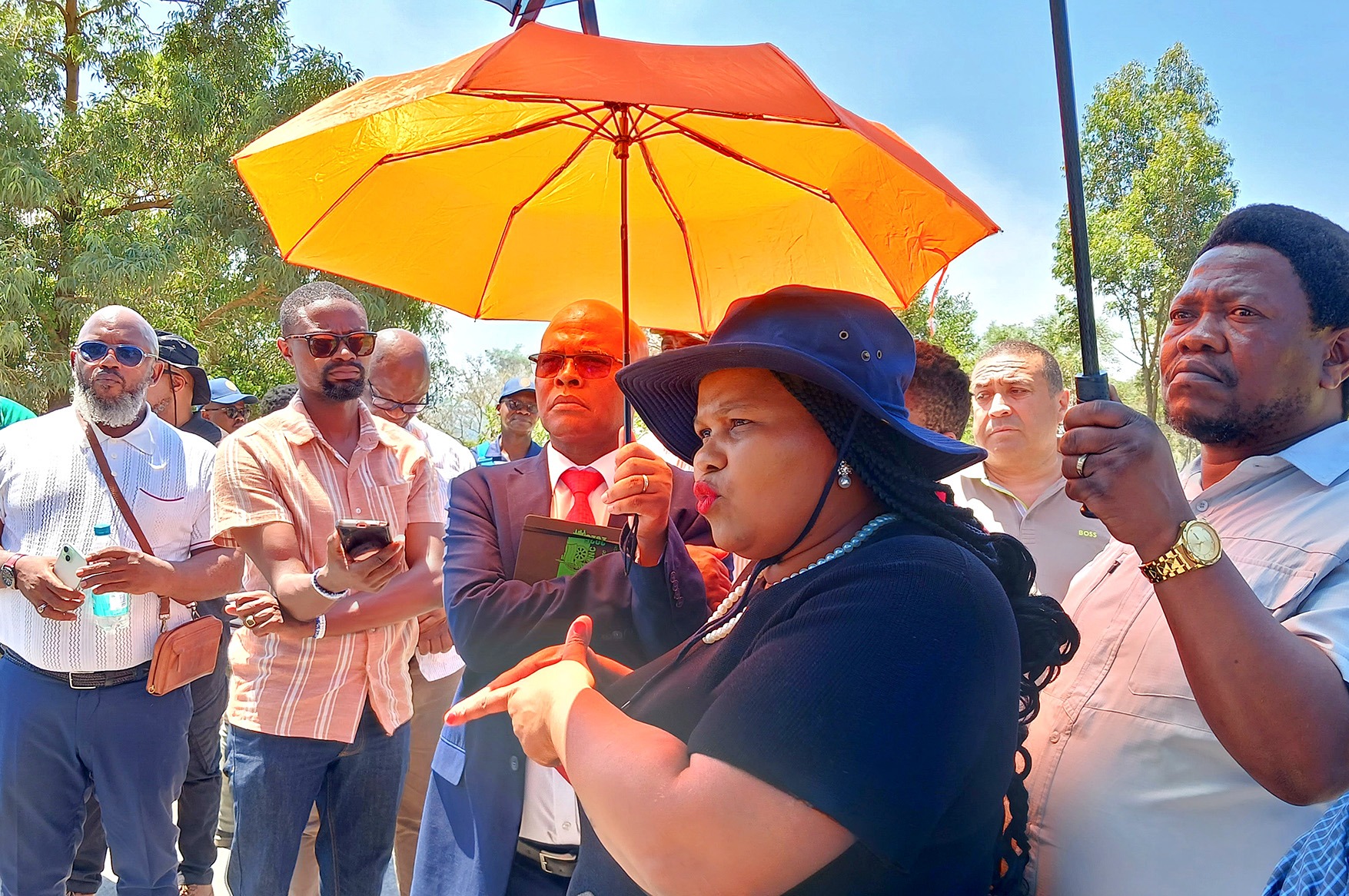
 Nelson Mandela Bay mayor Babalwa Lobishe and the metro’s leadership have been told that they need to comply with Parliament’s Cooperative Governance and Traditional Affairs committee and submit documents the committee has been asking for since January. (Photo: Riaan Marais)
 Nelson Mandela Bay has come under fire from Parliament’s Portfolio Committee on Cooperative Governance and Traditional Affairs for failing to provide full and timely information after an oversight visit last year in Port Edward.
Despite months of follow-ups, the committee says the municipality has provided incomplete responses and has not adequately addressed its concerns, hampering the committee’s ability to assess governance and service delivery progress.
In October 2025, a joint oversight delegation, comprising the portfolio committee and the Standing Committee on the Auditor-General, engaged with several municipalities, including Nelson Mandela Bay and Buffalo City metros, to account for persistent challenges. These included audit disclaimers, poor financial statements and service delivery issues.
/file/dailymaverick/wp-content/uploads/2025/10/DSC_0031-copy.jpg "Nelson Mandela Bay has been plagued by thousands of broken street lights, many of which have not been fixed in months. (Photo: Deon Ferreira)")
Committee chairperson Zweli Mkhize said on Thursday (19 March) that the lack of cooperation from the municipality was hampering Parliament and the committee from doing its work.
“These requests are not discretionary,” said Mkhize.
“They form part of Parliament’s constitutional responsibility to ensure accountability, transparency and effective cooperative governance. Timely and full cooperation from the municipality is therefore essential.”
Following the visit, the committee formally requested documents and detailed reports from the metro. The committee said on Thursday that it had, since January, sent correspondence to the municipality, including multiple formal letters, follow-up communications and requests for clarification.
Mkhize said: “These delays affect Parliament and this committee’s ability to assess progress on critical issues identified during the oversight visit. These include governance, financial management and service delivery matters that impact communities.
“It is therefore important that the Nelson Mandela Bay Metro leadership respond fully and timeously to the committee’s requests.”
‘Prioritise cooperation’
The committee has called on mayor Babalwa Lobishe and the metro’s leadership to urgently prioritise cooperation ahead of a scheduled appearance on 24 March.
“This includes submitting all outstanding information, furnishing clear responses to the committee’s queries and meaningfully engaging in corrective actions,” Mkhize said.
Municipal spokesperson Sithembiso Soyaya said the metro had noted the concerns and remained committed to cooperating with oversight structures, but that the city had submitted the report.
He said the municipality submitted the requested report on 14 March 2026, in line with communicated processes and timelines, and was engaging with the committee’s secretariat to obtain clarity on the specific areas where the committee might require further information.
Soyaya added that a previous meeting had been postponed by the committee. The municipality has since used this time to further consolidate relevant documentation and information, he said.
“The administration is therefore actively working through the appropriate governance and administrative channels to ensure that all requested information is provided ahead of the committee’s meeting scheduled for next week,” he said.
Over the past few months, Nelson Mandela Bay has been rocked by a string of service delivery issues, including protests in the informal settlement of Grogro over electricity, the collapse of several high-voltage electricity transmission pylons, and water supply challenges across the metro, particularly in Tiryville, Kariega, due to problems at the Nooitgedagt Water Treatment Works.
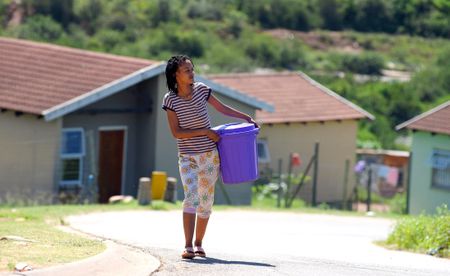
On Thursday, the Nelson Mandela Bay Civil Society Coalition also hit out at the metro, saying the ongoing collapse of water, electricity and sanitation infrastructure is a “direct violation of constitutional rights”.
/file/attachments/orphans/Monga_297853.jpeg "Chairperson of the Nelson Mandela Bay Civil Society Coalition, Monga Peter. (Photo: Andisa Bonani)")
The coalition, in the lead-up to Human Rights Day, said clean water, safe sanitation and reliable electricity were central to human dignity.
The coalition said: “Across our metro, some communities are confronted with dry taps, failing sewerage systems and persistent electricity disruptions. The consequences are most severe for the most vulnerable among us – the elderly, the sick and young children – whose health, safety and dignity are placed at risk.
“Those communities that are clinging to the rungs of economic development are also not spared from this neglect, as they find themselves being treated as second-class citizens.
“Nelson Mandela Bay is facing a worsening water and infrastructure crisis. Declining dam levels, excessive water losses, unstable electricity networks and deteriorating sanitation systems have combined to create unsafe, undignified and unsustainable living conditions.
“These failures are not inevitable. They are the result of prolonged mismanagement, inadequate maintenance, political interference and the erosion of technical capacity within the municipality.” DM