




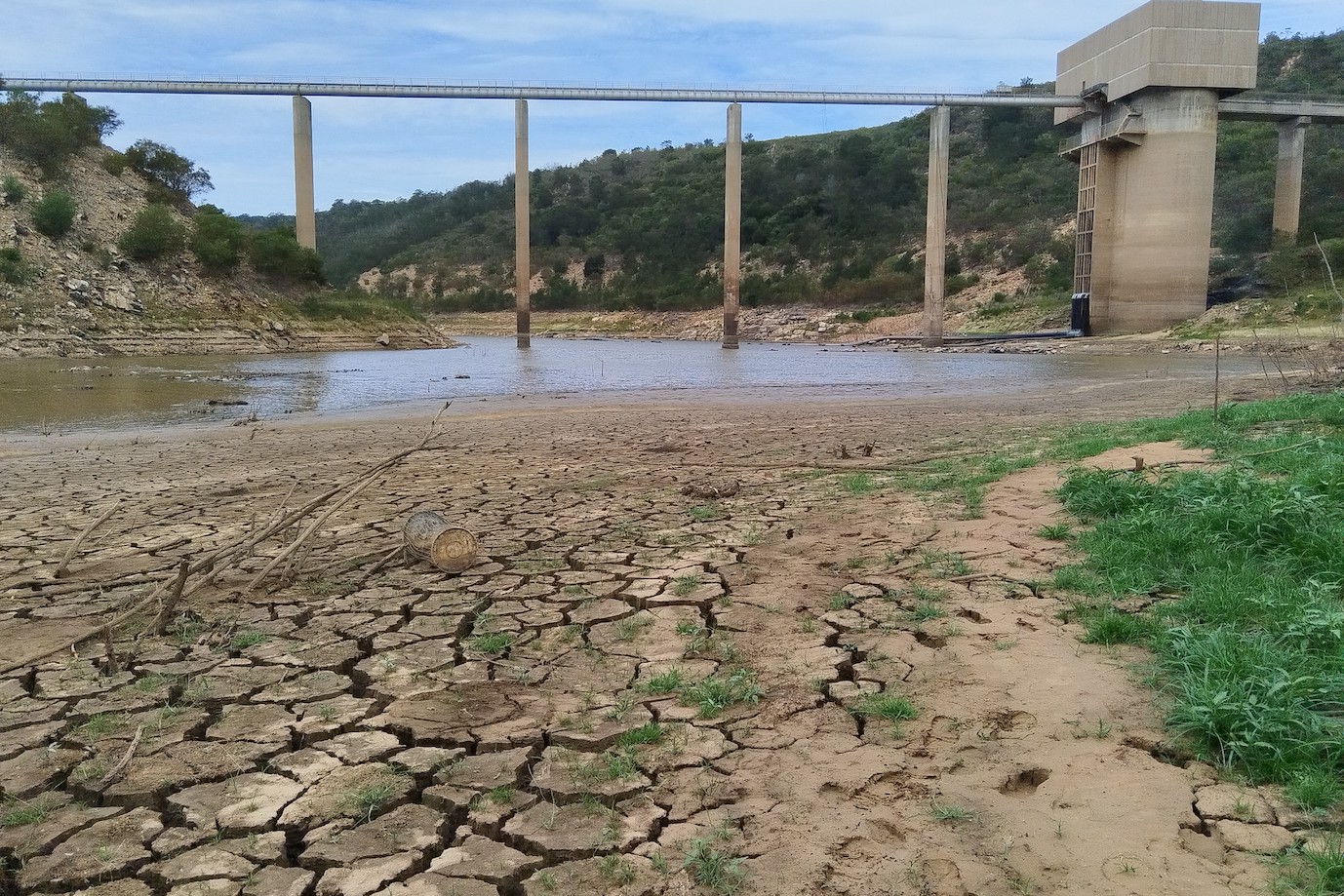
 Nelson Mandela Bay’s largest dam, Impofu, stands at 39%, while combined dam levels across the metro are just over 40%. (Photo: Mkhuseli Sizani)
 Every day, Nelson Mandela Bay pumps hundreds of millions of litres of treated water into a network of ageing pipes, but more than 60% of it never reaches residents.
Water losses in the metro surged to a record 60.39% in the first half of the 2025/26 financial year, and more than 6,000 leaks have been reported across the system.
Add to that a serious shortage of plumbers in the metro’s water services unit, which means it takes between seven and 10 days to attend to a reported leak — more than three times longer than the municipal standard.
Against this backdrop, the Nelson Mandela Bay Business Chamber is challenging the City’s framing of the crisis as primarily drought-driven, arguing that systemic infrastructure failures are a major contributing factor.
On Monday afternoon, 16 March 2026, the City warned that combined dam levels had dropped to 40.29%, “dangerously close to levels where water security becomes severely constrained”.
The National Disaster Management Centre head, Dr Elias Sithole in February classified the drought in the Eastern, Western and Northern Cape as a national disaster. The notice, signed on 31 January, appeared in the Government Gazette on 4 February.
Water levels at the metro’s largest dam – the Impofu Dam – have dropped from 55.8% last year to roughly 39%, the City said. This, according to the City, is “a direct consequence of below average rainfall, amidst the prolonged drought conditions plaguing our region”.
But Nelson Mandela Bay Business Chamber CEO Denise van Huyssteen has hit back, saying the situation was “a water management crisis” driven by neglected infrastructure.
She said: “It is not a drought but a water management crisis. The continued failure to maintain and properly manage critical water infrastructure has created a situation where enormous volumes of treated water are simply being lost in the system.”
/file/attachments/orphans/Screenshot2025-12-15at145307_748755_485995_651198.png "Denise van Huyssteen, CEO of the Nelson Mandela Bay Business Chamber. (Photo: Facebook)")
Water losses surged to a record 60.39% in the first half of the 2025/26 financial year, alongside more than 6,000 reported leaks across the metro – figures that according Van Huyysteen “illustrate the scale of the systemic infrastructure issues which undermine water security”.
“This situation is not sustainable and it is not solely the result of drought alone, but is exacerbated by long-standing infrastructure neglect and ineffective water management,” she said.
Daily Maverick recently reported that the City must urgently replace about 4,700km of ageing water pipes – some more than 40 years old.
At the time, the metro’s water boss, Joseph Tsatsire, said: “Our infrastructure is probably more than 40 years old, and I’m talking about 4,700km of water pipeline in the city. Pipe replacement is required to deal with water losses.”
He added that the metro had replaced less than 40km of the 4,7000km.
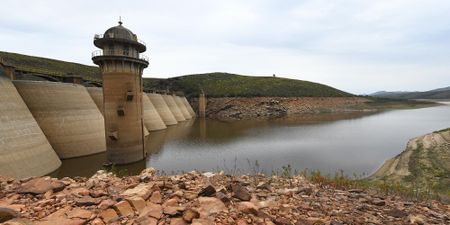
The City also has a serious shortage of plumbers in the water services unit, which means it takes it between seven and 10 days to address water leaks.
Water leaks should ideally be repaired within 24 hours, according to the Municipal Non-Negotiables Booklet launched by Eastern Cape Cooperative Governance and Traditional Affairs MEC Zolile Williams.
The metro does not have a long-term contract in place to deal with the leaks, but is in the process of hiring a temporary contractor while the contract is being finalised.
Crisis threatens business continuity
Van Huyssteen warned that the crisis threatened business continuity across key sectors, including manufacturing, automotive, logistics, hospitality, retail and tourism.
“Water is a fundamental enabler of economic activity. When supply becomes unreliable, it directly affects production, investment confidence and job security.”
The chamber has called for urgent, sustained action to address the crisis. It wants an immediate action plan to maintain infrastructure, alongside medium- to long-term investment. Key vacancies, particularly for artisans and technical staff, must be filled, while vehicles and essential tools need proper maintenance.
Infrastructure directorate hit by underspending, staff shortages
A report by Tsatsire, currently the acting executive director for infrastructure and engineering, shows that the directorate is lagging on its 2025/26 spending targets, with procurement delays, payment problems and staff shortages listed as major constraints.
The directorate’s operating budget totals R3.7-billion, of which R624.9-million had been spent by 12 February 2026 – just 17% of the allocation. Its capital budget stands at R744.6-million, with expenditure of R118.8-million, or 16%.
This falls well short of the institution’s planned expenditure target of 60% by 31 March.
The report attributes the slow spending largely to delays in the supply chain management (SCM) process. Tenders that closed in the 2023/24 financial year have yet to be awarded, while bid committees are not meeting regularly due to a lack of quorum. In some instances, committee members lack the experience needed for effective decision making.
Further delays stem from slow approvals by the budget and treasury offices, as well as a lack of clarity on the procurement of professional service providers. Discrepancies between capital and operating accountants have also affected approvals.
Financial constraints have compounded the problem, with payment delays linked to retention processes and the timing of creditor authorisations, meaning expenditure is only recorded once payments are finalised.
Operationally, the directorate is grappling with significant staff shortages, which are hampering project implementation and procurement planning. Delays by other municipal departments – including electricity and energy, and human settlements – have also affected timelines.
Residents urged to save water
Bay mayor Babalwa Lobishe said infrastructure upgrades alone would not resolve the crisis if consumption remained high. The metro was currently using 373 million litres of water per day — roughly 93 million litres above the allocated limit.
“Water security remains one of the most critical priorities for our metro. The investment we are making in infrastructure upgrades and drought mitigation interventions demonstrates the seriousness with which we are addressing this challenge.
“However, infrastructure alone will not solve the crisis if water consumption remains this high. I am therefore making a clarion call to all residents, businesses and institutions to drastically reduce their water usage,” Lobishe said.
/file/dailymaverick/wp-content/uploads/2025/07/ED_560573.jpg "Nelson Mandela Bay Mayor Babalwa Lobishe. (Photo: Lulama Zenzile / Gallo Images / Die Burger)")
Van Huyssteen stressed there was a need for greater transparency and accountability on infrastructure performance, water losses and maintenance programmes, and that rebuilding public and investor confidence would require clear communication and consistent progress.
“As a business community we remain committed to working with the municipality, government and civil society to address the crisis. However, it is essential that the true nature of the problem is acknowledged and that urgent action is taken,” she said.
Lobishe called on residents, political parties, businesses and civil society to work with the city in responding to this "crisis".
She said: "Water security is a shared responsibility. By adopting a water saving lifestyle and reducing unnecessary consumption, we can collectively protect this critical resource and ensure that Nelson Mandela Bay continues to function during this difficult period". DM