



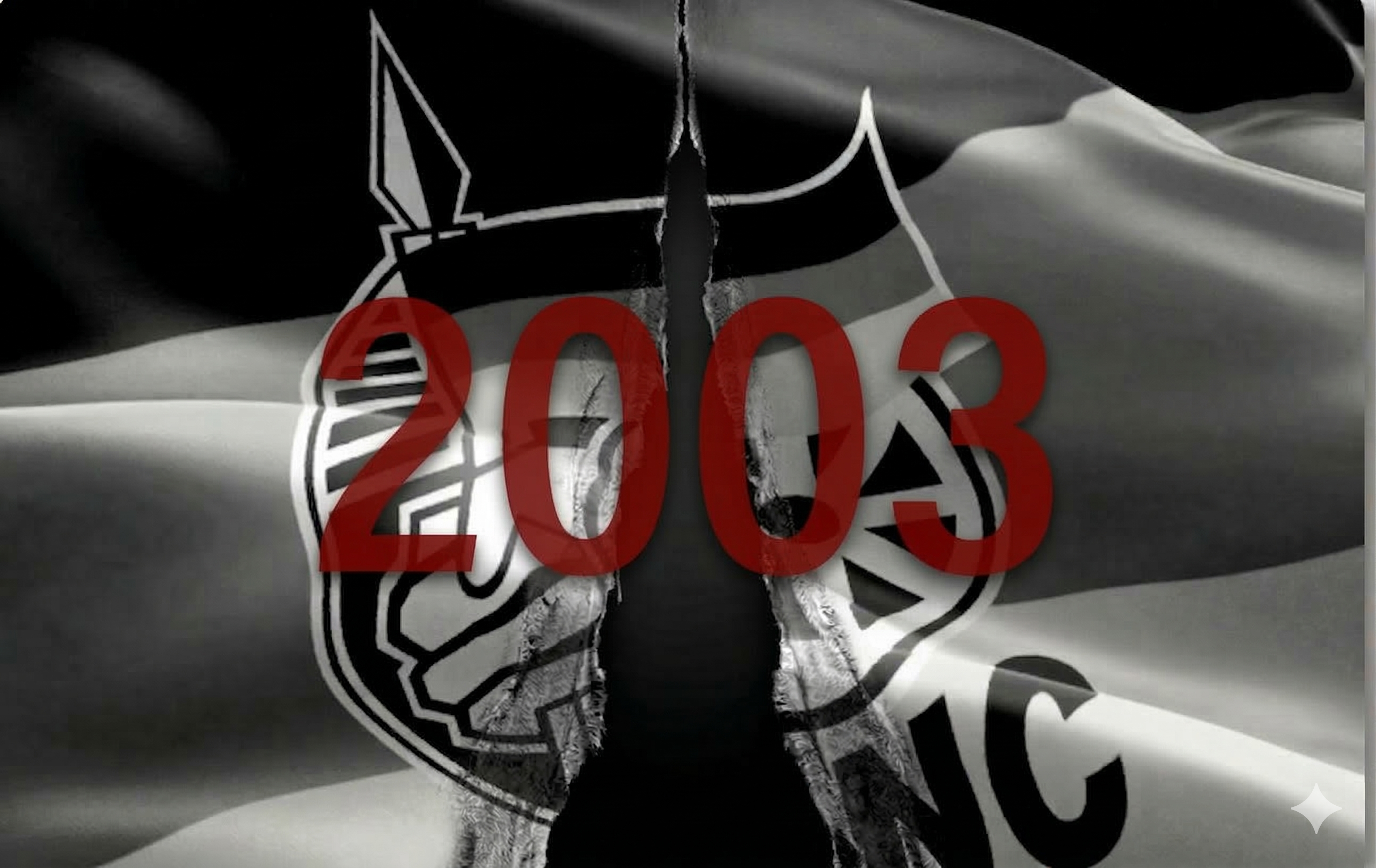
 In 2003, a clandestine agreement between former apartheid leaders and the ANC sowed distrust and led to significant political interference in South Africa’s justice system. (AI image created using Gemini)
 Last week, two formidable lawmen, former heads of the National Prosecuting Authority (NPA), inaugural chief Bulelani Ngcuka and his successor, Vusi Pikoli, appeared before the Khampepe Commission of Inquiry into delayed TRC prosecutions.
Their testimony has been much anticipated as the men not only carry the weight of history, but also the meaning of “truth” and accountability itself in post-apartheid South Africa. They were there in 2003 when the fissure that led to a serious post apartheid schism in the ANC began to rip through the organisation. Then, it was still concealed from public view.
This was the year a secret agreement between old apartheid generals and the fledgling ANC government – and which the families of survivors who have forced this historic commission claim – seeded the political interference that took root and destroyed the Directorate of Special Operations (DSO or The Scorpions), and almost finished off the NPA.
In 2003, in a speech to a joint sitting of Parliament, Thabo Mbeki set the course for the establishment by legal regulation of an alternative Amnesty Task Team (ATT), outside the NPA.
This was a forum of directors general in the departments of justice, state security, defence, intelligence, social development and other officials who all reported back to Mbeki’s ministers. Now, there had to be “consultation” between the NPA and the executive.
The conflict of interest was glaring, and Pikoli told them so.
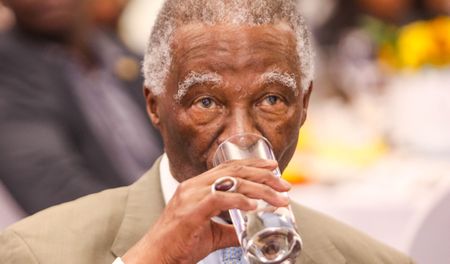
/file/dailymaverick/wp-content/uploads/2024/11/Jen-Siljan-Portait-Solo-by-Gabriel-Nyberg-1.jpg "Archbishop Desmond Tutu on 6 May 2010. (Photo: Gallo Images / The Times / Shelley Christians)")
The betrayal
It was this sleight of hand by Mbeki that subsequently set the scene for the derailing and stalling of truth, accountability and justice in a liberated South Africa. Until now.
Ngcuka and Pikoli faced and attempted to ward off the first unconstitutional attacks on the independence of the newly born prosecuting authority by senior political figures in the ANC, including former presidents Thabo Mbeki and Jacob Zuma.
In 2003, 400 TRC cases were handed to the NPA after the finalisation of traumatic 1998 TRC public hearings, while its Amnesty Committee (established in 1995) still worked, hearing applications until 2002. The final report was handed to Mbeki in 2003.
Many perpetrators of gross human rights violations who did not apply for amnesty were left footloose and scot-free with access to embedded resources and the reassurance that, for now, their need to account for atrocities, bombings, disappearances and kidnappings would be stalled.

While TRC chair, Nobel prize-winner Bishop Desmond Tutu, proclaimed the “rainbow nation” and the “miracle” of the “New South Africa” – and we all wanted and needed to believe him – in the shadows, apartheid intelligence spooks and former security police agents scuttled about planting false flag operations, eventually setting comrade against comrade.
Read more: ‘Project Gnome’: How security police forged a memorandum that tricked ANC and changed history
/file/attachments/orphans/SIU-03_648833.jpg "New National Director of Public Prosecutions Andy Mothibi. (Photo: Shelley Christians)")
Why it matters now
This almost ancient history matters now because while the Khampepe commission exposes the roots of past rot, decay and subversion, new National Director of Public Prosecutions Andy Mothibi is pushing for legislative change to reinstate the independence of the NPA to shield it from future political overreach.
Read more: New NPA boss Andy Mothibi sets sights on a fully independent prosecuting authority
In its current iteration, the Directorate of Priority Crime Investigation (DPCI, or the Hawks) still does not satisfy the 2011 landmark Constitutional Court ruling Glenister v President of the Republic of South Africa and Others penned by former justices Dikgang Moseneke and Edwin Cameron.
This ruling established that the state is constitutionally obliged to create and maintain an independent unit to combat corruption. The judgment confirmed that the Hawks (established in 2009 by Zuma and rubber-stamped by an ANC-majority Parliament) lacked sufficient independence and protection from political interference.
This is why Mothibi’s attempt at correction bodes well.
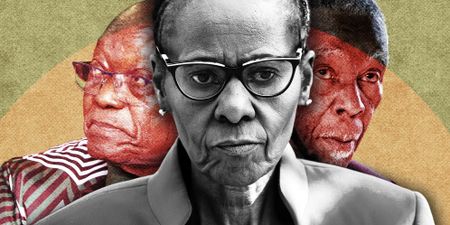
/file/dailymaverick/wp-content/uploads/2025/09/ED_538821.jpg "Former president Thabo Mbeki set the scene for the derailing and stalling of truth, accountability and justice in a liberated South Africa. (Photo: Gallo Images / Sharon Seretlo)")
When the ANC broke
At the Khampepe inquiry, it is the families of victims of human rights abuses and atrocities who have fought tooth and nail for 19 years for this probe into whether the top-tier secret negotiations derailed accountability and justice.
“History is that certainty produced at the point where the imperfections of memory meet the inadequacies of documentation,” observes the character Patrick Lagrange in the 2011 novel, The Sense of an Ending, by Julian Barnes.
The inadequacies of documentation in this instance being the piles of files, affidavits, dockets, secret communications, letters and transcripts of testimonies to the TRC in 1998 that went “missing” or that were stuffed into dark cupboards at the SAPS, gathering dust.
These have now all come to light in thousands of pages of legal documents, court judgments and bundles of secret memoranda that have been dropped on the Khampepe Commission, broadcast live daily, in spite of attempts by Zuma and Mbeki to delay the process.
The inquiry was instituted by President Cyril Ramaphosa in May 2025 after families leveraged the courts. The heart of Mbeki and Zuma’s complaint for commission chair Judge Sisi Khampepe’s recusal is that she has too much of an institutional memory, having served as commissioner on the TRC Amnesty Commission. This could prompt “bias”, the two former statesmen have argued.
In a statement released on Sunday night, Ramaphosa's office said he "remains committed to seeking justice for the victims of apartheid-era crimes whose cry for justice cannot be swept under the carpet".
However, he said, the court application in the Gauteng High Court in Johannesburg for retired Constitutional Court Judge Sisi Khampepe to recuse herself from the judicial Commission of Inquiry, needs to be concluded.
"President Ramaphosa will act swiftly after the court decision to ensure that the commission of inquiry gets down to business," the statement said.
Read more: Mbeki and Zuma: Two presidents, one commission and the lawfare over TRC accountability
/file/attachments/orphans/ED_0029624_501750.jpg "Advocate Vusi Pikoli, who began his testimony at the Khampepe Commission last week. (Photo: Gallo Images / Nardus Engelbrecht)")
Black, green and gold
“I am a member of the ANC. I joined in 1980 in Lesotho. I remain a loyal member of the ANC whose loyalty is unquestionable, but not unquestioning,” Vusi Pikoli began his testimony last Thursday, almost 20 years after his suspension as prosecutions head in 2007.
Pikoli was appointed in 2005 after Ngcuka resigned in July 2004 (Dr Silas Ramaite kept the seat hot in the meantime) before completing his tenure. He left scorched by the behind-the-scenes machinations of a twin-headed monster comprised of ANC intelligence agents and apartheid-era ghosts still in the machine.
An uMkhonto weSizwe (MK) veteran, ANC member of the legal and constitutional affairs department in exile, special adviser to Minister of Justice and Constitutional Affairs Dullah Omar, former Director-General of the Department of Justice and head of the National Prosecuting Authority (NPA), Pikoli represents the ideal ANC cadre.
As did Ngcuka, a lawyer, with a struggle pedigree dating all the way back to Steve Biko and Durban lawyer Griffiths Mxenge and his wife Victoria, who were later killed by an apartheid death squad.
Pikoli's most recent job is as adviser to now-sidelined Minister of Police, Senzo Mchunu, and current adviser to his placeholder, Firoz Cachalia.
It was on Ngcuka’s watch that Scorpions prosecutor advocate Billy Downer began unpacking the ANC-led government’s “original sin” – corruption in the 1997 Strategic Defence Procurement Package – the Arms Deal.
In 2003, just as Ngcuka’s NPA announced that deputy president Jacob Zuma’s financial adviser Schabir Shaik would be prosecuted, but not Zuma himself, the ANC’s own dirty tricks department got to work.
Shaik was found guilty in 2005 in the Durban High Court on two counts of corruption and one of fraud and sentenced to 15 years in prison. History reminds us that he did not spend a day behind bars, and remains alive and well and living in KZN.
In 2003, however, the war stooped low.
/file/attachments/orphans/ED_598511_134964.jpg "Advocate Bulelani Ngcuka testifies at the Khampepe Commission in Johannesburg on 2 March 2026. (Photo: Gallo Images / Luba Lesolle)")
The spy smear
In September that year, Mac Maharaj, Zuma’s close ally and a senior leader in Umkhonto weSizwe (MK), with Mo Shaik, former MK intelligence operative and brother of Schabir, approached then president Mbeki with the spurious accusation that Ngcuka was an apartheid-era spy “RS452”.
“My name was in every newspaper every other day because of the work of the Scorpions,” Ngcuka reminded the commission last week.
While in the background spooks spread confusion among DSO prosecutors, the SAPS, politicians and ANC minsters, in the foreground, in August 2003, the NPA announced that it would be charging the country’s first black National Commissioner of Police, Jackie Selebi, with corruption.
The next month, Maharaj and Shaik struck. Mbeki set up the Hefer Commission into the Ngcuka spy allegations, which revealed that “Rs452” had in fact been Eastern Cape human rights lawyer Vanessa Brereton, who had worked with a security police operative Karl Edwards, and not Bulelani Ngcuka.
Read more: Zuma has a history of treating commissions with contempt
In this instance, the documentation was not inadequate. The Hefer commission found the Maharaj/Shaik “dossier” to be “worthless”. Jacob Zuma refused to testify to the Hefer Commission
/file/attachments/orphans/000075743_558735.jpg "Former South African Police Service commissioner Jackie Selebi on 8 June 2007. (Photo: Leon Botha/Beeld)")
The loyal cadre
Soweto schoolteacher Jackie Selebi went into exile in Tanzania in 1979 and was the ANC’s representative to the Soviet Union’s World Federation of Democratic Youth in Hungary from 1983 to 1987.

That year, he was elected leader of the ANCYL while in exile in Zambia and was later appointed to the National Executive Committee of the liberation movement.
He was a well-known teacher at the Solomon Mahlangu Freedom College in Morogoro, Tanzania, where he taught young South Africans who had fled the country to join the movement.
Back home from exile, he was involved in the complex repatriation of exiles to South Africa from across the world, a gargantuan task. It was during this period that Selebi's path fatefully crossed with that of convicted drug dealer Glenn Agliotti, who became Selebi’s benefactor.
He was an early ANC member of Parliament and served as the country’s Ambassador and Permanent Representative to the UN in Geneva before being appointed DG of the Ministry of Foreign Affairs between 1999 and 2000.
As Y2K and the year 2000 approached, he was appointed by Mbeki as the first black National Commissioner of the SAPS. In this position, he was Mbeki’s eyes and ears. His blood, too, ran black, green and gold.
Selebi was charged in 2008, as Mbeki’s star in the party was waning, and convicted in 2010 of having corruptly received R1.2-million in bribes of various forms from Agliotti.
Selebi died at 64 in January 2015. His funeral at the Dutch Reformed Church in Moreleta Park, Pretoria East, was paid for by the ANC and was attended by ANC dignitaries, including Kgalema Motlanthe, Dipuo Peters, Aaron Motsoaledi, Max Sisulu, Lindiwe Zulu, Nathi Nhleko and Bheki Cele.
Mbeki was not there in person, but sent a written tribute to be read out in which he praised Selebi’s “honesty and attachment to principle” while lamenting “the immense blemish” of having been found guilty of corruption in South African courts.
/file/dailymaverick/wp-content/uploads/2021/05/08-14.-VdMerwe-Vlok-co-accused-in-the-dock-DSC_0157-1.jpg "From left: Former police commissioner General Johan van der Merwe, former police minister Adriaan Vlok and three of his co-accused in the dock of the Gauteng Division of the High Court in Pretoria. (Photo: David Forbes)")
The showdown
But back in November 2004, the NPA was about to arrest and prosecute the men who ordered and were responsible for the poisoning of Reverend Frank Chikane in 1989. These were former minister of law and order Adriaan Vlok, former police commissioner Johan van der Merwe and security policemen Gert Otto, Hermanus van Staden and Christoffel Smit.
It was then that Jan Wagenaar, the attorney representing the generals and other apartheid perpetrators, called the higher-ups to whisper that they had evidence that Priority Crimes Litigation Unit [PCLU] prosecutor, advocate Antonn Ackermann, “had a solid case” and was about to arrest and prosecute the “ANC 37” senior leadership, including Thabo Mbeki. He claimed that two SAPS members had brought him proof of these dockets.
Despite Ackermann, Ngcuka and his later boss Pikoli’s various meetings with Mbeki’s inner circle, including the security cluster, the SAPS and the NPA, and reassuring them that all of this was not true, Selebi ran with the false flag operation like a cat with its tail on fire.
The date of a memorandum by Ackermann, penned in 2003, had been altered and had the date falsified to 2006 to back up the claim of imminent arrests. In the end, none of the evidence or dockets could be produced by the generals.
The commission heard that at a meeting in 2007, Pikoli had advised Selebi to “tell the truth and shame the devil” when he refused to back down, but Selebi stormed off, declaring “the gloves are off” and that it was “war”.
Suspended by Mbeki in September 2007, Pikoli was officially fired in February 2009, when the ANC-controlled Parliament endorsed the decision to axe him.
Mbeki, by then, had been forced to step down as leader of the ANC and the country. Kgalema Motlanthe, as the stand-in, was given the task of issuing Pikoli’s marching orders.
And so it was, as Dickens wrote, “It was the best of times, it was the worst of times, it was the age of wisdom, it was the age of foolishness, it was the epoch of belief, it was the epoch of incredulity, it was the season of light, it was the season of darkness, it was the spring of hope, it was the winter of despair.”
Several ANC members, like Ngcuka and Pikoli, survived that winter long enough to tell their truth. DM
Correction: An earlier version of this article incorrectly referred to the Directorate of Special Operations as the Directorate for Priority Crimes Investigation. (Updated 16 March 2026)
Correction: This article has been amended to say that the commission heard that at a meeting in 2007 not 2006, Pikoli had advised Selebi to “tell the truth and shame the devil” when he refused to back down, but Selebi stormed off, declaring “the gloves are off” and that it was “war”. (Updated 16 March)