




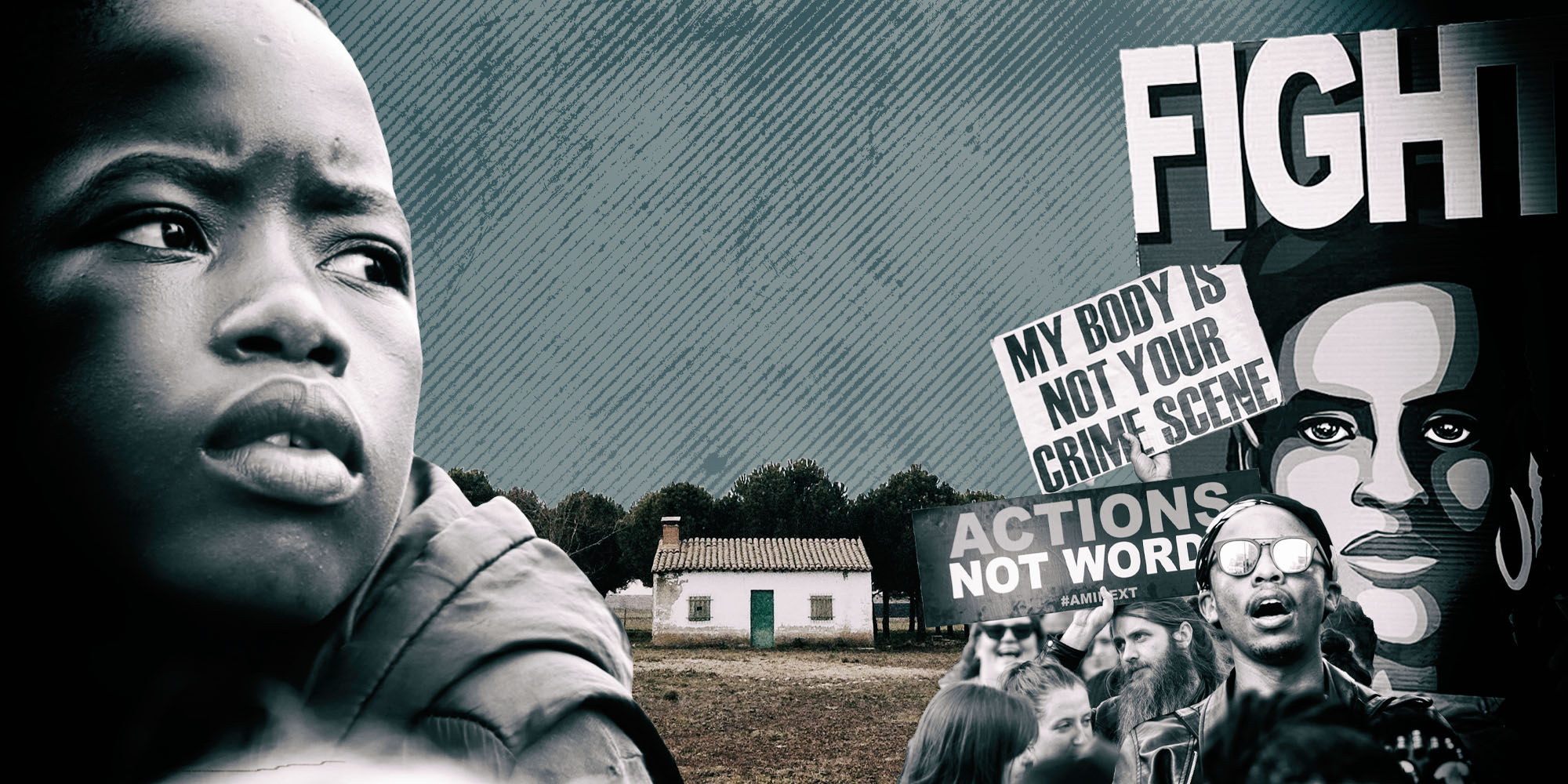
 As the UN’s 70th Commission on the Status of Women unfolds, activists are battling rising anti-rights sentiment to protect global women’s rights amid a fiscal crisis. (Photos: Leila Dougan | Gallo Images / Alet Pretorius | Unsplash / Elizabeth Lies)
 /file/dailymaverick/wp-content/uploads/2025/10/label-Op-Ed.jpg)
New York has a strange rhythm during the Commission on the Status of Women. Outside the United Nations building, taxis lean on their horns and tourists queue for photographs. Inside, diplomats, activists and civil society organisations spend long nights arguing over language that can quietly shape the lives of millions of women.
The Commission on the Status of Women, known as CSW, is the UN’s largest annual gathering on gender equality. Each year, governments negotiate an outcome document known as the Agreed Conclusions, which sets political commitments and global standards on issues affecting women and girls. These texts do not change national laws overnight, but they often influence legislation, justice systems and policy frameworks around the world.
This year’s 70th session is unfolding against the backdrop of a multilateral system under visible strain. The United Nations is facing a financial crisis so severe that senior officials have begun openly warning about the risk of institutional collapse if major contributors continue to withhold funds. At the same time, anti-rights and nationalist governments are pushing to dilute long-standing human rights commitments within international forums. Those tensions surfaced clearly in the negotiations this week.
Delegates rejected a package of amendments proposed by the United States that would have weakened references to sexual and reproductive health and rights. Instead, the commission adopted its Agreed Conclusions through a recorded vote rather than the traditional consensus process, a rare step that revealed both the depth of the political divisions and the determination of many states to hold the line on existing rights standards.
/file/dailymaverick/wp-content/uploads/2022/08/MC-Violence-Women.jpg "Protesters outside Parliament during the End Queer and Trans Hate Campaign in Cape Town on 26 April 2021. The march was in solidarity with LGBTQI+ victims and survivors of violence. (Photo: Gallo Images / Brenton Geach)")
The battles behind that vote were familiar. Anti-rights actors pushed to weaken references to sexual and reproductive health and rights, challenged language affirming protections for “all women and girls,” and sought to narrow wording that could be read as inclusive of LGBTIQ people. Feminist advocates and supportive governments worked just as hard to resist those changes.
Yet the deeper story unfolding in New York is not only about the wording of a document. It is about the future of the system itself. For decades, feminist movements have used multilateral spaces like CSW to push governments toward legal reforms and international standards on violence against women. The results are not abstract. Agreements forged in these arenas have helped shape national legislation, justice sector responses and policy frameworks around the world. They have also given activists a powerful tool: the ability to hold governments accountable to commitments made on the global stage.
But the system that made many of those gains possible is increasingly contested. Across the world, coordinated anti-gender campaigns are reframing feminism and gender equality as ideological threats. Conservative governments, religious networks and “family values” organisations have built transnational alliances to challenge language on sexual and reproductive health and rights, LGBTIQ inclusion and comprehensive sexuality education in international agreements. These actors are no longer operating only outside the system. They are embedded within state delegations, proposing amendments and reshaping negotiations from inside the room.
At the same time, the United Nations itself is under enormous pressure. Years of financial strain, geopolitical rivalries and declining trust in global institutions have weakened the system’s ability to operate effectively. For many observers, the UN’s current fiscal crisis is not simply a budgetary problem, but part of a broader political struggle over the future of multilateral governance. For feminist movements, this moment has created an unusual tension. Feminists have never been naïve about the United Nations.
Strategic choice
From the Beijing Platform for Action to the present, activists have documented how the system reproduces global power hierarchies, marginalises voices from the Global South and often translates radical demands into cautious diplomatic language. Many feminist organisations have long criticised UN institutions for being constrained by donor priorities and reluctant to challenge the economic and political systems that underpin inequality. But the current moment has forced a sharper strategic choice. The crisis facing the UN has resulted in many feminist organisations defending a system they have also spent decades critiquing.
In a widely circulated joint statement, more than 1,200 feminist organisations and allies argued that while the UN urgently needs reform, it remains the only universal rules-based intergovernmental system capable of establishing global standards.
Allowing it to collapse will not produce a more democratic world. It will simply concentrate power in the hands of authoritarian governments and private actors. That concern reflects a deeper fear about what might replace the current system.
Across global politics, alternative models of governance are emerging that shift power away from public institutions toward elite-driven platforms dominated by corporate and political interests. For many feminist activists, abandoning multilateralism without building a democratic alternative risks replacing imperfect global rules with even less accountable forms of governance.
In response, feminist organisations are defending the UN more explicitly as an institution. Networks such as Wedo, the Women’s Major Group and allied coalitions have called on governments to pay their UN contributions in full and on time, warning that financial blackmail could cripple institutions responsible for advancing human rights. At the same time, they caution against allowing private donors to fill the gap in ways that accelerate the privatisation of global governance.
/file/dailymaverick/wp-content/uploads/2022/06/MC-LGTBI_3.jpg "The Stonewall Inn, a pop-up store at 53a Neil Street in London, celebrates Pride Jubilee on 26 June 2019, marking 50 years of activism since the 1969 Stonewall Riot in New York, marking the beginning of the gay rights movement in the United States. (Photo: Quintina Valero / Getty Images)")
At CSW70, these debates run just beneath the surface of negotiations. Civil society organisations track proposed amendments in real time, brief supportive governments and coordinate strategies to resist attempts to dilute language on gender equality. Delegations from different regions work together to prevent incremental erosion of longstanding commitments. But alongside these defensive battles, there is also a growing recognition that feminist movements may need to pursue dual strategies.
On one hand, defending multilateral institutions from anti-rights capture. On the other, building autonomous feminist infrastructures that do not rely solely on UN spaces: regional accountability mechanisms, transnational solidarity funds and people-centred justice initiatives capable of sustaining movements beyond diplomatic arenas. The logic is simple. You can try to keep the house from burning down while also building alternative shelters.
In that sense, CSW70 feels less like a routine diplomatic gathering and more like a hinge moment. The official theme: ensuring access to justice for all women and girls, arrives at a time when justice systems themselves are under pressure from conflict, austerity and democratic backsliding. The negotiations unfolding in New York may appear technical from the outside. But the stakes extend far beyond the wording of a document.
They are about whether the international system still has the capacity to defend human rights in a world where those rights are increasingly contested. The question, then, is not whether the multilateral system is perfect. It is whether we are willing to defend it from those who would dismantle the fragile global rules that still protect human rights. DM
Joy Watson is a Daily Maverick contributor; she has worked as a researcher and policy adviser to national states as well as in the global policy arena. Currently, she works for the Institute for Security Studies and the Sexual Violence Research Initiative.