




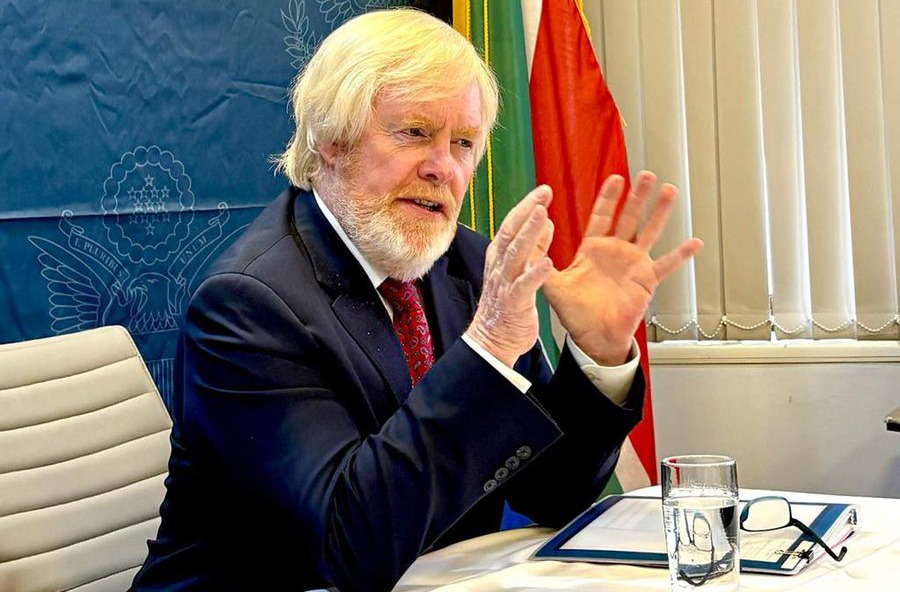
 Brent Bozell. (Photo: Europa.com / X)
 The new American ambassador to South Africa (SA), Leo Brent Bozell III, has received an abrupt awakening about how South Africans can always find something – or somebody – to poke in the media, warranted or not. It can be entertaining, but can also be a rough and tumble world.
The other day, he spoke at a business gathering in the Western Cape. It was his first public address in the country, delivered before a business audience likely in sync with his ideas about how foreign investors should participate in (SA’s) sophisticated economic world, and that his government is ready to cooperate with SA to make this happen.
As part of his speech, right at the beginning, he made the right acknowledgements of SA’s complex history and its ongoing efforts to achieve a more democratic, non-racial society. Bozell said, “Though I have only recently arrived, I have already begun to experience the richness and complexity of this remarkable country. I have travelled beyond Pretoria to Johannesburg, Durban, Cape Town, and now Hermanus.
“I have met with government officials, business leaders, and local communities. I have visited the Apartheid Museum and District Six Museum…. They are places that remind you that South Africa’s history is lived memory – sacrifice, struggle, resilience, and unfinished work.” So far, so good.
/file/dailymaverick/wp-content/uploads/2025/03/GettyImages-521220070.jpg "Leo Brent Bozell III. (Photo: Kris Connor / Getty Images)")
Moving into slightly choppier waters, he raised a few cautionary flags, saying his concerns are not just rhetorical. “They involve the business environment, rural safety, the Expropriation Act, and South Africa’s growing engagement with some of America’s adversaries.
“These issues shape investor confidence. They shape strategic trust. And they shape the trajectory of our bilateral relationship.” Maybe a little edgy for an initial foray but, well, ok, such critiques are not so different from those of some local commentators.
Nonetheless, he waxed enthusiastic about recent US investment successes such as Visa, Google, Microsoft, and Amazon. These are proof, he said, “American companies bring capital, high standards, cutting-edge technology, workforce development, and long-term commitment”. He went on to discuss possible South African investments in the US. Good markers to put out there.
Then he set out what he believed to be impediments to better relations. They were not demands, even if statements by Donald Trump and other administration officials have come pretty close to just that.
Intended outcomes?
Bozell said: “The real question is whether current policies are achieving their intended outcomes. Programmes such as Broad-Based Black Economic Empowerment are designed to expand opportunity and correct historic injustice. Those are important goals. But when these policies are structured in ways that introduce challenges to ownership or create complex compliance burdens or are clouded by charges of corruption, investors begin to reassess risk.”
He specified a roster of areas for change, calling them achievable, practical and beneficial to both Americans and South Africans.
They were:
“1. Protecting rural communities from violence;
2. Condemning rhetoric that incites hatred or glorifies violence;
3. Ensuring that expropriation policies include clear and fair compensation standards;
4. Expanding digital and critical minerals cooperation;
5. Ending mandatory surrender of ownership or control of corporate decision-making as a cost of doing business.”
This speech wouldn’t have been all that newsworthy, save for the fact that in the Q&A, Bozell touched one of the hot buttons in SA. He disagreed with the “Kill the Boer” Constitutional Court’s ruling, even as he acknowledged that the court had made its decision in one of the most contested court cases in SA, one intersecting freedom of speech/hate speech, and the politics of free expression.
He was quoted as saying: “We may not get clarity on the Kill the Boer chant that we believe is hate speech. I am sorry, I don’t care what your courts say, it’s hate speech.”
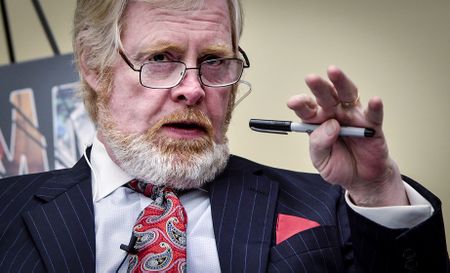
Any comment by a foreign ambassador on this case, especially an American one, given all the recent unpleasantnesses between the two countries, was sure to make the news – but the wrong way.
Given the current texture of US-South Africa diplomatic relations, words like that led to a demarche (a diplomatic reprimand) by the South African government and some public annoyance from the country’s foreign minister. In effect, Bozell was told to mind his manners, we’re watching carefully… One retired diplomat wrote to me, almost immediately, saying, “This was just the hors d’oeurves. Lots more coming.…”
Sticking to script
But – it doesn’t have to be this way. Nations can disagree without fireworks.
Ordinarily, first speeches from a newly accredited envoy are rich with appreciations for the country they are now living in, descriptions of their own past experiences, and why they are delighted to be here, a gentle anecdote or two, and an expression of their hopes to advance relations and deepen the ties between two societies. In short, they are pretty programmatic, but largely forgettable. They make no waves.
Yes, it is true ambassadorial speeches can sometimes highlight differences and cast a spotlight on bilateral issues to be solved or moderated, or even criticisms of the host society that affect that bilateral relationship. But such speeches usually come later, once some personal rapport has been achieved in the envoy’s tenure.
Sometimes, too, repetition of the key point becomes the crucial thing. US Ambassador Mike Mansfield served in Japan for more than a decade, following his long career as a senator, an academic, and even as a Marine earlier in his life. His stock speech – delivered to hundreds of business, economic, social, and other groups – after he said how glad he was to be in whatever place he was in, began with the same line: “The US-Japan bilateral relationship is the single most important bilateral relationship in the world today, bar none.”
Read more: Tips for Bozell: A geopolitical survival guide from Mzansi for US ambassador to SA
By the time he left Tokyo, millions of Japanese could chant that line by heart – in English or Japanese – having heard it so often, and they had come to believe it. He had gone to Tokyo just after the collapse of the American involvement in Vietnam and it was deemed crucial for him to convince a worried Japanese public that the US was not cutting its links to the rest of Asia. He understood this need and didn’t mince his words.
One crisp, key phrase
In our current circumstances, Ambassador Bozell and his staff should contemplate how they can boil down his message to one crisp, key phrase. Once they have it, he should intone it in every radio, television, online, and in-person presentation. And his staff must piggyback on it as well.
It must be the kind of statement encapsulating his desire to build a better relationship for the future, even if there are disagreements. But, no matter, adults can work these things out, even if they must agree to disagree occasionally. Underscoring this mantra should be the idea the relationship is sufficiently worth saving that the hard work on improving it lies ahead, rather than in dwelling on past insults, angry words, and prickly disputes.
As an experienced media professional, Ambassador Bozell certainly understands the importance of such an effort and being prepared to do it. (Ed’s note: Is he prepared to do it?) But it may take time to move away from this first pothole in the road. DM