



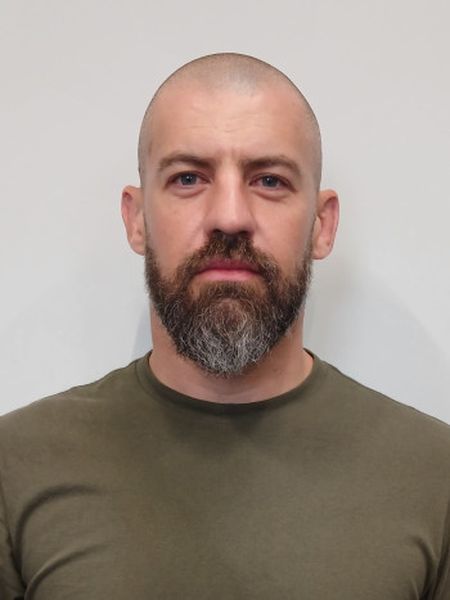
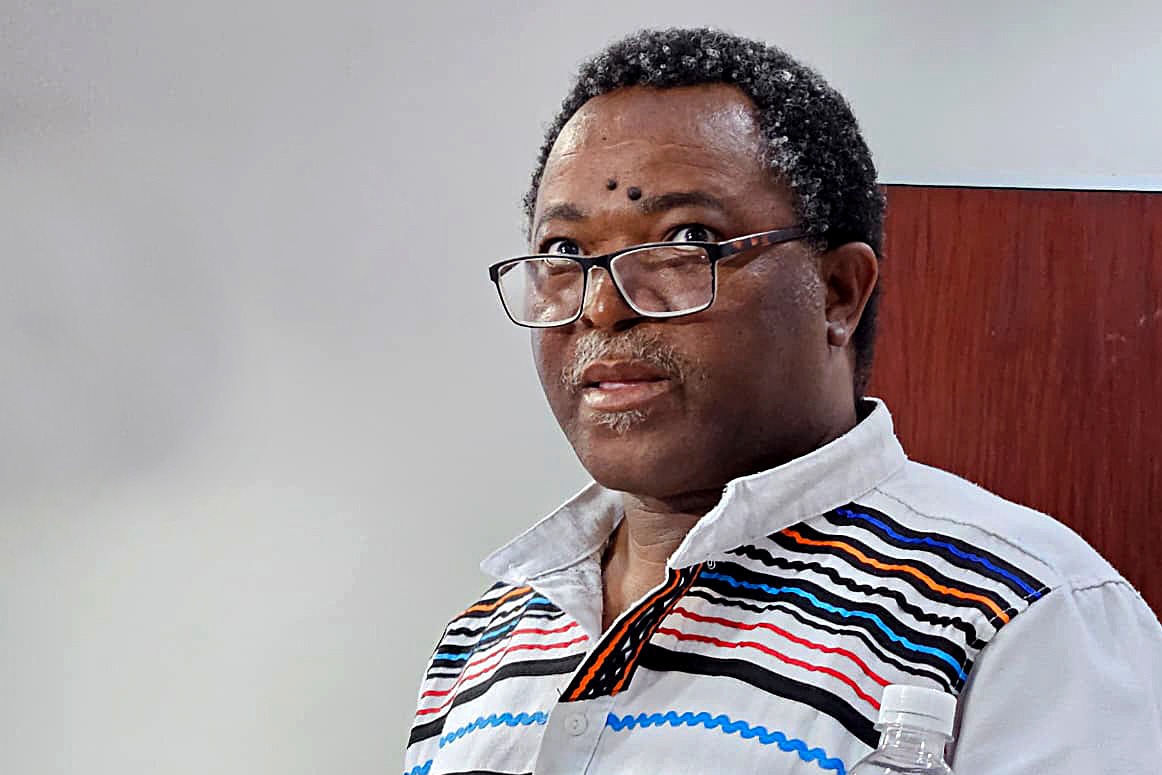
 The chairperson of the Coalition for Civil Society, Monga Peter, has asked President Cyril Ramaphosa to address critical infrastructure failures in Nelson Mandela Bay. (Photo: Andisa Bonani)
 “The people of Nelson Mandela Bay deserve a city that works. They deserve leadership that acts with urgency, competence and accountability, and above all, the protection of the rights guaranteed to them by the Constitution.”
This was the overarching message of a letter the Nelson Mandela Bay Civil Society Coalition (NMBCSC) wrote to President Cyril Ramaphosa, asking for his urgent intervention as the metro steadily deteriorates.
NMBCSC chairperson Monga Peter listed a series of ongoing concerns, but the latest widespread electricity outage, caused by the collapse of a high-voltage electricity transmission pylon on Tuesday, seemed to be the straw that broke the camel’s back.
And while the municipality acknowledged the coalition’s letter and the concerns raised, it maintained that programmes were already in place to address “significant service delivery pressures” plaguing the city.
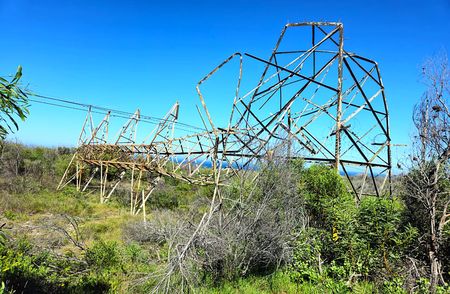
/file/attachments/orphans/Pylon_915405.jpg "A collapsed pylon in Nelson Mandela Bay. (Photo: Deon Ferreira)")
In the letter, Peter said the mounting challenges in the metro had escalated beyond simple administrative failures and should be considered a violation of residents’ constitutional rights.
“The NMBCSC has written to President Cyril Ramaphosa calling for urgent national intervention to address the accelerating collapse of electricity, water and sanitation infrastructure in Nelson Mandela Bay,” said Peter.
In the letter, he wrote: “The Constitution obliges local government to prioritise the basic needs of communities [and provide] essential services such as water, sanitation and electricity. Municipalities must ensure that every resident has access to at least a minimum level of basic service.”
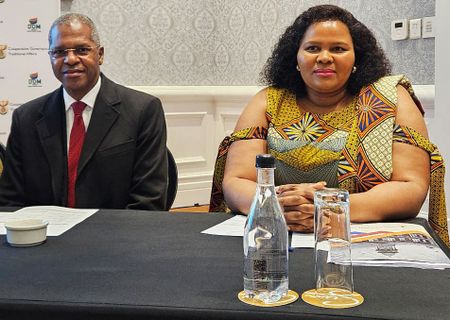
In December 2025, the Minister of Cooperative Governance and Traditional Affairs (Cogta), Velenkosini Hlabisa, met with Nelson Mandela Bay Mayor Babalwa Lobishe, members of her mayoral committee, and representatives from Cogta’s provincial office. The goal, said Peter, was to clarify the implementation of section 154 of the Constitution, which obliges national and provincial governments to support municipalities in fulfilling their functions.
“Regrettably, this intervention has produced no tangible results to date. As acknowledged during that engagement, the invocation of section 154 in Nelson Mandela Bay — now for the fourth time — has historically failed to deliver meaningful and sustained improvement,” said Peter.
Political interference
He said that a shortage of finances was not to blame, but rather continuous political interference in the operations of the municipality, and a lack of skills, accountability and professional management.
“Since 2023, National Treasury has withheld at least R1.6-billion from the municipality due to irregular and wasteful expenditure and the failure to spend conditional grants appropriately. These funds were intended for critical investments in water, sanitation and electricity infrastructure.
/file/attachments/orphans/WhatsApp-Image-2026-01-18-at-1330_737822.jpg "A water leak that was reported in November last year was only fixed on 6 January. (Photo: Facebook)")
“The lack of proactive maintenance and inadequate monitoring of electricity infrastructure has resulted in repeated power disruptions. Since 2023, at least 202 power outages have occurred in the metro’s primary industrial and commercial areas, while power dips occur almost daily.
“On 11 March 2026, another electricity pylon collapsed, only weeks after a previous failure had been repaired. These incidents are not isolated. They are the predictable outcome of years of neglected maintenance and systemic dysfunction. Each failure leaves communities without power while further undermining economic activity and public confidence.”
Besides these challenges, Peter also mentioned dwindling dam levels and increasing water losses due to leaks and infrastructure failures, as well as unhealthy conditions due to failing sewage systems and ailing electricity networks.
Ultimately, all these challenges translate to pressure on local businesses and economic losses.
A constitutional matter
“Concerns repeatedly raised with both local and provincial authorities have not been met with the urgency required. This is no longer simply a municipal governance issue. It is a constitutional matter affecting the dignity, safety and livelihoods of hundreds of thousands of residents.
“Nelson Mandela Bay is a strategic economic hub for the Eastern Cape and the country. Allowing its infrastructure to collapse undermines investment, threatens jobs and places further strain on already vulnerable communities,” wrote Peter.
In response, the municipality said the challenges in the metro were not unique to the metro and municipalities across South Africa faced similar problems.
The municipality said it had already communicated its programmes to strengthen governance, renew infrastructure, stabilise services and restore operational effectiveness.
“Service delivery reform is currently under way through coordinated efforts between the municipality, organised business, civil society formations and the three spheres of government.
“The municipality is working closely with the national and provincial departments responsible for cooperative governance, infrastructure development and public finance to strengthen technical capacity, improve asset management systems and accelerate infrastructure maintenance and renewal programmes,” said the municipality.
Acknowledging the NMBCSC and its calls for better collaboration, the municipality said its “doors remain open to constructive engagement.
“The municipality remains fully committed to transparency, accountability and cooperative governance as we work with all partners to restore effective and efficient municipal services and to secure a sustainable future for the people of Nelson Mandela Bay.” DM
Comments
Scroll down to load comments...