




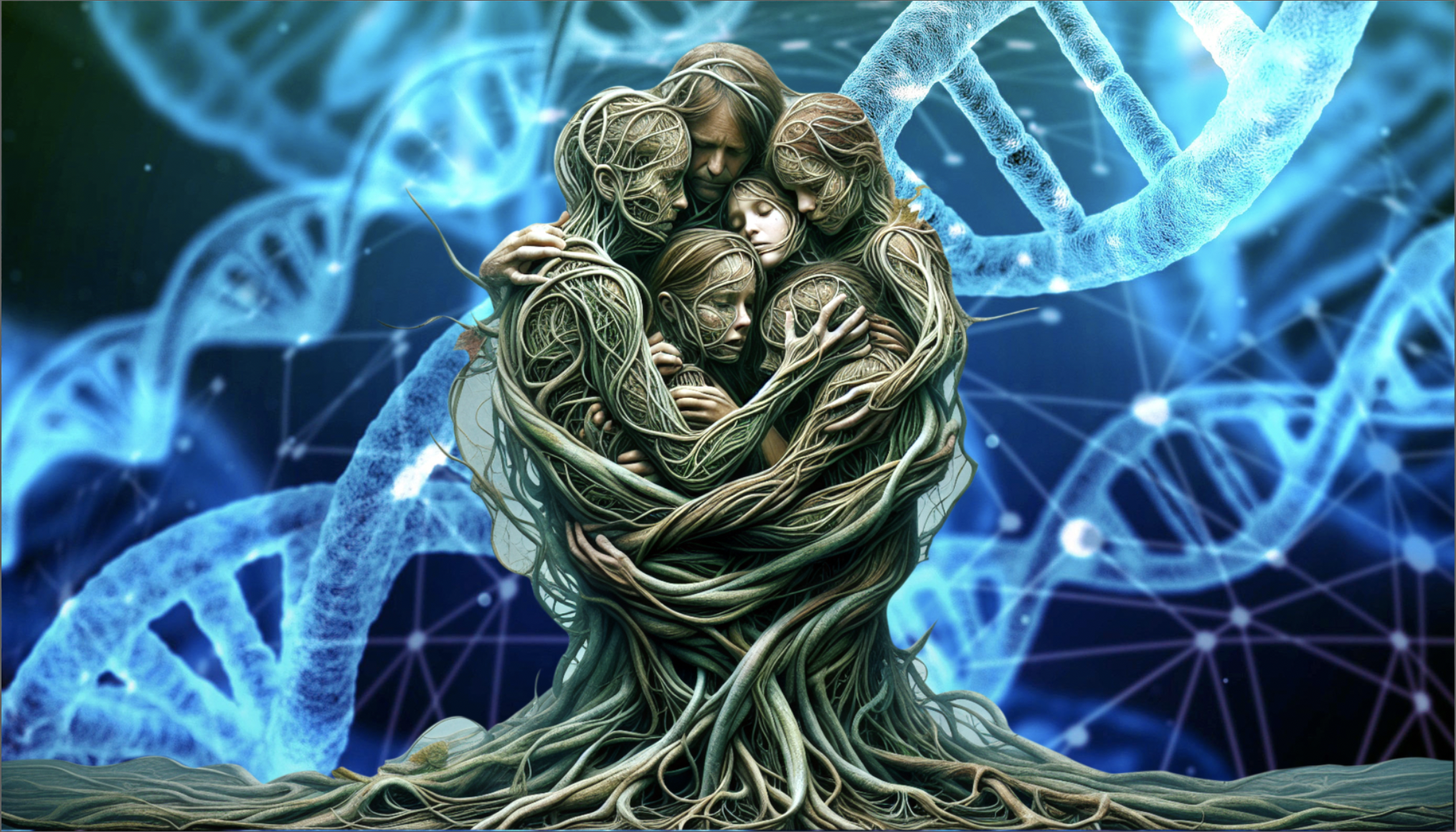
 The effects of trauma are best understood as changeable responses shaped by context. (Image: Pixabay)
 /file/dailymaverick/wp-content/uploads/2025/10/label-Op-Ed.jpg)
An older man in a work programme told me he dreamed of a small vegetable garden — then listed, like a prayer, why it couldn’t happen: no space, no money for municipal water, no money for seeds. Nothing was “wrong” with him. Everything had happened to him. And until someone sat with him long enough to turn the mountain into steps, the dream stayed where poverty often keeps it: in the mouth, not in the ground.
In development work, we’re trained to diagnose. We look at a person who isn’t moving forward, and we ask: What’s wrong here? Why the poor choices? Why the passivity? We reach for the nearest tool: a workshop, a programme, a curriculum, a referral form.
A trauma-informed lens asks a different question — and it changes the entire room: What happened to you?
That question doesn’t excuse harm. It doesn’t romanticise suffering. It simply recognises that people don’t arrive in poverty as blank slates. They arrive carrying histories — violence, shame, instability, grief, chronic stress — and those histories shape what is possible long after the workshop is over.
It’s worth remembering why “charity” took root in the first place. In the 1990s, when democracy arrived and the world leaned in, relief was not a cynical industry. It was an ethical instinct. People who had been systematically deprived suddenly received something basic: uniforms, stationery, nappies, food support, school fees — the practical scaffolding that makes dignity possible. That relief mattered. In many households, it still does.
Relief is not failure. Relief is often the first rung of the ladder.
The problem is when we pretend the first rung is the ladder.
In the late 1990s, Central American community development practitioner Marta Cabrera named what many practitioners feel but struggle to say plainly. Communities can be saturated with workshops and still remain stuck — not because people are stupid, but because their inner worlds have been shaped by chronic adversity. She asked the question that should be pinned above every strategy session: “How does one empower a traumatised population?”
Cabrera’s point is not theoretical. It is operational. When trauma is unrecognised, we misread behaviour. We see “lack of motivation” where there is exhaustion. We see “resistance” where there is fear. We see “dependency” where a nervous system has learned that tomorrow is not guaranteed. If you ignore trauma, you build interventions that fail by design.
This is where the sector needs humility.
Training is often necessary. But training is rarely sufficient. Knowledge can sit in a person’s mind while their body remains trapped in threat. Trauma, stress and instability drain the energy required for planning, persistence and risk. And so we get the familiar cycle: attend the workshop, feel inspired, return to life, get knocked back, repeat.
Accompaniment
Here is the simple, difficult truth: the work that changes lives is often the work after the workshop.
That work has a name: accompaniment.
Accompaniment is not “doing for” people. It is not charity dressed up in new language. It is the steady practice of returning — so that a person can translate insight into action in the face of real constraints. It is slow. It is relational. It is not easily photographed.
And it is hard.
The workshop is the easy part. The second visit is the work. The third visit is where change either begins — or dies.
Here’s the problem: our systems rarely pay for the second and third visits. Funding cycles and reporting templates reward what is quick, visible and countable — and quietly punish what is slow, relational and repeated.
A small example makes the point.
In a conversation with social employment participants working in agriculture, the question was simple: What have you learned — and what have you started at home? The learning was real. The starting was not.
So we did a basic coaching tool: Grow — Goals, Reality, Options, What next.
One older man couldn’t write, so I wrote with him. His goal was modest: a small garden to feed his family, maybe surplus to sell. Then “Reality” arrived fast: overcrowded space, fear of water costs, no money for seeds.
A non-trauma-informed response can become moralistic: If you want it, why don’t you just do it?
A trauma-informed response becomes curious: How have you coped up to now? Which constraints have you learned to treat as permanent? Where did hope get shut down?
When we moved to “Options”, something shifted. He remembered his sister-in-law might have space as tenants were leaving. Seeds turned out not to be an impossible sum —perhaps R50 or R60 for a packet. Water could be partly solved with an old tank to catch rainwater. By the end, he had a plan.
That could be the end of the story in a glossy report: “participant developed an action plan”.
But accompaniment starts where the report ends.
Because crisis snaps the thread. And so you go back. And you go back again. You redo the exercise because life intervenes — a fight at home, a sick child, a lost job, a landlord’s threat, a payment that didn’t come through. Each return is an act of rebuilding agency until a new pattern becomes strong enough to carry weight.
Active citizenship
A second example comes from youth work.
In March 2025, a small Critical Consciousness process began with young people from Esterhof in Riebeek Kasteel, rooted in storytelling, reflection and Paulo Freire’s idea of conscientização — moving from passive acceptance to active citizenship. It begins where trauma-informed development begins: not with instruction, but with meaning-making.
Participants asked the kinds of questions many programmes avoid: Why are we poor? Why do some have so much while others have so little? Why is it still so hard to find work? Out of that came something that development language often fails to capture: voice, belonging, moral agency. One participant wrote that real change starts “in how we speak to others, how we listen, and how we care”. Another named the end-goal with disarming simplicity: “to believe that we belong to each other”.
And when young people described what they wanted to carry forward, they didn’t ask first for a bigger programme. They asked for relationship — “a safe space, a listening ear” — and for community strength: “We are strong together. When one person feels weak, the group can carry them.”
That is not sentiment. It is an operating system.
A brief word about the organisation I know best, only as one example among many.
Goedgedacht Trust is a rural development organisation in the Swartland that works alongside farm and village communities to strengthen children, families and young people across the life course. Under the founder’s leadership, Goedgedacht deliberately brought in an asset-based community development (ABCD) approach — a shift away from doing for people and toward recognising community assets and supporting people to build from what they already have.
That shift matters. But ABCD also teaches a second lesson: mapping assets is not the same as unlocking them. Unlocking requires accompaniment — the return visit, the steady follow-through, the relational work that restores agency when life collapses back into survival mode.
Here is the sting line the sector needs to swallow: we have built a development culture that rewards what can be counted — and underfunds what actually changes people.
Relief still matters. Training still matters. But if we want change that survives contact with real life, we have to fund what happens after the workshop: the returning, the checking-in, the redoing — the steady accompaniment until agency is no longer a moment, but a habit.
If funders want fewer projects and more progress, fund the return visit — or stop pretending we’re doing development. DM
Deon Snyman is the MD of the Goedgedacht Trust, a rural development organisation in the Western Cape. He holds a PhD in Old Testament, an MA in ancient languages and an MPhil in political studies. He has worked for more than two decades at the intersection of social justice, community development and leadership formation, with a focus on children, youth and families in vulnerable communities.