



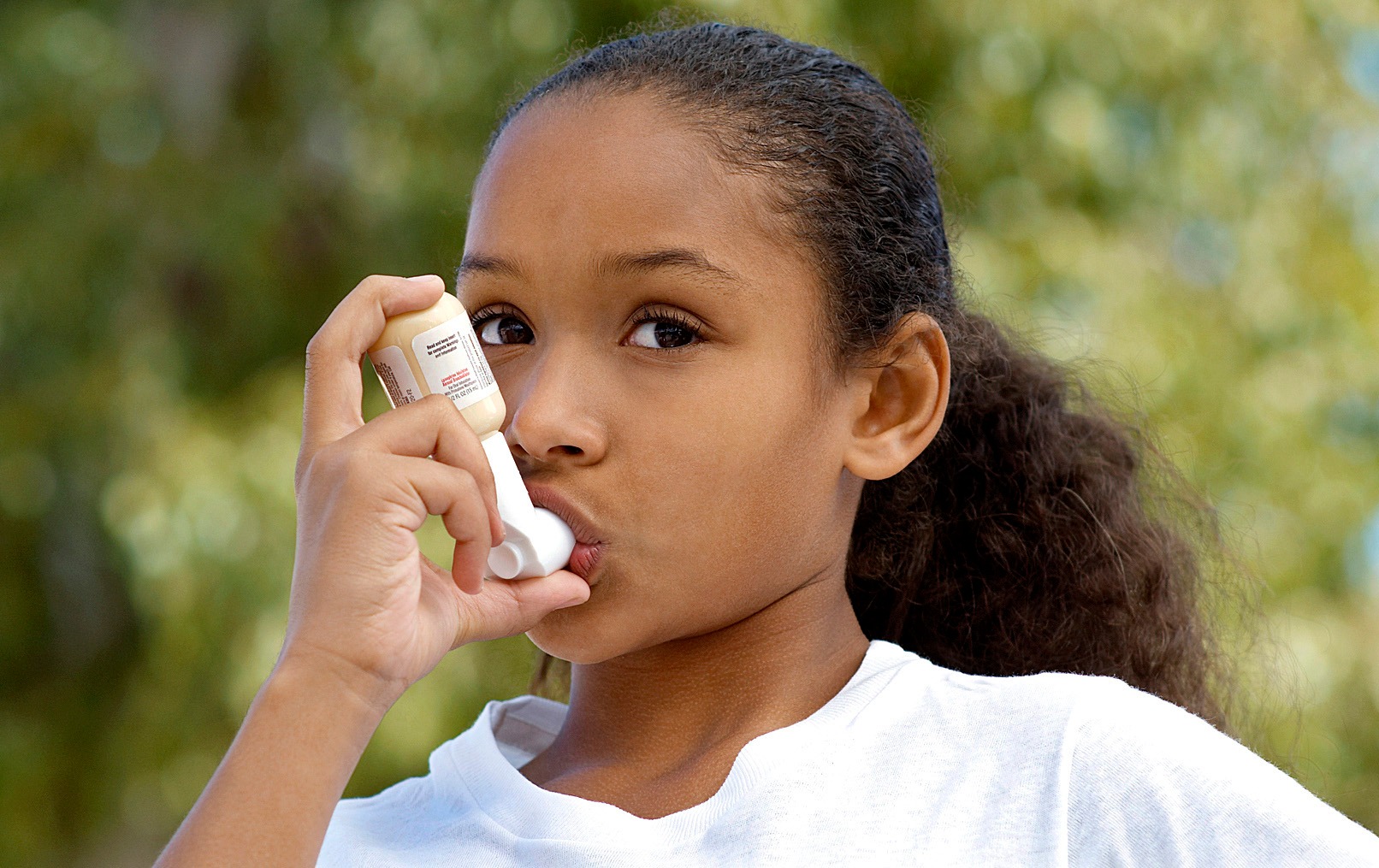
 Chronic respiratory diseases account for 4% of all deaths due to non-communicable diseases in South Africa, yet the World Health Organization has warned that these conditions aren't receiving the attention they should, both locally and globally. (Photo: iStock)
 Across South Africa and the globe, there is a silent scourge affecting the health of populations – chronic respiratory diseases. Conditions such as asthma and chronic obstructive pulmonary disease (COPD) go underreported and undertreated, despite making up a significant portion of the disease burden worldwide.
In South Africa, chronic respiratory diseases (CRDs) account for 4% of all deaths, according to the World Health Organization (WHO). The risk factors for these conditions come into play from the early years of a person’s life, and are intricately intertwined with the social determinants of health – in particular, poverty.
COPD, ranked as the fourth leading cause of death worldwide, used to be viewed as a mainly smoking-related condition. However, Professor Richard van Zyl-Smit, consultant pulmonologist at the University of Cape Town and Groote Schuur Hospital, noted that there were many other factors that could “mess up your lungs”, particularly in low- and middle-income countries. And the damage starts from a young age.
/file/attachments/orphans/RichardvanZyl-smit_744853.jpg "Richard van Zyl-Smit, professor and consultant pulmonologist at the University of Cape Town and Groote Schuur Hospital, at a media workshop on chronic respiratory diseases in Cape Town on 3 March 2026. (Photo: Supplied / Michael Kessler)")
Poverty and CRDs
While COPD develops gradually over time, presenting in adult patients, asthma is one of the most common chronic conditions in children, according to the WHO.
Early life events such as poor growth in utero, severe respiratory infections or childhood asthma can play a role in the development of COPD later on.
Poverty is the main underlying driver of chronic respiratory diseases, explained Van Zyl-Smit.
“In reality, if we want to fix this, we really have to attend to poverty,” he said.
“For chronic respiratory diseases, the asthma and COPD … we have the insults of mining. [There’s] tuberculosis and childhood infections, HIV, tobacco smoking, poorly treated asthma, biomass exposure and outdoor air pollution. Everything we breathe impacts.”
Broader issues such as access to inhaler medications, food security, vaccine inequity and climate change also play a role in the development of these diseases, he added.
“This is a very messy space because there's so much going on, but it's really important, because if you can't breathe, you can't function. You can't go and work … You can't go to the shop. Someone's got to care for you,” said Van Zyl-Smit.
“Chronic respiratory diseases impact from [the level of] paediatrics – not being able to go to school, university – all the way through to your workforce.”
The WHO has noted that access to effective treatments for asthma and COPD remains a challenge in many low- and middle-income countries, with patient education on how to use inhaled medicines similarly limited.
According to data from 2019, the number of deaths due to CRDs in South Africa stood at 20,149, with 45% of these occurring in individuals under 70 years of age. The number of deaths due to asthma stood at 5,847, with 61% occurring under 70 and 7% under 30.
“I can't talk about adult respiratory disease without recognising the really important part of paediatrics [and obstetrics],” said Van Zyl-Smit.
“It's everything from conception all the way through that impacts chronic respiratory disease, not just the smoker who then ends up with emphysema … We need to recognise that the insults on the lungs start early, and we need to cover the full base.”
Van Zyl-Smit was speaking at a Cape Town media workshop on chronic respiratory diseases hosted by the Pace University Center for Global Health, in partnership with the WHO, on 3 March.
Prioritising primary care
Both José Luis Castro, WHO director-general special envoy for CRDs, and Bob Mash, professor in family medicine and primary care at Stellenbosch University, emphasised the importance of strengthening the primary healthcare system to effectively tackle CRDs.
Mash noted that primary care was the only part of the healthcare environment with the scope and access to help the large number of people living with CRDs.
“According to the research, 17% of teenagers in Cape Town at the age of 13 to 14 have some sort of history of asthma. If you work that out, it's 120,000 teenagers in Cape Town who might need care for asthma. And according to the research, 20% of adults in Cape Town over the age of 40 years have some form of COPD. That's potentially 406,000 people,” he said.
However, Mash noted that the ability of the primary care sector to actually deal with these issues was “very limited”.
“There's been a historic focus in primary care on acute infectious diseases and vertical programmes ... You will struggle to get care for non-communicable diseases, and especially for chronic respiratory diseases such as asthma and COPD,” he said.
Other challenges include shortages of appropriate medications and a lack of knowledge and skills development around CRDs. Mash explained that while South Africa had very good guidelines for the management of these diseases, these weren’t always followed at a facility level.
“Lastly, we don't educate and empower our patients. We know that with a lot of non-communicable diseases, people have very little understanding of what is really wrong with them, and mostly what we do is give people medication without really explaining to them what's going on and empowering them to do the lifestyle changes that they need to do,” he said.
Mash advocated a greater inclusion of family physicians in primary care teams, allowing for a better management of complexity in patient cases.
/file/attachments/orphans/JoseLuisCastro_706580.jpg "José Luis Castro, World Health Organization director-general special envoy for respiratory diseases, at a media workshop on chronic respiratory diseases in Cape Town on 3 March 2026. (Photo: Supplied / Michael Kessler)")
Turning the tide of CRDs
Speaking to Daily Maverick, Castro acknowledged that pushing for a higher prioritisation of CRDs in the current global funding environment would be challenging, particularly as there are other infectious diseases that are seen as more threatening due to the potential to spread and get out of control.
However, he added that a condition like COPD that caused 3.5 million deaths worldwide each year was also having a devastating impact on economies and societies.
“We must emphasise prevention … [For] COPD, which is largely preventable, we have … tobacco control policies that are effective and can protect a large number of populations from developing the disease. The WHO clean air guidelines that [can also] help countries address the issues of air quality, and we have seen when cities have implemented that how the health of the population has changed,” said Castro.
Other steps to manage and reduce CRDs included ensuring accessibility and affordability of effective medicines, and strengthening primary healthcare systems, he explained.
“We need to strengthen the primary healthcare system because that's where most people will go when they're sick, to be sure that they are diagnosed early and that they are put on the appropriate treatment. The earlier that happens, the better the quality of life for both people suffering from asthma and COPD, and their caregivers,” he said.
Castro stressed that addressing chronic respiratory diseases was not only a medical concern, but a matter of improving labour policies, urban planning and regulation.
“Air pollution is not an accident, and weak enforcement is not fate. Inaccessible medicines are not acts of nature. They are policy choices, and policy choices can change,” he said.
/file/attachments/orphans/JoseandBarryKistnasamy_694247.jpg "José Luis Castro, World Health Organization director-general special envoy for respiratory diseases, sits next to Dr Barry Kistnasamy, compensation commissioner for the National Department of Health, at a media workshop on chronic respiratory diseases in Cape Town on 3 March 2026. (Photo: Supplied / Michael Kessler)")
Government priorities
At a government level, a key step involved in addressing risk factors for CRDs is the Tobacco Products and Electronic Delivery Systems Control Bill, which is currently sitting with Parliament, according to Dr Barry Kistnasamy, compensation commissioner in the National Department of Health.
Another approach is tackling the environmental and occupational exposures that make up the social determinants for these diseases, especially where they intersect with higher risks for infectious diseases such as TB.
“The third aspect is related to indoor air quality issues or external air quality issues. In the pollution soup, 80% of our energy comes from coal, and there's a place in the country called the Vaal Triangle, which has some of the highest rates in terms of pollutants,” said Kistnasamy.
“There is the Just Energy Transition that we are working through now, with a discussion about grant funding and loan funding to move ourselves away from coal. It's difficult because we have very little in terms of reserves other than nuclear [power] ... but the burden of coal power generation and use of fossil fuels falls on the colleagues here who do clinical medicine, and ultimately need to try to ameliorate conditions through therapeutic advances.”
Kistnasamy acknowledged that for many individuals affected by chronic respiratory diseases, the prevention of their conditions lay outside their control, unless the government, activists and academics did more to change and enforce regulations. DM
/file/attachments/orphans/ChildrensReporterV2_187851.jpg)