




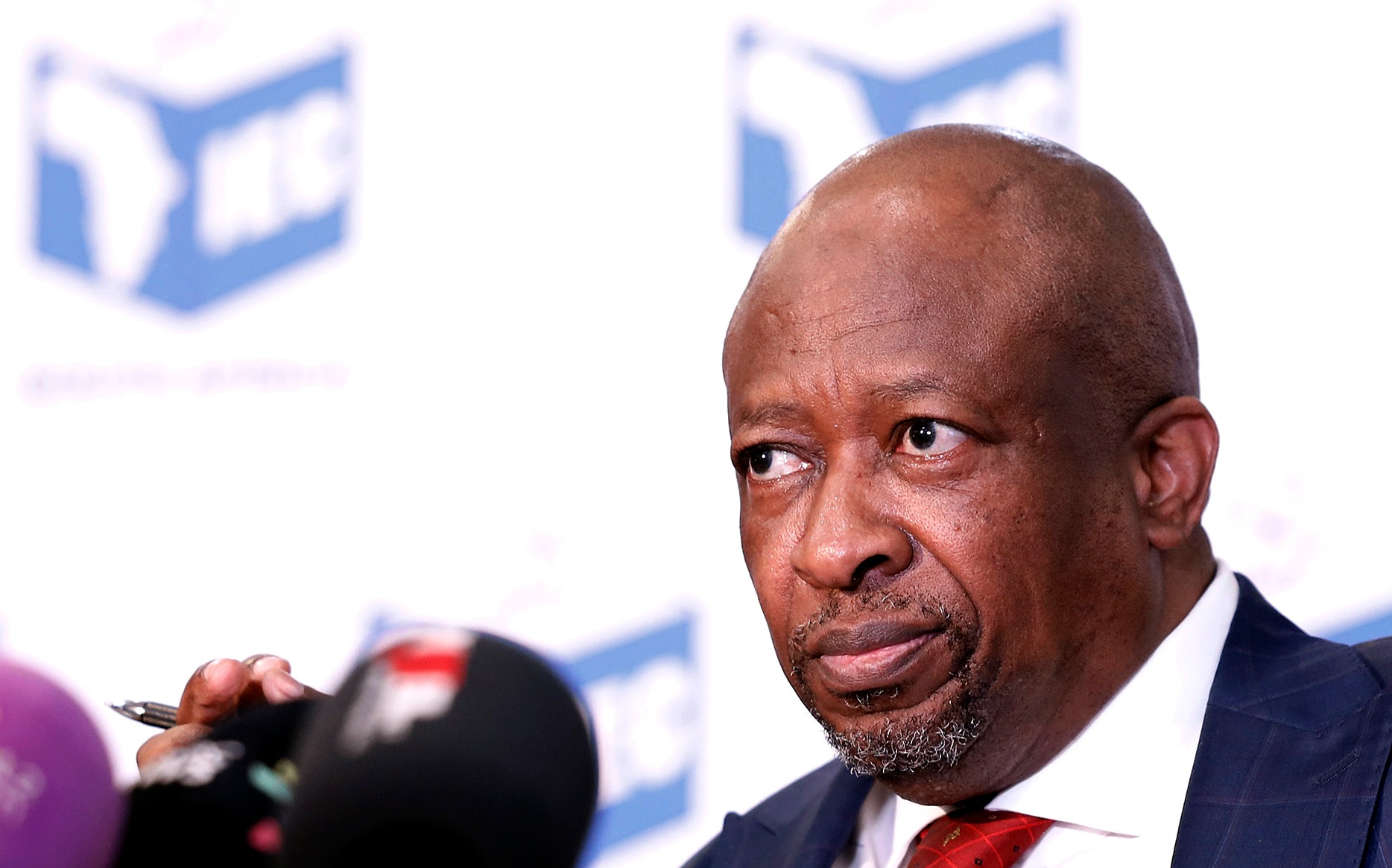
 IEC CEO Sy Mamabolo addresses the media on 10 March at Election House in Centurion. (Photo: Sharon Seretlo / Gallo Images)
 The Electoral Commission of South Africa (IEC) is concerned about the use of generative artificial intelligence (AI) and disinformation ahead of the forthcoming local government elections.
“We do anticipate that the growth of generative AI will create a fertile ground for increased disinformation attempts, and we are building our own internal capacity for social media responses,” the IEC’s chief electoral officer, Sy Mamabolo, told reporters at a press conference in Centurion on Tuesday, 10 March.
To combat the threat of AI and disinformation in the electoral process, Mamabolo said the IEC was implementing measures such as providing credible information upfront on digital platforms and ensuring a rapid response whenever disinformation is detected
He added that one of the strategies was to partner with social media platforms, “because it is in their interest that their platforms are not used in a manner that negates the credibility of the electoral process.
“We are also evaluating the possibility of a social media code of conduct,” said Mamabolo.
“We are verifying its constitutionality, [and] at an appropriate moment, we will be indicating whether such will be constitutionally permissible and what framework it has to be to engage political parties, candidates [and] media on an acceptable use of social media in the electoral process.”
Fake videos
The rise of AI is transforming elections around the world. A New York Times report in June last year found that AI played a major role in elections in at least 50 countries. Not all uses were nefarious, but in several cases, free and easy-to-use AI tools generated fake videos and photos that affected electoral processes.
In South Africa, the IEC recognised the threat of disinformation ahead of the 2024 general election and partnered with Media Monitoring Africa (MMA) to use the Real411 platform to deal with misinformation and disinformation.
An MMA report from May 2024 found that pre-election disinformation was most prevalent on X.
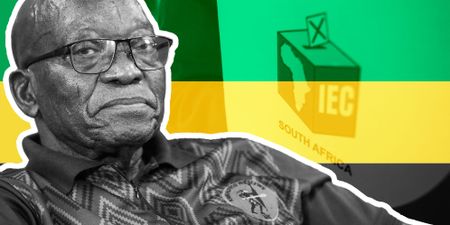
The uMkhonto weSizwe (MK) party, led by corruption-accused former president Jacob Zuma, repeatedly sought to discredit the IEC and spread disinformation about the democratic process ahead of the polls. The evening before the IEC released the election results, Zuma threatened violence if the process continued.
MK brought a case before the Electoral Court to have the results set aside, making unsubstantiated claims of vote-rigging. The IEC disputed the party’s “egregious allegations”, which it said were made without corroborating evidence.
The court later imposed a punitive costs order on the party for withdrawing its legal challenge.
On Tuesday, Mamabolo said the IEC was aware of fake voter registration websites impersonating its domain.
“The growth of artificial intelligence has had the unintended consequence of causing the increase in the use of digital platforms for fraudulent purposes and the spread of misinformation and disinformation.
“The sites are intended to lure unsuspecting members of the public to share their personal information. Members of the public are advised not to click on links and urged not to share their personal information (ID number, phone number, address, etc.) on these websites,” he said.
Voter registration weekend
Mamabolo said the IEC’s first voter registration weekend for the 2026 local government elections would take place on 20 and 21 June.
The proclamation of an election date by the minister of cooperative governance and traditional affairs, Velenkosini Hlabisa, will take place only after voter registration is completed that weekend.
The elections must be held between 2 November 2026 and 31 January 2027.
/file/attachments/orphans/ED_520363_845131.jpg "Campaign posters during municipal by-elections in Lenasia on 11 September 2024. (Photo: Fani Mahuntsi / Gallo Images)")
Mamabolo stressed the need for South Africans to register to vote where they ordinarily reside.
“As South Africa’s preparations for the general elections of municipal councils are advancing methodically and nearing key implementation milestones, we must first and foremost remind all South Africans eligible to vote to register where they ordinarily reside. Once the election date has been announced, they must vote where they are registered,” he said.
Voters can also currently register online. The only official online voter registration portals are: RegisterToVote.org.za or www.elections.org.za.
Mamabolo said the IEC’s online voter registration campaign was “starting to bear fruit”, with 260,205 new registrations recorded between November 2025 and March 2026.
Voter apathy
Low voter turnout in South Africa remains a concern. Voter turnout declined from 89.3% in 1999 to a record low of 58.6% in the 2024 elections.
In 2024, nearly 39.7 million people in the country were eligible to vote, but more than 11 million did not even register.
The IEC deputy electoral officer, Masego Sheburi, said the commission was careful “not to ascribe apathy to turnout”.
“From the research that we have done over a period, since about 1998, we know a number of things. First, young persons, in particular, do not participate due to apathy, but because they harbour some misgivings about some of the things that are happening in the country. They increasingly tell us that they are not registered, not because of administrative barriers to their registration, but because of developments in the body politic,” he said.
/file/attachments/orphans/ED_599535_278121.jpg "IEC deputy CEO Masego Sheburi at the commission's media briefing on 10 March. (Photo: Sharon Seretlo / Gallo Images)")
Sheburi said the IEC remained invested in engaging with young people ahead of the 2026 polls; “however, that must be matched by the performance of democracy.
“In other words, what is the dividend of participation in a democratic system? Until there’s congruence between those two, the rate of participation will unfortunately continue to be on the decline,” he said.
Sheburi added that the IEC was set to “imminently” release research identifying the primary factors that drive some South Africans to the polls while discouraging others. This data, he noted, would enable the commission to “sharpen” its strategies for boosting voter turnout.
Ballot papers and registration of parties
Mamabolo revealed that a whopping 508 political parties were registered for the elections.
“Of these, 299 are registered on a national level, while the balance of 209 are either registered on a provincial, district or metropolitan level,” he said.
This has raised concerns about the size of the ballot paper.
“If you register a party, you cannot register it for any other reason but to contest for state power. We are a multiparty democracy; we do not take issue with the number of registered political parties, we do not take issue with the number of parties that ultimately contest,” said Sheburi.
“However, we are concerned with the length of the ballot and what it does to a voter. We know for a fact that certain voters find it difficult to identify their party of choice on a lengthy ballot or on a ballot set out in two columns — that may lead either to voters not making a mark at all or miscasting a ballot.”
/file/dailymaverick/wp-content/uploads/2025/10/12262747.jpg "A citizen casts their vote during the general elections in Soweto on 29 May 2024. (Photo: Kim Ludbrook / EPA)")
Ahead of the 2024 polls, the IEC introduced a new three-ballot system due to the number of political parties that contested the election. Ahead of the elections, researchers and analysts highlighted the need for increased voter education on the new system to prevent voters from spoiling their votes.
The addition of a third ballot in 2024 resulted in votes being counted more slowly than usual, according to the IEC.
Adequate funding and resources
Sheburi confirmed that the IEC had adequate funding for free, fair and proper local government elections.
“So far, the National Treasury has always placed resources at our disposal to enable us to run elections. Can we do with more [funding]? Certainly, in the same way that Health and Education can do with more,” said Sheburi.
Mamabolo said the commission had a “fair” budget to run the elections.
“If we exclude our administrative expenses, we’re looking at a R2.6-billion budget to do the elections. We really have been engaging hard with Treasury, and they’ve tried to … enable us to conduct a credible election process,” he said. DM