




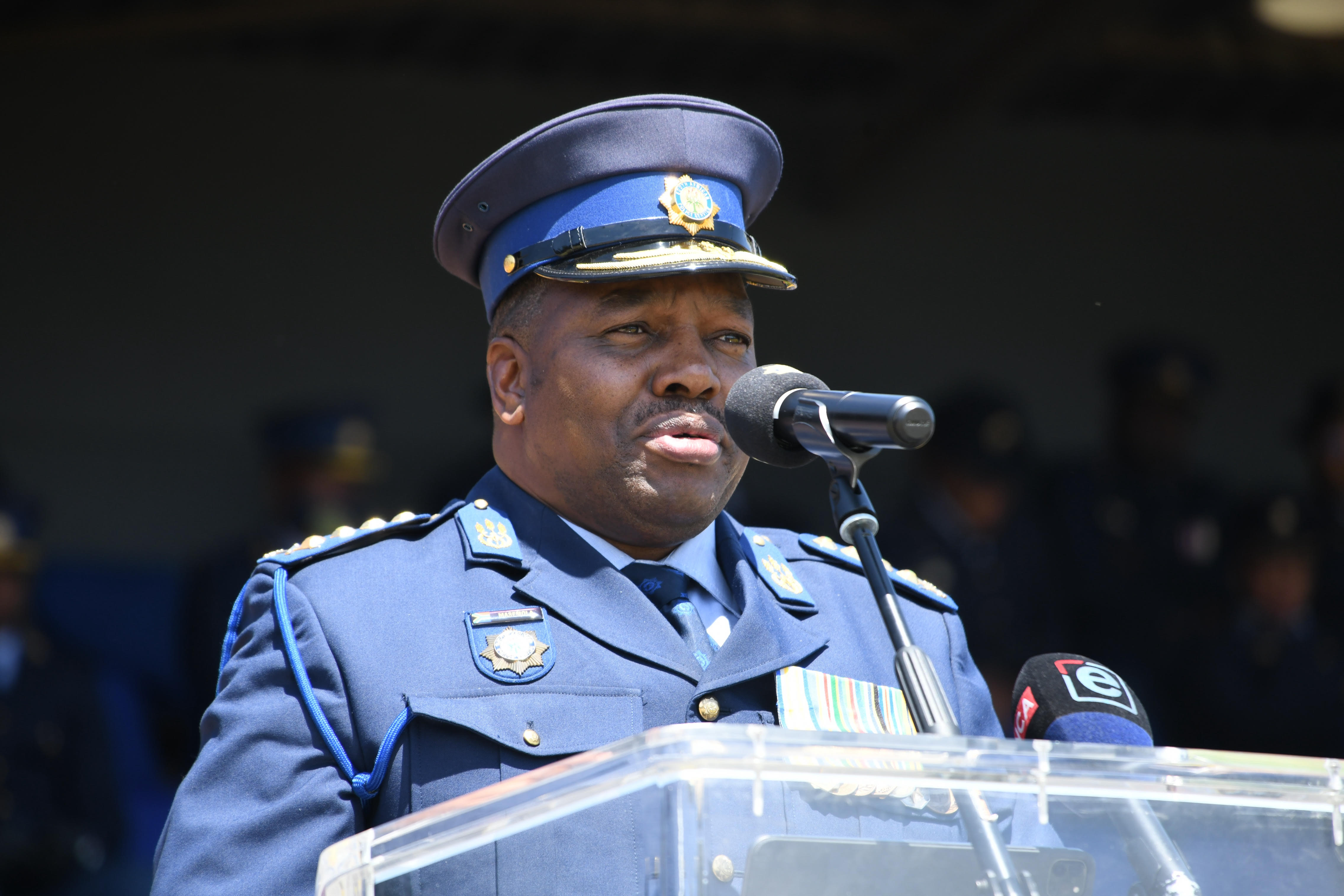
 Lieutenant-General Fannie Masemola at the South African Police Service Passing Out Parade at SAPS Tshwane Academy on 12 December 2024 in Pretoria, South Africa. (Photo: Gallo Images / Frennie Shivambu)
 /file/dailymaverick/wp-content/uploads/2025/10/label-Op-Ed.jpg "<br>")
Since the Madlanga Commission and Parliamentary Ad Hoc Committee hearings began last year, several police ministers and members of the South African Police Service (SAPS) and metropolitan police have faced hard questions about their ties with criminal underworld figures.
These inquiries are SA’s first serious attempt to grapple with police corruption. They raise a key question: How can the problem be tackled more decisively?
One issue that requires more clarity is the role of the Independent Police Investigative Directorate (Ipid), which is legally mandated to investigate police corruption, among many other offences.
Commissioners’ interventions during Ipid testimony before the Madlanga Commission in February indicated that they would probably recommend more resources for the directorate. The 2015 Marikana Commission report also called for “staffing and resourcing of Ipid … [to] be reviewed to ensure [it can] carry out its functions effectively”.
In his 2026 State of the Nation Address, President Cyril Ramaphosa said the Madlanga Commission’s recommendations would be central in defining criminal justice policy. The commission must therefore carefully consider the recommendations it makes.
To make real progress in cleaning up SA’s police, the commission must affirm that tackling police corruption is the primary responsibility of police leaders. It should also emphasise that entrenched police corruption reflects these leaders’ failure to eliminate graft in their organisations.
Afterthought
While there is an argument for providing Ipid with more resources, the directorate was not created to address police corruption. The addition of police graft to its mandate was an afterthought when the Independent Complaints Directorate was transformed into Ipid in 2012.
Ipid’s main focus is on crimes of violence committed by the police. Most cases in which the directorate’s investigations result in criminal or disciplinary convictions involve serious violent crimes committed by police officers, many of them acts of interpersonal violence perpetrated while off duty.
Corrupt police are typically serial offenders who collude with other officers and shield each other from accountability. They may also work with gangs or organised crime groups. Investigating these networks requires organised crime-focused techniques that currently fall outside Ipid’s repertoire.
Ipid is reactive, responding almost exclusively to reported incidents. But most corruption cases are not brought to the attention of authorities. A 2018 Statistics SA survey found that 91% of respondents who said they were asked to pay a bribe had not reported it.
Between April 2019 and March 2025, Ipid received 439 complaints of police corruption, 404 for the SAPS and 35 for SA’s six metropolitan police departments. These incidents probably represented the tip of the iceberg, and accounted for just 1.3% of the 32 964 cases received by Ipid in this period.
Tackling corruption in the SAPS must start with vigorous proactive measures to ensure the integrity of senior leadership. In a statement in February, Acting Police Minister Firoz Cachalia said vetting and lifestyle audits of top-ranking police officers would be prioritised.
The minister must insist that these processes are impartial and rigorous. Information highlighting irregular relationships, interests or transactions must be properly scrutinised and accounted for. And future appointments of national police commissioners and other senior SAPS and metro police leaders must require a genuine commitment to tackling corruption.
Other critical measures are also needed. A recent Institute for Security Studies report highlights that SA’s system for investigating police corruption is fragmented and uncoordinated.
Clarity needed
Although investigating police corruption should not be the responsibility of a single agency, clarity is needed on which body has the primary mandate. The SAPS’ Anti-Corruption Investigation Unit should be strengthened. But investigations into police leaders should be handled by a different agency focused on senior government officials.
Rather than relying on reported incidents, police corruption investigations should be based on risk assessments and data and intelligence analysis that identify police stations and units most implicated.
To enable information gathering about graft, the police should be obliged to report any corruption they observe. A 2024 Journal of Criminal Justice article says this obligation should be institutionalised to remove “the onus of the decision away from officers and make them feel they are not being disloyal for reporting”.
Many police officers who report corruption may be unwilling to testify as witnesses. So information must be used strategically to construct criminal and disciplinary cases based on the testimony of those who will testify, along with other evidence.
Core focus
While prosecutions are important, a core focus should be on disciplinary measures that ensure corrupt personnel are dismissed. Not only are reported cases a small fraction of corruption incidents, but the number of dismissals is even smaller.
Of 37 SAPS members convicted of corruption following Ipid investigations between April 2022 and March 2025, 17 (46%) were dismissed. A coherent system for reporting on police corruption investigations is also needed.
No country has addressed police corruption without a police leadership committed to vigorously tackling the problem. Over the years, the SAPS has developed many anti-corruption strategies, but implementation has been poor.
Above all, it should be the SAPS national commissioner who accounts for progress and failures in tackling police corruption. DM
David Bruce is an Independent Researcher and Institute for Security Studies (ISS) Consultant.
First published by ISS Today