




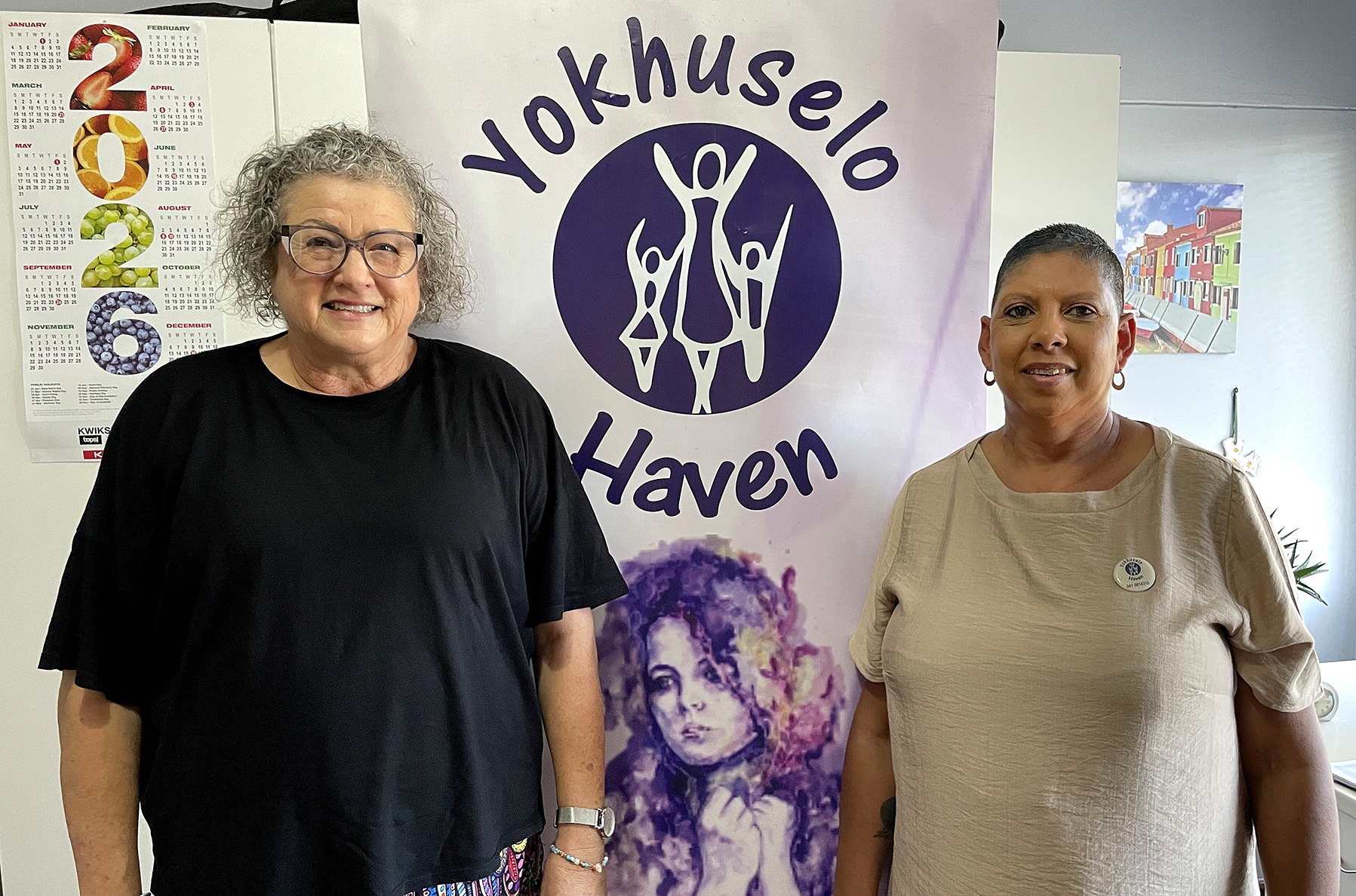
 Yokhuselo Haven treasurer Antonette Hamman (left) with office manager and house mother Rochelle Norris-Botha. (Photo: Kyran Blaauw)
 For more than three decades, Yokhuselo Haven has been a pillar of safety for Gqeberha’s most vulnerable women and children. Today, it is reaching out to the community and local businesses to help keep its doors open and its mission alive
Running the shelter costs more than R50,000 a month, which covers food, electricity, water, baby necessities, security and other essential services.
The haven’s treasurer, Antonette Hamman, said that despite the organisation’s long history, too few people know it exists.
/file/attachments/orphans/Photo7_815421.jpg "Antonette Hamman in front of a mirror created during a mosaic class at Yokhuselo Haven. (Photo: Kyran Blaauw)")
“Even though we have been here for 36 years, not enough people know about us,” said Hamman.
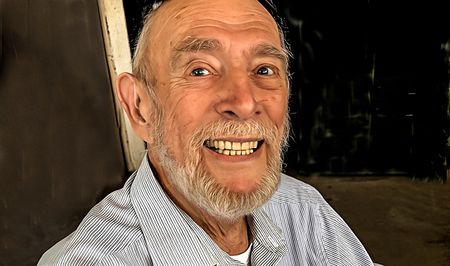
The haven was founded in 1988 by attorney Daryl Burman and his wife, Olga. Burman, one of Nelson Mandela Bay’s most respected attorneys, died on 5 February at the age of 88. His wife died on 14 March 2017 aged 77, just four days after Burman celebrated his 80th birthday.
While many companies are willing to donate goods or volunteer their time, Hamman said the organisation’s biggest challenge is paying its monthly bills.
“Companies want to paint for us or install systems, which we appreciate. But no one wants to adopt one of our utility bills and pay it for us.”
/file/attachments/orphans/Photo6_897835.jpg "Sewing materials used by residents to create crafts for sale and to develop new skills. (Photo: Kyran Blaauw)")
The shelter has appealed to businesses and individuals to “adopt an account”, such as covering electricity, water or security costs each month. As a registered non-profit organisation, Yokhuselo Haven can issue Section 18A tax certificates to donors.
Dire straits
“We are a well-oiled machine,” said Hamman. “Our books are audited, and everything is in order. But right now we are in dire straits.”
Unlike many similar organisations, the haven does not receive financial support from government departments, although it must still report to them annually.
House mother and office manager Rochelle Norris-Botha said the haven provides shelter to women who are victims of domestic violence. They are encouraged to open a criminal case against their abuser.
“If they haven’t opened a case yet, we take them to the police to do so,” she said.
/file/attachments/orphans/Photo2_757498.jpg "Rochelle Norris-Botha shows a resident how to use herbs from the garden in her cooking. (Photo: Kyran Blaauw)")
Women are typically allowed to stay for up to three months, during which time the shelter helps them obtain protection orders, find employment and rebuild their lives. Social workers from partner organisations assist where needed.
Some cases are complex. Norris-Botha recalled helping a victim escape abuse from a perpetrator who was incarcerated but continued to threaten her from inside St Albans Correctional Centre.
In such cases, the shelter works with transport company Intercape to help victims travel safely to relatives elsewhere in South Africa.
Despite the hardships, Hamman said the shelter continues to transform lives.
She remembers a mother and her daughter with Down syndrome who arrived from the Karoo with nothing.
“When she came here, the daughter could only sit. She could not talk,” said Hamman.
“When they left, she was eating, she was talking, and she was laughing. We all cried when they left.”
The mother later found a job at a school, and the daughter was enrolled in a school.
/file/attachments/orphans/Photo5_243700.jpg "A bedroom at the haven designed to accommodate two women and their children. (Photo: Kyran Blaauw)")
Another former resident went on to become a police sergeant.
“That is why we do what we do,” said Hamman.
To help cover operational costs and expenses, the haven recently introduced a modest contribution system for residents.
“Previously, women who came here did not pay anything to stay,” said Hamman. “We have now decided that, depending on their income, they can contribute what they are able to. We do not make any profit from this — it is simply to help cover running costs.”
Hamman said the approach also teaches “the women that once they leave the haven, they will need to pay for services wherever they go. We want them to understand financial responsibility while still ensuring that no one is turned away for lack of money.” DM