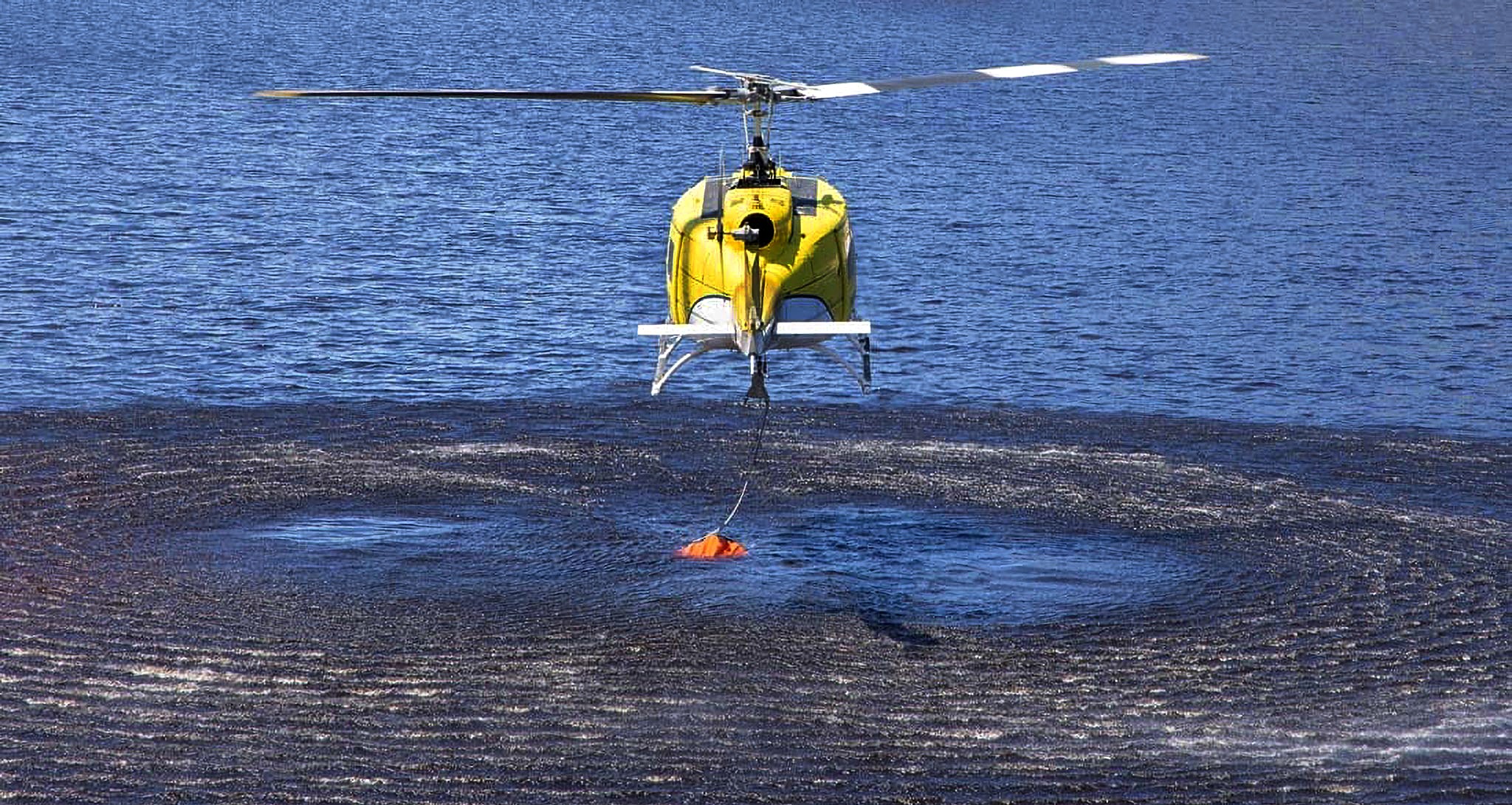
 Dipping the bucket which holds a ton of water takes a brief moment and then a button-press to drop. (Photo: Grant Duncan-Smith)
 /file/attachments/orphans/storiedmountainlogo_645719.jpg)
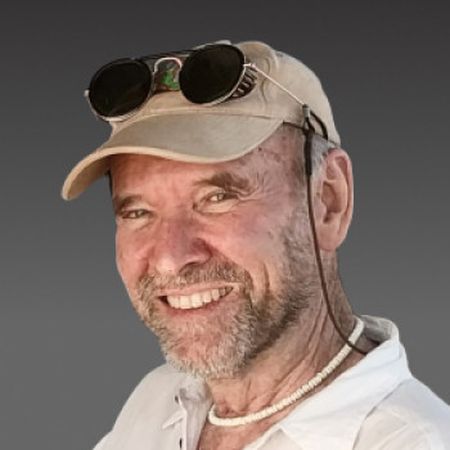
The call comes over the radio: smoke on the mountain. Within minutes John Mittelmeyer is pulling on his overalls and striding towards his bright-yellow helicopter.
The old Bell Huey waits on its skids – a Vietnam-era veteran still earning its keep above Cape Town. He climbs in, runs through the checks, and the engine winds up with a rising scream. The rotors blur and the machine lifts into the air, banking towards a rendezvous with a water source.
/file/attachments/orphans/Firebirds-2_920654.jpg "The drop. (Photo: Kishugu Aviation)")
From up here the city falls away quickly. The smoke is easy to find – a grey thread lifting skywards.
Kishugu Aviation's pilots know the water sources. John dips the suspended bucket into a reservoir, sometimes the Molteno Reservoir near the city bowl, sometimes the harbour, sometimes wherever the nearest usable water lies. The bucket fills, a tonne of water hanging beneath the helicopter on a cable.
Then he turns towards the fire.
A busy hour might mean 30 drops. Each one releases roughly a 1,000 litres of water – about a tonne – cascading onto the burning slopes below.
“It becomes quite rhythmic,” he says. “You scoop, you climb, you drop. Then you go again.”
From the ground, a wildfire looks like a wall of flame and smoke. From the cockpit of a helicopter, it becomes something else entirely. “You see it in three dimensions,” Mittelmeyer says. “From the ground you see it in two. From up here you see where it’s burning, where it’s already burnt, where it’s moving.”
/file/attachments/orphans/Firebirds_835672.jpg "In the business of saving the city. (Photo: Grant Duncan-Smith)")
The fire
From the air, a fire reveals its structure. Most mountain fires begin at a point and spread outward in a V shape. The narrow tip marks the origin. The open end – the head of the fire – races forward, driven by wind and fuel.
“The head of the fire moves with the wind,” he explains, “and generally it travels at the speed of the wind.” That can make it terrifying on the ground. Flames can move much faster than a person can run.
But from the air the behaviour becomes readable. “You can see what it’s doing,” he says. “You can see where it’s going.”
Pilots and firefighters learn to read these patterns quickly. A well-placed series of drops can slow the head of the fire just enough for ground crews to get in and finish the job.
/file/attachments/orphans/Firebirds-6_312016.jpg "In a fire any water source will do. (Photo: Grant Duncan-Smith)")
The bucket
The helicopter’s bucket is simple but effective. Lowered into water, it fills automatically. A valve at the bottom stays closed until Mittelmeyer presses a button in the cockpit, releasing the water in a sudden torrent.
“It’s a single-pilot operation,” he says. “I’ve got a mirror by my feet so I can see the bucket and the fire.”
Despite the drama of water falling from the sky, helicopters are only part of the firefighting effort. “People think the helicopters are the answer,” he says. “They’re not. They’re part of the answer.”
The aircraft can knock down flames and cool the vegetation, but small embers can remain hidden in the brush. If even one survives, the fire can restart. That is why ground crews are essential.
/file/attachments/orphans/Firebirds-4_330605.jpg "John Mittelmeyer says on a drop he’s too focused to ever be scared. (Photo: Don Pinnock)")
The ground crews
“We dampen it down,” Mittelmeyer says. “The guy on the ground must put out that little flame.” That partnership between air and ground teams is what ultimately stops the fire.
Cape Town’s fires begin in many ways, but most have human origins.
“You can often see exactly where it started,” Mittelmeyer says. “You arrive and you see the point next to the road.”
Sometimes a cooking fire has been left unattended. Sometimes someone clearing bush to build a shack burns vegetation deliberately. In other cases, fires are started carelessly or maliciously.
“The last fire we had,” he says, “while we were putting it out, two others started next to it.” For firefighters, the causes are often painfully obvious.
/file/attachments/orphans/Firebirds-3_666581.jpg "John Mittelmeyer with one of the city’s well-known Huey fire choppers. (Photo: Don Pinnock)")
Planning the drop
Once a blaze begins, the mountain itself shapes what happens next. From the cockpit, Mittelmeyer studies the terrain, the wind and the vegetation. Fynbos burns quickly but usually regrows. Pine plantations behave differently. If flames climb into the crowns of pine trees, the fire can suddenly accelerate.
Some vegetation smoulders stubbornly. Palmiet – the wetland plants growing in river valleys – can burn deep within their dense stems, glowing for days before flaring up again.
But beyond all the science and strategy, firefighters often speak of fires as if they were living things. “Fires definitely have personality,” Mittelmeyer says. Some burns are manageable. A drop here, another there, and the flames collapse quickly. Others feel restless and unpredictable.
“You get to some fires and you look at it and say: this thing’s going to run,” he says. “It’s got an energy behind it.”
Learning to recognise that personality early can make the difference between a small incident and a major wildfire.
Flying low over a fire requires constant judgement. The helicopter’s spinning rotors push down a powerful column of air and flying too close to the flames can fan the fire. “You’re blowing a massive fan of air down,” Mittelmeyer says.
Often he must drop water from higher up to avoid spreading the flames. At other times, when strong winds threaten to blow the water away, he flies lower for accuracy.
Precision matters. “If you were standing there,” he says with a grin, “I could soak you.”
/file/dailymaverick/wp-content/uploads/2025/04/ED_555204.jpg "A chopper water-bombs the flames at Noordhoek. (Photo: Gallo Images / Brenton Geach)")
In the zone
For Mittelmeyer, the work carries a surge of focus every time the radio crackles. “There’s always an adrenalin rush,” he says. “When you’re in the moment, nothing else matters.”
The job also brings satisfaction. When helicopters arrive early, they can often stop a fire from spreading beyond its initial run. “In many cases,” he says, “where we arrive is where the fire ends.”
From above, the smoke and flames begin to shrink, the blackened ground marking the line where the fire has been contained.
Mittelmeyer has spent decades around aircraft. A Cape Town native, he learnt to fly privately in the 1970s and eventually returned to aviation full-time. Today he flies both helicopters and fixed-wing aircraft and is involved in operations across the region.
But firefighting flying is not a career he lightly recommends. Asked whether he’d advise his kids to follow the same path, his answer comes quickly.
“No,” he says. To fly like this – low over mountains, in smoke and wind, carrying heavy loads – requires something deeper than a job. “You’ve got to do this with passion.” Without it, he says, the risks would be too much.
“If you don’t do this with enthusiasm,” he adds, “you can scare yourself to death.”
Kushugu Aviation is an independent company that contracts to SANParks for fire management.
Read the full Table Mountain series:
• The flat mountain that wouldn’t behave
• What is Table Mountain? A story of Deep Time
• Hotter, drier, wilder: reinventing conservation for a changing climate
• Table Mountain’s green cloak that took 60 million years to weave
• The fluid intelligence of Table Mountain’s rivers
• What it takes to keep Table Mountain wild
• Rough sleepers: The mountain keeps us
• Cormac Cullinan: thinking like a mountain, listening like a river