




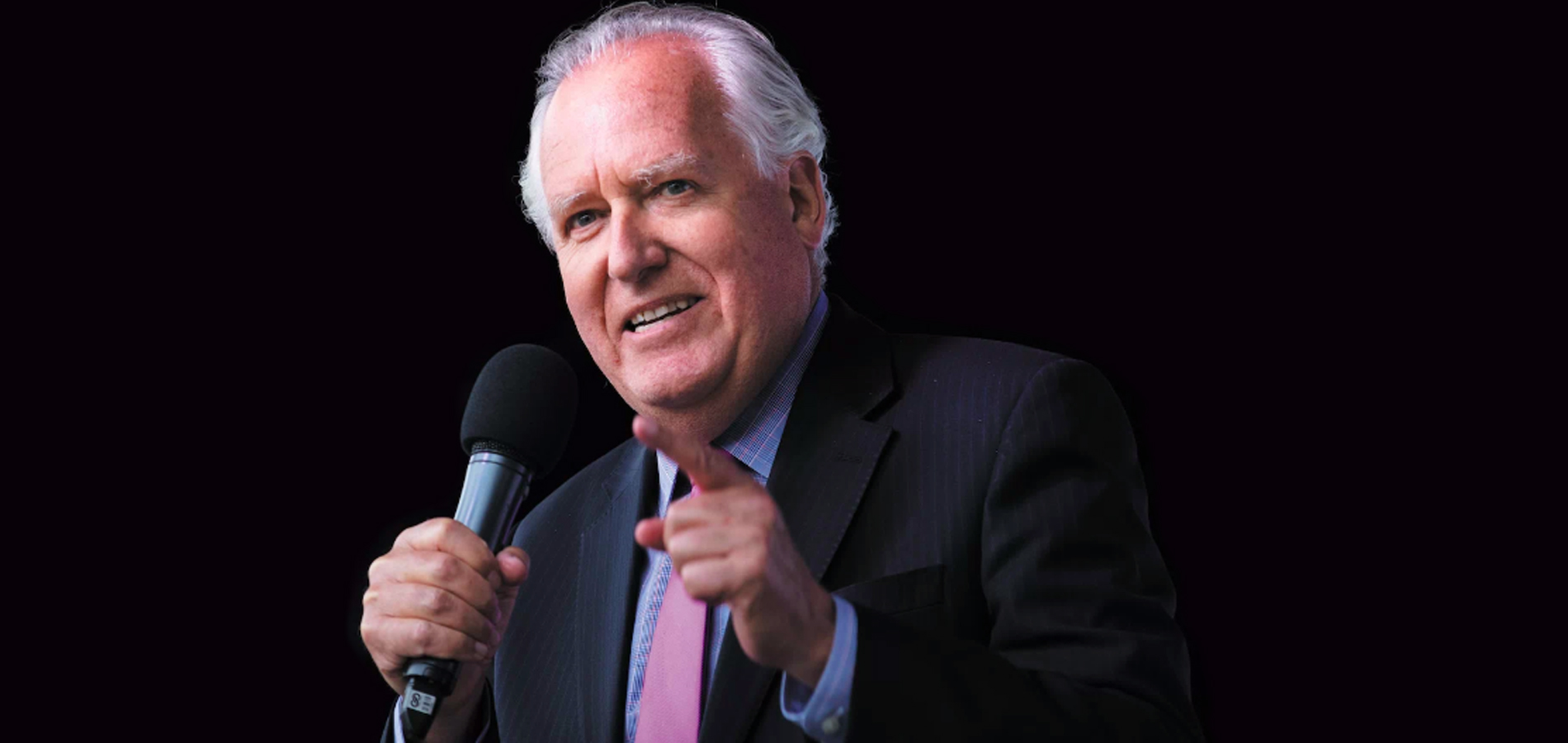
 The Lord Hain.
 In it, he revisits serious concerns he first raised with the UK National Crime Agency in 2018 regarding HSBC’s conduct toward the South African education charity Education Africa. Lord Hain alleges that although a settlement was concluded with the charity in 2013, it was accepted under what he describes as “extreme financial duress,” and that the individual staff members affected were never party to that agreement. Their claims, he notes, were rejected in full.
Describing the matter as one of public interest, Lord Hain calls on HSBC’s current leadership to resolve what he characterises as unfinished business — “properly and finally — fairly, transparently, and in the best interests of all those harmed.”
It always seems impossible: My fight to build and save Education Africa is available at all Exclusive Books stores.
We publish Lord Hain’s letter in full below.
I write this open letter, intended for public circulation, in response to the publication of It Always Seems Impossible: My Fight to Build and Save Education Africa by James Urdang. The book revives deeply troubling issues surrounding HSBC’s conduct toward Education Africa and, crucially, the fact that no settlement was ever reached with the individual parties who were harmed.
On 7 March 2018, I wrote a letter to Ms Lynne Owens, then Director General of the UK National Crime Agency, concerning HSBC Holdings’ and HSBC South Africa’s complicity in serious wrongdoing against Education Africa, a vulnerable charitable organisation. I understand that this matter remains an open case. James Urdang’s book provides the detailed background and documentary trail that informed that letter.
James Urdang is a remarkable South African and a British dual citizen who has devoted more than three decades of his life to advancing social justice through education for disadvantaged Africans. His memoir carries a three-page glowing foreword by the Nelson Mandela Foundation, which independently verified the factual accuracy of his account and his relationship with Nelson Mandela.
The book also carries a cover endorsement from Sir Bob Geldof, who describes it as “a powerful account from a genuine African hero – inspiring, urgent and true.”
During a webinar linked to the book’s launch on Tuesday, 11 November, hosted by journalist Tamsin Metelerkamp of Daily Maverick, HSBC was approached for comment. The bank’s response stated:
“HSBC and Education Africa entered into a full and final settlement in 2013. The terms were accepted by both parties as confidential and without any admission of liability or wrongdoing by either party.”
This statement is, at best, incomplete. While HSBC reached a settlement with Education Africa under extreme financial duress, it refused to settle with the individual staff members who were directly harmed. Their claims, submitted through Leigh Day Solicitors in London, were rejected in their entirety. HSBC as a corporate trustee of Education Africa and those responsible within the institution were protects from accountability and remained securely employed, drawing substantial salaries, bonuses, and pensions.
The settlement was a classic David-versus-Goliath scenario. Education Africa, represented by Bates Wells & Braithwaite, faced an impossible choice: accept an inadequate settlement or close its doors entirely. Although James Urdang had a mandate from the Education Africa board to sign, he refused on principle, knowing the terms were unjust. The board ultimately intervened and accepted the settlement solely to save the organisation.
When James Urdang’s cousin, Mark Tucker, was later appointed Chair of HSBC, the matter was brought to his attention by a mutual cousin, Penny Saxby. Mr Tucker appropriately recused himself and referred the issue to Stuart Levy, HSBC’s Chief Legal Officer, who had overseen the settlement with Education Africa and rejected the individual claims. Mr Levy wrote to Ms Saxby that he was “sorry to hear of the difficulties Education Africa was facing, and the predicament in which your cousin and his family and colleagues find themselves.” This expression of sympathy is striking, given that HSBC’s actions directly created that predicament.
The settlement was clearly structured in the best interests of the bank. It sought to silence a charity while compounding misconduct that included criminal activity by HSBC Africa in its role as corporate trustee—misconduct subsequently covered up by HSBC Plc. through the settlement agreement itself. I question the validity of any agreement that effectively conceals criminal wrongdoing.
This was not HSBC’s first attempt to suppress the issue. When concerns were initially raised with the bank by the British Trade Commissioner in South Africa, Andy Henderson – who was deeply disturbed by events at Education Africa – they were dismissed. Similar concerns were raised by members of the diplomatic corps, including the Austrian Trade Commissioner, the Canadian High Commissioner, and the former Director of UNIC in Pretoria. These warnings were ignored until a formal legal letter was sent to HSBC’s then Group CEO by Bates Wells & Braithwaite.
The consequences for Education Africa have been severe. The consequences for the individuals within Education Africa have been equally severe. The organisation lost flagship projects, with long-term knock-on effects for tens of thousands of disadvantaged Africans who would otherwise have benefited from educational opportunities. Through extraordinary resilience and determination, James Urdang rebuilt the organisation and even managed to scale some of its projects. Yet Education Africa’s potential social impact should be far greater today. It should be sustainably endowed as an intergenerational institution – something HSBC’s actions have denied it. The book details the devastating impact on the individuals: HSBC has hidden behind the settlement agreement with Education Africa to avoid any accountability for what it did to these individuals.
I urge you to read James Urdang’s memoir, enclosed. In moments of doubt, he consistently errs on the side of generosity, guided by the belief that people and institutions can evolve, stumble, and grow. Notably, every chapter dealing with HSBC relies almost entirely on the bank’s own words – emails, documents, and records – supported by a high-level forensic investigation.
I trust that HSBC aspires to be a very different institution today. Under your ethical leadership, I appeal to the bank to resolve this matter properly and finally—fairly, transparently, and in the best interests of all those harmed.
I have copied Martyn Day of Leigh Day, the attorneys of record for the Education Africa staff members whose lives and families were profoundly damaged by HSBC’s misconduct, and whose claims were rejected without redress. Trusting you will reach out to Mr Day and finalise this matter. DM
/file/attachments/2989/Daily-Maverick-Mar-26-final_186456.jpeg)